
The story of Alabama athletics is filled with tradition and triumph. For decades, female athletes have built a legacy of excellence. This legacy deserves its own spotlight.
This celebration honors the Crimson Queens. They were pioneers whose talent and determination paved the way for women’s sports at the University. Their achievements set a high standard for those who followed.
The numbers show their impact. Dominique Canty scored 2,294 points, and Carol Smith scored 2,018. They are among the top scoring leaders. Early stars like Julie Ellis, the top scorer in 1974-75, also played a key role.
It’s not just about the numbers. It’s about preserving Alabama’s athletic legacy for the future. We are dedicated to preserving Alabama’s athletic legacy and sharing these important stories. Their era was a defining chapter in Alabama women’s sports history.
Milestone Moments
Milestone moments mark a timeline with lasting impact. For Alabama, these include cultural shifts and athletic achievements. These moments, often led by pioneers, turn ordinary events into legendary history.
In 2019, Tiara Pennington made history as Miss University of Alabama. She was the first African-American woman to hold the title. Her win was a big step forward, showing the impact of a true pioneer.
On the basketball court, records show incredible talent. Sarah Ashlee Barker set a record with 45 points in the 2025 NCAA Tournament. This broke Jasmine Walker’s record of 41 points from 2021. These athletes showed what’s possible in one game.
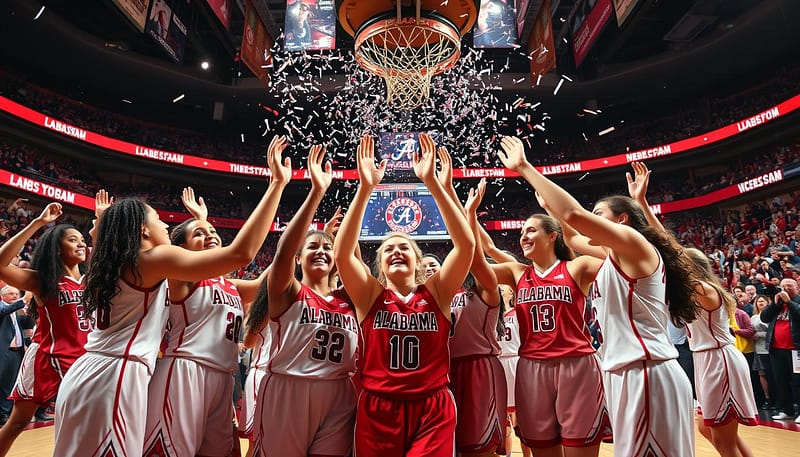
Team records also tell a story of success. The highest-scoring game was in 1993, with 122 points against Oral Roberts. This was part of the 1991-92 season, which averaged 87.9 points per game. This season was the most potent in Alabama history.
These moments, whether cultural firsts or records, build a legacy. They show the impact of pioneers like Pennington, Barker, Walker, and the 1992 team. They set new standards for those who come after.
Growth of Women’s Programs
Looking at five decades of scoring data shows the rise of the Crimson Tide’s women’s basketball program. Each year, a new standout athlete emerges, marking the team’s growth. This journey shows the team’s evolution in skill, athleticism, and strategy.
In the early years, Julie Ellis set the standard. As the 1980s and 1990s came, scoring totals went up. This was due to more investment in women’s sports, better facilities, and tougher schedules.
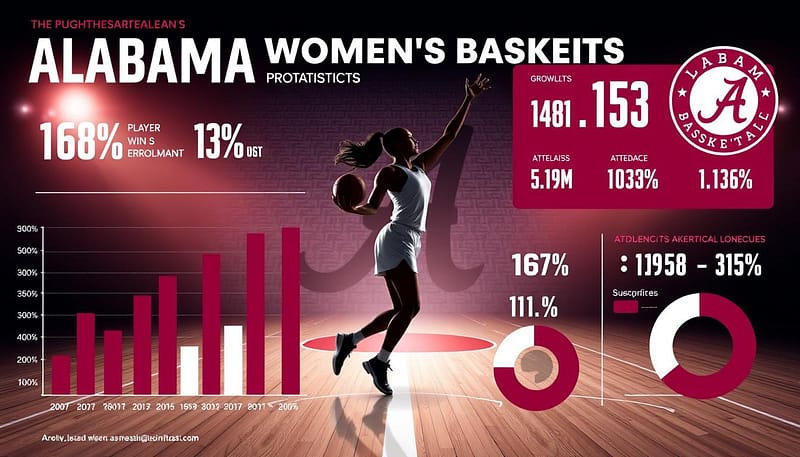
The team’s offense reached new heights in the early 1990s. The 1991-92 team scored an average of 87.9 points per game. Two years later, the 1993-94 team set a single-season record with 2,840 points. These achievements show the team’s elite level.
The table below shows the growth of scoring leaders across decades, highlighting individual performance:
| Era | Example Player | Notable Context |
|---|---|---|
| 1970s | Julie Ellis | Early program pioneer and standard-setter. |
| 1990s | Players like Ruthie Bolton-Holifield | Era of record-breaking team offensive output. |
| 2010s-2020s | Brittany Davis, Sarah Ashlee Barker | Modern stars reflecting heightened conference competition. |
Improved resources fueled the program’s growth. Better recruitment brought top athletes to Tuscaloosa. As the SEC became top in women’s basketball, Alabama had to step up. This led to more skilled scorers and versatile players.
The journey from early stars to today’s players shows clear progress. Each generation built on the last, facing tougher opponents and higher expectations. This cycle of improvement is evident in the stats.
This growth was not random. It was driven by athletes who rose to the challenge of a growing conference. Their ability to score against better teams shows the program’s strength. The numbers tell the story of Alabama women’s basketball becoming a force to be reckoned with.
Honors and Community Engagement
The legacy of Alabama’s Crimson Queens goes beyond winning games. True honor comes from using their fame for good and community service.
Tiara Pennington fights for psoriasis awareness with her “Psoriasis Take Action Alabama” project. Farrah Sanders, as Miss Black and Old Gold, supports mental health with “My Mind Matters,” focusing on women of color. They turn their personal struggles into support for others.
E’talia Shakir represents minority students on her homecoming court. She believes in “leaving the door open” for others, showing true leadership. This approach ensures future generations see a path to success.
This spirit of giving back is key in Alabama’s women’s sports. A champion on the track is also a champion in her community. Athletes in track and field also mentor and advocate for others.
They mix their athletic achievements with community service. This mix makes them hall of fame material. The Crimson Queens make history by helping others succeed.