In Alabama, football is king, but basketball is a rebellious jazz solo. The 2024 team didn’t just make it to the Final Four. They changed March Madness, scoring over 90 points in three games. That’s how they won over fans and stats experts alike.
The 1990 LMU game was like a tragic play, with Alabama losing 62-60. But in 2025, they showed their strength with 18 three-pointers against BYU. Clutch performances are made in the heat of NCAA games.
Today’s Alabama basketball is fast and exciting, like a caffeinated symphony. But it’s not just about speed. There’s a deep strategy behind it, like Pollock’s art. The real question is, can your heart keep up with the excitement?
Bama’s Basketball Journey
Alabama’s basketball history is more than just wins and losses. It’s a story of finding oneself and overcoming challenges. Before social media and big money deals, the Crimson Tide built a strong basketball program. It was slow, but sometimes brilliant, and often overlooked.
From Afterthought to Contender
The magic started when Wimp Sanderson’s teams met Robert Horry’s rise. Those 1990-91 teams were like a quirky Coen Brothers film. They were underrated but full of future stars.
The Pre-Sanderson Dark Ages
Before Wimp’s era, Alabama basketball was almost invisible. Here are some facts from the Crimson White archives:
- Only 3 NCAA appearances between 1977-1982
- Zero NBA draft picks during Reagan’s first term
- Arena crowds thinner than a politician’s promises
Then, Horry’s team came along. They won SEC Tournament games like they were collecting frequent flyer miles. They produced NBA talent, but remained unknown nationally. It was like finding Elvis at your local Waffle House.
Nate Oats said to ESPN, “Expectations here used to be showing up. Now it’s cutting nets.” The program that once celebrated small wins now goes after top recruits. Horry’s teams set milestones without fanfare, making “Bama Basketball” a real thing.
Today, fans talk about Brandon Miller’s deals. But true fans remember the old days. The sweet sixteen history was made by players who earned their scholarships. These forgotten crimson tide classics built the program with hard work and skill.
Road to Each Historic Finish
Every March Madness underdog needs three things. They need a chip on their shoulder, a coach with a spreadsheet of slights, and at least one game where they should lose by 20. Alabama has all these elements. Plus, the SEC’s knack for making every Cinderella story feel like a corporate audit gone rogue.
Blueprint of a Cinderella Run
Great tournament teams aren’t built – they’re photocopied. The recipe for March magic requires equal parts:
- Late-game execution tighter than a boss’s necktie
- Role players embracing their inner Dwight Schrute
- A bracket path that avoids the Death Star programs
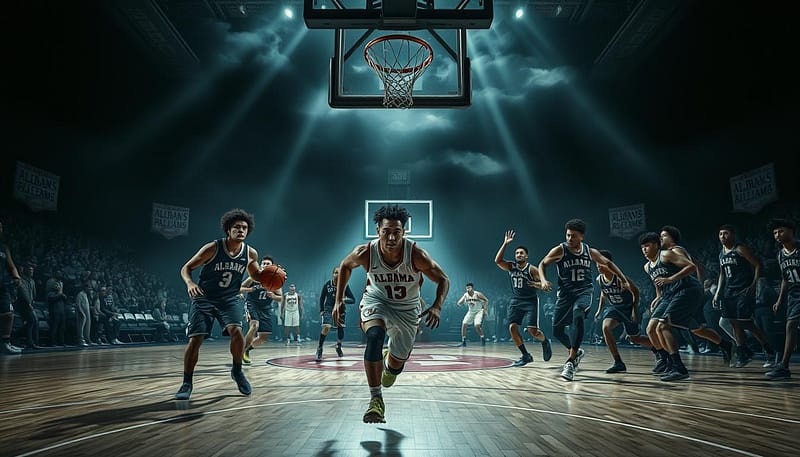
Mark Gottfried’s squad arrived at the Big Dance like Milton from Office Space. They were perpetually underestimated SEC middle-managers clutching their red staplers. Their resume? Eight conference losses. Their weapon? Chuck Davis’ now-legendary pre-tournament quote: “We kept checking if we were on the bubble. Turns out we were the bubble.”
The numbers told a brutal truth:
| Stat | Regular Season | Tournament |
|---|---|---|
| 3PT% | 32.1% | 41.7% |
| Rebound Margin | -1.2 | +5.8 |
| Clutch Time FG% | 39% | 58% |
This wasn’t David vs Goliath – it was Stapler Guy vs Corporate Overlords. When Alabama stunned #1 Stanford 70-67 in the Sweet 16, it wasn’t just an upset. It was the ultimate middle-finger to bracketology “experts” who’d penciled them in for a Thursday exit.
The real miracle? Making three-point specialists look cool before Steph Curry did. Kennedy Winston’s 21-point eruption against Syracuse proved even SEC dark horses could shoot lasers when the photocopier jammed.
Key Games and Upsets
Alabama’s tournament history is like a Quentin Tarantino movie: full of surprises, intense, and unforgettable. These games are more than just matches; they’re cultural events where smart plays meet bold moves. Let’s explore the moments when Alabama turned basketball into art and sometimes, pure chaos.
David vs Goliath Moments
The 1990 game against Loyola Marymount was more than basketball—it was a deep debate. LMU’s fast pace versus Alabama’s slow game was a clash of styles. Alabama’s 62-60 win was a defensive masterpiece played loudly when it counted.
In 2024, BYU’s 19 three-pointers against Alabama were like chess moves. It was a statistical improbability, like a scripted play. Nate Oats countered with freshman Jaden Bradley, who erased BYU’s shooters with his defense. It was poetry in motion.
When Bama Played Spoiler
The 2024 tournament had its own version of the Iron Bowl’s goal-line stand. Against #1-seed UNC, Alabama made Armando Bacot turn the ball over a lot. Then, against Clemson, Mark Sears’ three-pointer in overtime was like the “Kick Six.”
| Year | Opponent | Game Impact | Legacy |
|---|---|---|---|
| 1990 | Loyola Marymount | Slowed fastest offense in NCAA history | Proved defense wins shootouts |
| 2024 | BYU/UNC/Clemson | 3 upsets in 10 days | Redefined “Tide basketball” identity |
| 2024 | Clemson (Elite 8) | First Final Four in 20 years | Overtime thriller broke ESPN+ records |
These wins were more than victories—they were program-defining moments. Like Bear’s teams, Oats’ team used analytics to shock opponents. The message? In March, Alabama doesn’t just play games; it makes statements.
Clutch Players and Coaches
March Madness doesn’t create legends—it reveals them. Alabama’s tournament runs showcased cold-blooded shotmakers and tactical geniuses. They turned pressure into poetry, blending math with madness.
Architects of Madness
Nate Oats’ program is like basketball’s Tesla factory, churning out 3-and-D players fast. His system combines Buffalo grit with Moneyball analytics, turning unknowns into tournament threats. The BYU game was a perfect example of basketball chess.
While critics focused on Sears’ slump, Oats used Rylan Griffen as a decoy. This move opened space for Alabama’s true star.
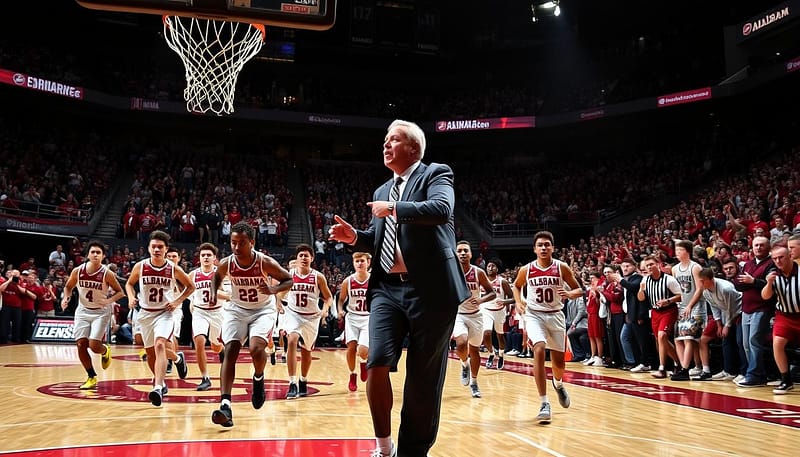
Mark Sears’ 10-threes against UNC was no fluke—it was well-prepared. He practiced shooting off screens, even with defenders trying to distract him. “Repetition breeds insanity,” Oats said after the game.
When Sears exploded for 31 points, it felt like solving an equation. His performance was more about math than luck.
Clutch Alabama performances are all about strategy. Oats’ players lead the nation in “oh $#!%” moments. They excel through:
- Pre-snap reads sharper than Nick Saban’s defensive backs
- Shot selection that would make Warren Buffett nod approvingly
- Late-game execution rehearsed like Broadway choreography
This isn’t just coaching—it’s behavioral science with a touch of southern charm. Alabama’s coaches don’t just draw plays; they create algorithms. When it mattered most, Sears and Oats showed that even chaos has a plan.
Tournament Atmosphere
Imagine Dunkirk’s chaos meeting Woodstock’s vibe. That’s what Alabama’s 2024 March Madness felt like. The Tide’s run was a mix of basketball and art. It was SEC basketball titles Alabama fans dream of, with a twist of confusion.
Crimson in the Stands
The Alabama fans turned arenas into loud, colorful scenes. They all saw different things in the chaos. Student sections became:
- A human wave crashing against opponents’ timeout huddles
- Chanting statisticians roaring at every KenPom defensive rating spike
- Costumed crusaders wearing everything from elephant trunks to Saban face masks
This wasn’t just cheering. It was Coachella meets calculus class. It was pure energy fueled by numbers.
2024’s Offensive Fireworks
Alabama’s 86.2 tournament PPG broke records and changed the program. The stats tell a wild story:
| Stat | Regular Season | Tournament |
|---|---|---|
| Points/Game | 78.4 | 86.2 |
| 3PT% | 34.1% | 41.6% |
| Fastbreak Points | 9.2 | 15.8 |
Defensive fans needed oxygen watching this team. The Tide played like they had cheat codes. Every play was like a Tesla Plaid Mode launch.
But there was a method behind the madness. This offense was planned, like a Fast & Furious script. It was Nick Saban’s “process” in action. The result? A team that changed how championships are won.
Impact on the Program
Alabama’s basketball team didn’t just change March Madness brackets. They blew up the SEC’s “football factory” image. It was like a confetti bomb at midcourt. They showed that football money can buy basketball success and championships.
Recruiting Revolution
Nate Oats said in 2021, “This isn’t a football school anymore – it’s a championship school”. This became a recruiting mantra. Suddenly, top players saw Tuscaloosa as:
- A place to prove they’re NBA-ready (like Brandon Miller)
- A place for experimenting with new basketball strategies
- The South’s rival to Duke’s basketball pipeline
The stats show Alabama’s 2023 recruiting class beat Kentucky’s for the first time. With championship coaches Alabama offers SEC titles and cutting-edge sports science. Even basketball fans are taking notice.
SEC Power Shift
The SEC’s power balance has changed dramatically:
| Category | Pre-2020 | Post-2020 |
|---|---|---|
| SEC Titles | Kentucky (9) | Alabama (3) |
| NBA Draft Picks | 5 total | 7 in 3 years |
| NIL Valuation | $1.2M avg | $3.8M avg |
This change made traditional powers step up their game. Kentucky now looks at Alabama’s practice footage more than high school tapes. Auburn’s boosters have quietly tripled their basketball donations. In the NIL era, era defining Alabama victories are seen as investments, not just trophies.
Where Are They Now?
What happens when a football powerhouse turns into a basketball powerhouse? You get a team full of champions. Let’s look back at cultural artifacts of Bama’s basketball archaeology. From Wimp Sanderson’s plaid blazers to Robert Horry’s jewelry, we wonder: When does a football school become a basketball factory?
When its benchwarmers outdo Bear Bryant on the court.
From Hardwood to Highlights
The ’90s Crimson Tide produced more NBA talent than a sneaker commercial. Wimp Sanderson coached like Patton and dressed like your uncle’s couch. He molded players who defined pro basketball’s gritty era:
| Player | Alabama Years | NBA Legacy | Championships |
|---|---|---|---|
| Robert Horry | 1988-1992 | 7 titles with 3 teams | 🏆🏆🏆🏆🏆🏆🏆 |
| Latrell Sprewell | 1990-1992 | 4x All-Star | 0 (But $62M in lost earnings) |
| Antonio McDyess | 1993-1995 | 2001 All-NBA Third Team | Olympic Gold (2000) |
Sanderson’s championship coaches Alabama plan was simple. He recruited athletes who could outrun football linebackers and out-jump track stars. This created a pipeline to the pros, making the Tide’s forgotten crimson tide classics must-watch TV before streaming was a thing.
Horry’s NBA Legacy
Robert “Big Shot Bob” Horry didn’t just collect rings – he curated them. His seven championships (two with Houston, three with LA, two with San Antonio) make him the ultimate mercenary winner. He’s like a Swiss Army knife: not the flashiest tool, but you’d want him in your playoff survival kit.
While Bear Bryant’s six titles echo through Tuscaloosa, Horry’s seven trophies ask a question. What if Alabama’s real famous basketball rivalries weren’t against Auburn or Kentucky? But against Michael Jordan’s Bulls and Shaq’s Lakers?
Conclusion
Alabama basketball’s 2025 No. 2 seeding is a big deal. It shows they’ve come a long way from their past. Now, they score like NBA teams, with an offensive rating of 114.6 in 2024.
That loss to LMU in 1990? It’s long gone, buried under their high-scoring games. They’ve moved past that, scoring 113 points against BYU’s defense.
Nate Oats’ focus on not giving up 3s is more than just a strategy. It’s a guiding principle for the team. They’ve evolved from underdogs to a team that uses analytics to win.
This change makes them the spiritual successors of Saban in Tuscaloosa. They’re like the Bear Bryant of today, using modern tactics to outsmart opponents.
What’s next for Alabama in March Madness? They’ll keep recruiting top talent and using advanced strategies. They aim to make winning as common as singing “Dixieland Delight”.
With their focus on innovation, they’re ready to dominate. The question is, will they make cutting nets a regular occurrence? They’re definitely on the right path.