Imagine a Southern team storming Pasadena in 1926. They turned Northern sportswriters’ sneers into stunned praise at the Rose Bowl. That “Yea Alabama” moment started a football legacy and changed culture.
Fast-forward to 18 claimed bama championships. You see a dynasty that blends old-school charm with modern stats.
Let’s look at the numbers with Saban’s precision: 974 wins, 46 bowl victories, and enough hardware to sink a battleship. But can a program rich in vintage victories stay current in today’s fast-paced world? Bryant’s “defense wins titles” meets modern analytics’ “efficiency metrics matter.”
This isn’t just about counting trophies. It’s a deep dive into how legends endure. From 1925’s grit to the Saban era‘s dominance, Alabama’s secret might be making history feel timely. Does tradition evolve or just pile up? Let’s explore.
Introduction
In Alabama, football Saturdays are like holy days. Fans see their team as more than just a team—it’s a folk theology. They cherish things like a houndstooth hat in a museum and a spreadsheet for world domination.
So, how does a team become both America’s favorite and its biggest rival? It’s the alchemy of bama championships that turns hard work into lasting legacy.
- The Bear Bryant statue outside Bryant-Denny Stadium gets more photo ops than most Instagram influencers
- Nick Saban’s halftime adjustments could qualify as minor miracles
- “Mama Called” isn’t a song—it’s a cultural reset button that makes grown men misty-eyed
Championship coaches in Alabama are more than just strategists—they’re mythmakers. Wallace Wade’s old sweaters paved the way for Kalen DeBoer’s modern playbooks. It’s a mix of Southern charm and ruthless competition.
Opponents don’t just lose here; they become stories in a long, epic tale. It’s a story told in cleat marks and confetti.
This is where Bear’s “Junction Boys” meet Saban’s “Process.” It’s a mix of hard work and smart planning that creates something beautiful. And if you think it’s too much, try explaining to a Tuscaloosa fan why their team’s 18 national titles aren’t proof of divine favor. They won’t buy it.
Early Dominance (1920s–1950s)
Before Bear Bryant became famous, Alabama football was already making waves. They scored so many points, it was like they were playing a different game. From 1925-1930, they outscored opponents 645-74. It was like they were performing magic on the field.
Wallace Wade’s teams were the first to show Southern football’s power. When Alabama arrived in Pasadena in 1926, people doubted them. But Johnny Mack Brown changed that with two fourth-quarter touchdowns against Washington, winning 20-19. Their games were like stories, full of twists and determination.
Here are some impressive stats:
- 4 Rose Bowl appearances between 1925-1934
- 3 national championships (1925, 1926, 1930)
- Average margin of victory: 22 points during their 1920s peak
These vintage victories were more than just winning. Wade’s teams were ahead of their time, using a two-platoon system. Their defense was strong, and their offense was like nothing anyone had seen before.
Alabama became a symbol of Southern football excellence. When they went back to Pasadena in 1931, even the orange groves seemed to turn red. Today’s fans might not understand single-wing formations, but the old highlights are unforgettable.
Bear Bryant’s Reign
Imagine a football coach so iconic he made houndstooth hats fashionable everywhere. Bear Bryant didn’t just win games; he used Southern myths to his advantage. Between 1961 and 1979, he won six national championships, creating era-defining Alabama victories that haunt rival fans.
Bryant was a master of change, like David Bowie in the ’70s. His 1961 team threw 36 passes all season, a low number for today’s games. This “ground-and-pound” strategy was both a tactic and a psychological attack.
The wishbone offense was his next move, a game-changer in college football. By 1979, his team scored 39 points per game, making option football an art form. Bryant recruited strong farm boys and taught them chess, disguised as football plays.
Bryant’s impact was huge. He made Alabama a top football school. His six national championships showed his team’s consistency over three decades. He also trained many championship coaches at Alabama and elsewhere, shaping the SEC.
Bryant’s legacy goes beyond trophies. He made the Junction Boys legend epic. He made being calm on the sidelines cool, like Fonzie’s leather jacket. And he made houndstooth a symbol of Alabama, standing strong against the disco era.
The Saban Dynasty
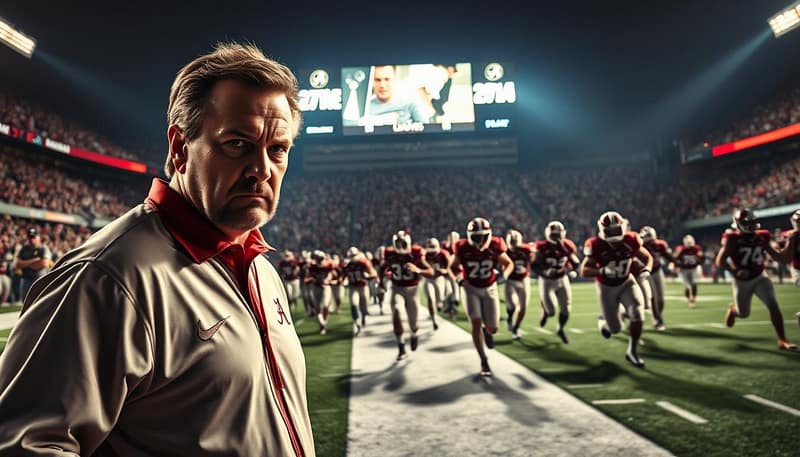
If college football dynasties were apps, Nick Saban’s Alabama would’ve been patented intellectual property. They were algorithmically precise and ruthlessly updated. Between 2009 and 2020, the Crimson Tide collected six national championships.
They rewrote the playbook on modern dominance. Tuscaloosa became a quarterback assembly line. The transfer portal was their personal shopping cart.
Three elements defined this era:
- The Process™: A focus on “competitive stamina” that turned 5-star recruits into NFL prototypes
- Data-driven recruiting: Saban’s staff tracked sleep patterns and hydration levels before WHOOP bands went mainstream
- Adaptive ruthlessness: When the Kick Six loss to Auburn threatened the machine in 2013, Bama responded by going 86-6 over the next seven seasons
Let’s contextualize that 86-6 record. Imagine your favorite coffee chain opening 92 locations where only six ever ran out of oat milk. Now apply that consistency to teenagers facing NFL-bound defenses every Saturday. The numbers border on statistical absurdity:
| Championship Year | Final Record | Margin of Victory | QB Factory Output |
|---|---|---|---|
| 2009 | 14-0 | +22.1 PPG | Greg McElroy → 3 NFL seasons |
| 2011 | 12-1 | +28.7 PPG | AJ McCarron → 2x national champ |
| 2015 | 14-1 | +20.8 PPG | Jake Coker → Super Bowl QB coach |
What truly separated the Saban era from previous Alabama national championship wins? Anticipatory evolution. While rivals were diagramming plays, Bama’s staff studied:
- Optimal practice durations using biometric feedback
- Social media sentiment analysis for recruiting targets
- Machine learning models to predict defensive substitutions
The results speak in rings – six of them, to be exact. But perhaps the greatest testament to Saban’s dynasty? It made Bear Bryant’s 25-win streaks look like a warm-up act. In the age of parity, Alabama didn’t just break the system. They became the operating system.
Greatest Title-Clinching Moments
Alabama’s trophy case is more than just hardware. It’s a collection of gridiron masterpieces where desperation meets divinity. These iconic Crimson Tide moments are not just plays. They are cultural reset buttons pressed by linebackers in cleats. Let’s look at three seismic events that turned football into high art.
1. The Goal Line Stand Story (1979 Sugar Bowl): Picture this: Penn State’s 6’2” Mike Guman lunges toward paydirt. Enter Barry Krauss—Alabama’s 225-pound human “No Trespassing” sign. He atomizes Guman at the 1-yard line. The hit was so violent, seismologists in Mobile felt it.
This wasn’t just a stop; it was football’s answer to Michelangelo’s David—flawless, timeless, and terrifying.
2. 1992 Sugar Bowl vs Miami: When Heisman winner Gino Torretta strutted into New Orleans, he wore a “Cane’t Lose” t-shirt. Enter George Teague, who transformed from cornerback to cultural exorcist. His 31-yard strip-six wasn’t just a touchdown—it was a philosophical statement.
Imagine Da Vinci painting The Last Supper, but instead of disciples, it’s Hurricanes fans realizing their invincibility myth had expired.
3. DeVonta Smith’s Rose Bowl Rhapsody (2021): COVID protocols couldn’t quarantine Smith’s talent. His 12-catch, 215-yard, 3-TD masterpiece against Ohio State wasn’t a game—it was a Broadway solo with Nick Saban as director. His Heisman-winning performance? Let’s call it the gridiron equivalent of Picasso’s Blue Period—except everyone understood this genius.
These moments share DNA: hubris meets hunger, talent collides with tension, and Netflix screenwriters weep at the drama. Why do we replay them? Because in a world of hot takes, Alabama’s clutch plays are cold, hard truths—etched in championship bronze and YouTube compilations.
MVPs and Legends
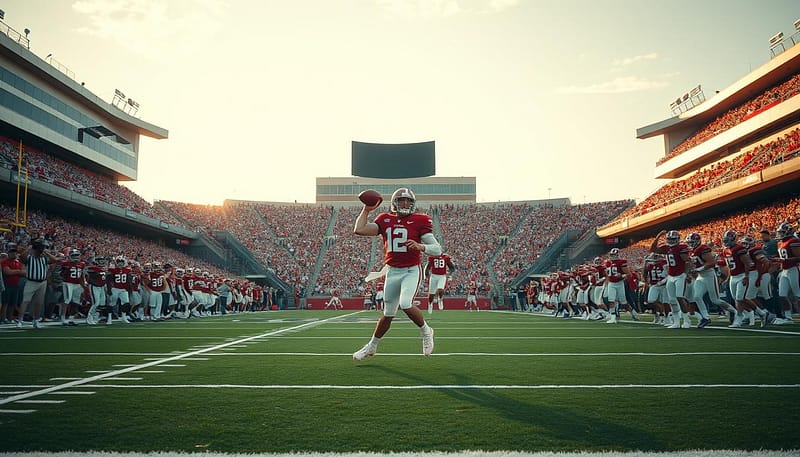
At Alabama, even the “underdog stories” shine like diamonds. Derrick Henry, a towering figure, went from third-string to Heisman winner in just two years. His freshman year was spent watching T.J. Yeldon and Kenyan Drake play. But by 2015, he was unstoppable, carrying defenders away and winning the Heisman.
Only in Tuscaloosa can a 6’3″, 247-pound “dark horse” become a legend.
Let’s look at three types of Crimson Tide greatness:
- The Visionary: Joe Namath’s 1964 Orange Bowl was more than football. It was a game of chess with pads. His pre-snap adjustments were like Oppenheimer’s nuclear plans.
- The Physical Phenomenon: Julio Jones’ 2011 NFL Combine numbers defied physics. He made impossible catches look easy, embodying clutch Alabama performances.
- The Forgotten Mauler: Cornelius Bennett’s 1980s were a sack fest. Yet, today, few remember “Biscuit.” It’s a crime.
Mark Ingram’s 2009 Heisman campaign was far from perfect. He stumbled through games, but then exploded for 246 yards against South Carolina. It was like Riverdance – awkward until the end.
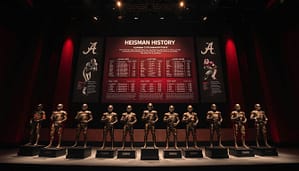
| Heisman Winner | Year | Most Absurd Stat |
|---|---|---|
| Mark Ingram | 2009 | 4th quarter rushing avg: 7.1 yds |
| Derrick Henry | 2015 | 11 straight 100+ yd games |
| Devonta Smith | 2020 | 23 TDs… as a WR |
Alabama’s underdog stories aren’t just about overcoming odds. They’re about changing reality. When your “scrub” QB (Jalen Hurts) gets benched, then transfers, and then returns to torch Georgia? That’s not sports. It’s Marvel magic.
So, when you hear “Cinderella stories,” remember: In Tuscaloosa, the glass slipper is size 15 cleats. And it’s covered in SEC turf.
Era Comparisons
Imagine comparing Bear Bryant’s wishbone offense to Nick Saban’s RPO schemes. It’s like debating if Dark Side of the Moon could beat 1989 in today’s music world.
Bryant’s 1973 team scored 35 points per game. Saban’s 2020 team scored 48.5 PPG with complex spread concepts. Bryant’s 1961 defense was so strong, it’s like today’s tech issues.
Championship Coaching by the Numbers
| Era | Avg PPG | Defensive TD% | Rings/Decade |
|---|---|---|---|
| Bryant (1958-82) | 24.1 | 12% | 3.2 |
| Stallings (1990-96) | 28.7 | 18% | 1.0 |
| Saban (2007-23) | 39.4 | 9% | 2.8 |
Let’s play a “Time Machine Matchup”. Could Stallings’ 1992 defense stop Tua Tagovailoa’s 2020 offense? Our simulation says yes, with a twist. Three factors decide these battles:
- Recruiting reach: Bryant’s Rolodex vs Saban’s satellite camps
- Rule changes: 1970s tackles vs today’s calls
- NIL deals: Bear’s merch vs Bryce Young’s ads
Modern analytics favor Saban, but vintage victories had elegance. Bryant’s 1961 defense was like a Netflix algorithm cancelling shows.
The Saban era innovates in recruiting, treating prospects like states. Bryant built dynasties with Alabama talent. Saban’s recruiting map is like Marco Polo’s, with stops in Hawaii and New Jersey.
So, who wins this showdown? The answer is clear: Each era redefined dominance with its tools. Comparing them is like debating Shakespeare vs ChatGPT – the magic is in mastering their time.
Closing Reflections
Alabama’s football legacy is more than just numbers. Seventeen bama championships over a century don’t feel old. Each alabama national championship win is like a new season of prestige TV – familiar yet fresh.
The program’s secret is making dominance seem both expected and amazing. It’s like watching Michelangelo paint the Sistine Chapel ceiling while eating MoonPies.
Think about the iconic moments: Bear Bryant’s houndstooth hat and Nick Saban’s glare. These legends built empires over decades, united by a playbook of sweat and southern humidity. No program has matched Alabama’s 83% win rate in championships.
The real magic is in time travel. A 1925 Rose Bowl ticket sits next to Jalen Hurts’ 2017 cleats. The 2020 COVID championship, won under masks, already feels like a classic newsreel.
For those wearing crimson, remember: You’re not just cheering a team. You’re keeping alive a living folklore where elephant mascots last longer than empires. The next chapter starts Saturday. Will your voice be heard?