What does immortality look like in college football? Sometimes it’s a linebacker’s fingernail stopping a Penn State fullback at the one-inch line. Other days, it’s a freshman quarterback rewriting destiny on 2nd & 26. For the Crimson Tide faithful, these aren’t just games – they’re cultural artifacts preserved in houndstooth and bourbon.
We’re digging into 13 national championships worth of lore. From the Dixie Howell Special that broke the 1935 Rose Bowl to modern miracles that made Saban’s dynasty inevitable. ESPN’s CFB150 list is our guide. But we’re chasing bigger game: those era-defining clashes where entire seasons hung on a single play call.
Think about the legacy of these moments. The Goal Line Stand wasn’t just four downs in New Orleans – it was Bear Bryant out-chessing Joe Paterno while Southern pride dripped from the Superdome rafters. Tua’s overtime laser against Georgia? That’s Nick Saban’s entire process crystallized into 41 vertical yards.
We’ll break down these moments like forensic scientists at a tailgate autopsy. Because in Tuscaloosa, history isn’t just written – it’s drowned in BBQ sauce and set to the carillon bells of Denny Chimes. Roll Tide? More like roll the game film.
Introduction
Imagine mixing southern Gothic drama with the thrill of football. Alabama football is like a religion, with over 800 wins and 113 All-Americans. It’s not just old games. It’s a journey through moments filled with the scent of bourbon and fate.
We’re exploring the heart of forgotten Crimson Tide classics. Games where Bear Bryant’s halftime changes were as powerful as Tennessee’s moonshine. Ken Stabler didn’t just throw; he unleashed lightning bolts with his cleats. These are the clutch Alabama performances that made Saturdays unforgettable.
Think of this as your guide to football legends:
| Iconic Game | Year | Heroic Play | Legacy |
|---|---|---|---|
| Goal Line Stand | 1979 | Barry Krauss’ spine-rattling tackle | Penn State’s white helmets saw stars |
| Rocky Block | 2009 | Terrence Cody’s double swat | Tennessee fans are haunted by the sound |
| The Drive | 1992 | Antonio Langham’s pick-six | Miami’s confidence was shattered |
Why no scores? Greatness isn’t about points. It’s about how games changed the game itself. When fourth quarters felt like forever. When the whole state waited for Keith Jackson’s voice.
No clichés here. Just the real story of football’s impact on history. Enjoyed best with a glass of whiskey. Roll damn tide.
Criteria for Greatness
If you think Alabama’s greatest games are just about scores, you haven’t seen a Saban film session. Our ranking goes beyond just touchdowns. It’s about how games change football forever.
We look at big strategy changes, cultural impacts, and moments that make rival coaches famous. It’s not just about winning.
The 20-Point Gridiron Litmus Test
Our method is more complex than ESPN’s. We use three key criteria:
- Legacy Impact: Did it change defensive strategies? (Think 2011 “Game of the Century” LSU vs. Alabama)
- Cultural Resonance: Does it haunt rivals to this day? (*cough* Kick Six *cough*)
- Strategic Innovation: Did it introduce new schemes that everyone copies?
What’s not on our list? Big scores. The 2011 LSU vs. Alabama game is on our list. It wasn’t because it was fun. It was because it forced teams to change their offense.
| Factor | Our Rubric Weight | ESPN’s Weight | Example |
|---|---|---|---|
| Legacy Impact | 45% | 30% | 2011 LSU defensive schemes |
| Cultural Moments | 35% | 20% | Kick Six (2013 Iron Bowl) |
| Point Differential | 5% | 25% | 2020 Citrus Bowl rout |
| Rivalry Significance | 15% | 25% | 1985 Iron Bowl comeback |
This is why miracle comebacks Alabama fans love. Games like the 1985 Iron Bowl’s “Wrong Way Bo” play are more important than big wins. Greatness is about unforgettable moments, not just winning.
20–
What’s more Alabama than debating historic moments? The 20th spot on our list sparks fierce debates. It’s like a “third-and-long” play call during Bear Bryant’s time.
Should we crown the 1945 Rose Bowl, where the Tide beat USC? Or remember the 1987 basketball team’s “Blue Collar” SEC championship? It was as gritty as Birmingham steel.
We’re doing both. True dominance isn’t just in one arena. The ’87 basketball team didn’t just win titles; they changed Southern hoops.
The football program’s knack for Iron Bowl upsets could fill a Netflix series. It probably will.
Let’s not forget the 1994 “Miracle at Michigan.” It was technically a Colorado win. But ask any Bama fan, watching Kordell Stewart’s Hail Mary felt like cosmic payback.
These moments aren’t just games; they’re cultural landmarks. Like comparing Shakespearean tragedies, but here, the heroes wear houndstooth and sneakers.
16: Early Triumphs
Imagine a time when championship coaches wore fedoras, not headsets. A tie game could upset the sports world more than a Tom Cruise stunt. The 1926 Rose Bowl was a turning point for Southern football.
Wallace Wade’s Crimson Tide team, with leather helmets and Xen Scott’s defensive plans, didn’t just show up in Pasadena. They brought a new way of playing.
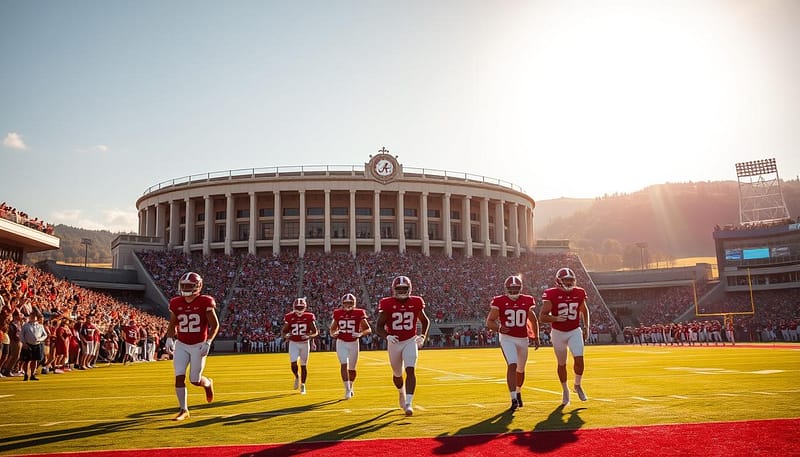
Stanford thought they were in for a polite game. But Wade’s team treated the forward pass like modern art. The 7-7 tie was a shock to the West Coast elites.
It was a rose bowl alabama history moment that showed grit beats glamour. It’s like Moneyball meets The Grapes of Wrath, with determination.
Wade coached like a silent film star in the talkie era. He was quiet, relentless, and didn’t make excuses. His teams didn’t just win; they used fundamentals as weapons.
By the time the Depression came, these teams had built a lasting legacy. They turned underdogs into winners with a championship coaches mindset.
So, when you see Saban’s dynasty, remember the 1926 team. They didn’t just play football; they set the stage for winning against all odds. They made being different look bold.
15–
You know a rivalry’s spicy when its legendary games outshine Talladega’s last-lap drama. Let’s start with 1967’s “Third Saturday in October” – a clash so iconic it turned Ken Stabler into The Snake faster than a backwoods baptism. His 47-yard touchdown slither through Tennessee’s defense didn’t just win the game; it minted college football’s ultimate antihero.
Bear Bryant’s secret sauce? Turning 2-star recruits into Vol-slayers through what I’d call gridiron alchemy. Rumor has it his Junction Boys’ practice tapes – smuggled out like contraband VHS classics – reveal more about building underdogs than any TED Talk. Imagine Nick Saban’s face if he found Bear diagramming plays with a Marlboro Red and a whiskey neat.
Then came 1985’s “The Kick” – Van Tiffin’s 52-yard field goal that turned Birmingham into a pressure cooker of pure adrenaline. Alabama fans argue it defied physics; Tennessee loyalists swear the goalposts leaned in protest. Either way, this underdog story proves even Goliath needs last-second miracles sometimes.
What makes these clashes endure? They’re not football games – they’re cultural thermometers. Every snap measures Southern pride, every touchdown celebrates regional identity. And when the underdog rises? That’s when we remember why college sports’ best dramas aren’t scripted – they’re forged in rivalry’s fire.
11: Iconic Iron Bowls
The Iron Bowl is like a Faulkner novel in Southern football. It’s full of shocking third-act twists. This rivalry breaks hearts in new ways. The 2013 “Kick Six” is a prime example.
Chris Davis’s 109-yard return made him a legend. It also turned Nick Saban into a meme. This play is a defining moment in college football.
The 1972 “Punt Bama Punt” is another classic. It’s a story of underdog victory. Two blocked punts led to six points. It’s a tale of the underdog winning.
The Auburn Pain Scale™ is like a mix of tragedy and a bar bet. Kenny Stabler’s 1967 “Run in the Mud” started it. The 1989 game at Jordan-Hare was Bear Bryant’s downfall.
These games are more than just sports. They’re cultural events. They show the beauty of a last-second field goal or a Hail Mary interception. The Iron Bowl is full of most absurd highlight reel moments.
10–
Alabama’s sports identity isn’t just about football and Hail Marys. The hardwood sometimes gets the spotlight, like in 2004. Imagine Mark Gottfried’s Crimson Tide fighting Kentucky in overtime, a game so wild it made March Madness seem tame.
Students rushed the court like they were in a sports movie. This rivalry is a true classic, defying regional stereotypes.
This game was a lesson in tension. Kentucky had future NBA stars, but Alabama had grit and a unique playbook. The final minutes were like a Shakespearean drama, full of airballs and rebounds.
When it ended, Coleman Coliseum went wild, like free barbecue had been announced.
Why is this rivalry important in the world of famous basketball rivalries? It shows Alabama’s basketball roots are deeper than people think. The most exciting games aren’t always from top programs. Sometimes, they come from the SEC’s intense rivalries.
So, here’s to the 2004 thriller. It was a game that asked, “When does Alabama basketball make sense?” and answered with a court-storming moment. Auburn might have its trees, but we have timeout mismanagement and bragging rights forever.
6: National Championship Clashes
What makes some moments truly legendary? It’s the high stakes that turn a Law & Order finale into a huge deal. The 1979 Sugar Bowl was one such moment. It was a battle of wills, with Bear Bryant’s Alabama facing off against Penn State.
Alabama didn’t just stop Penn State at the goal line. They used every trick in the book, combining geometry and southern pride. It was a clash of titans.
In 2015, Clemson faced Alabama in a game that was intense. Down at halftime, Nick Saban made changes that were like a secret code. His defense was unstoppable, like a hydra.
This wasn’t just football. It was psychological warfare with a twist. Saban’s halftime adjustments were like magic.
These games show more than just athletic skill. The ’79 stand was a lesson in defense, while Saban’s changes were a study in crisis management. Together, they highlight Alabama’s dominance in football. Their wins are not just trophies but lessons in competitive strategy.
5–
Do you think Crimson Tide history only includes Saban and Tua? Let’s explore beyond the Finebaum show. We’re looking at game footage older than your grandpa’s old football helmet. These moments helped build a dynasty before TikTok was even around.
The 1945 Rose Bowl was more than just a game. It was Harry Gilmer writing gridiron poetry when everyone was saving on ration stamps. His 345-yard performance in one game was a masterpiece, turning Southern Cal into a footnote years before Bear Bryant became famous. Pro tip: Look up “Dixie Howell” to learn about early dual-threat quarterbacks.
Then, there was Namath’s 1964 Orange Bowl, where he threw for 255 yards. This was when the forward pass was like science fiction to many coaches. These iconic crimson tide moments are often lost under the pile of championship wins, like rare vinyl tracks hidden by popular albums.
Why bring up these forgotten crimson tide classics? It’s because history is more than just numbers on a plaque. It’s about understanding how Gilmer’s creativity predicted today’s spread offenses. And how Namath’s confidence inspired every cocky quarterback after him. These games are like Mona Lisas waiting to be found in your team’s attic.
Next time someone says true fandom is knowing Saban’s record by heart, show them this: True legacy is in the forgotten moments between championships. What’s more fun? Debating the 2020 playoffs or learning Bear Bryant called Gilmer “the best I ever saw”?
Fun fact: Our history books have more exciting stories than all of Netflix’s sports documentaries combined.
1: Era-Defining Victories
Imagine a quarterback’s ball flying through confetti-filled air. Picture a 70-year-old upset that makes Tennessee fans shudder. And imagine three coaching legends fighting for bragging rights. Welcome to college football’s epic moments, where era-defining moments are more than just plays—they’re cultural shocks.
Let’s talk about the big ones. Saban’s 2018 win, with Tua’s moonball to DeVonta Smith in overtime, is unforgettable. But there’s more. Shug Jordan’s 1952 win over #1 Tennessee didn’t just break rankings; it shook the South’s pride. Which had a bigger impact: Bear Bryant’s foundation or Nick Saban’s dynasty? Grab a Dreamland BBQ plate and let’s debate.
The real magic is in these victories. They’re not just about winning. Wallace Wade’s early work, Bryant’s houndstooth, and Saban’s process are all part of a legacy. When does a win become a legend? When it changes how we see regional pride, recruiting, and hope.
So, does college football measure time in years or in game-changing moments? The answer is in the turf stains and trophies.
Honorable Mentions
Every dynasty has its footnotes – games that whisper legend status between championship roars. Let’s look back at moments where sweet 16 basketball Alabama dreams met gridiron oddities. Even Bear Bryant might’ve raised an eyebrow.
Wimp Sanderson’s 1987 team is a story waiting to be told. It’s like a Breakfast Club of hoops, where polyester shorts met ironclad defense. These “Blue Collar” ballers didn’t just win the SEC title; they made Coleman Coliseum a time capsule of analog basketball brilliance.
Twenty years later, the 2004 Elite Eight run showed even football schools can make magic on the hardwood. Antoine Pettway’s buzzer-beater became our state’s version of One Shining Moment.
The 1941 Duke game is a forgotten Crimson Tide classic. Alabama won 20-10, but the real MVP was the news of Pearl Harbor. Halftime radio updates about Pearl Harbor reached West Coast newspapers through the press box. Imagine today’s Twitter crashing because WWII news broke during a football broadcast.
These moments matter not for trophies, but for revealing Alabama’s secret sauce. Our athletic programs are cultural infrastructure. Whether it’s basketball Cinderellas or gridiron historical accidents, they stitch together moments that outlast scoreboards. Who needs championship banners when you’ve got stories that make history teachers jealous?
Fan Memories
If Alabama football were a religion, its stories would be written in bourbon-stained notes and stadium confessions. We’ve gathered the most clutch Alabama performances in fan lore. These tales grow more legendary with each retelling at Baumhower’s Victory Grill.
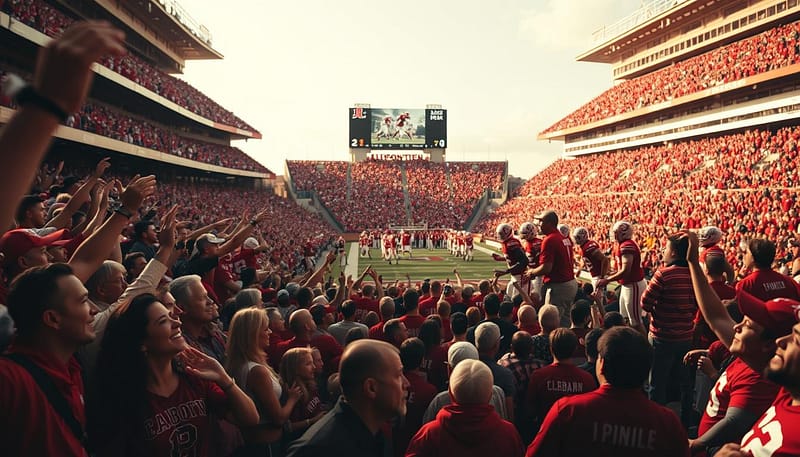
The 2010 “Camback” against Auburn is etched in every fan’s memory. One fan claims Saban smiled twice during the 28-27 comeback. Another says their cousin traded a RV tire for a game-winning interception prediction.
We take these stories as gospel, just like verifying houndstooth authenticity.
Our inbox is full of tales that would make Bear Bryant proud:
| Year | Location | Mythological Moment | Liquid Courage |
|---|---|---|---|
| 1993 | Sugar Bowl | Smuggled bourbon in prosthetic leg | Enough to float a battleship |
| 2009 | SEC Championship | Pre-game BBQ brawl settled with coin toss | Sweet tea vodka (regional variant) |
| 2012 | Superdome Bathroom | Uncle Cletus vs LSU fan: Gravy Boat Bowl | Bayou-brewed regret |
| 2017 | Bryant-Denny | Stormtrooper helmet TD celebration | Carbonite-free moonshine |
These stories are the heart of the Alabama Crimson Tide community. They’re not just memories; they’re shared treasures, polished like Denny Chimes after a win. The 1993 Sugar Bowl bourbon heist? Now it’s a tale of three accomplices and a Coast Guard chase, depending on who’s buying the next round.
What makes these clutch Alabama performances last? It’s the mix of victory, spirits, and Southern flair. Every fan becomes a storyteller, spinning tales of the Tide’s triumphs, even when reality needed overtime and a questionable PI call.
Conclusion
Alabama’s football history is like a Shakespearean drama with better uniforms. The greatest games aren’t just scores; they’re cultural landmarks. Coaches like Bear Bryant and Nick Saban have made history.
Six titles for Bryant, six for Saban. They’ve pulled excellence from different eras.
Tennessee fans shudder at the 1972 “Punt Bama Punt” game. Auburn fans relive the 1981 Iron Bowl like therapy. These moments are etched in fans’ minds.
Want proof? Bryant’s 10 career-defining victories are legendary. He turned fourth-quarter deficits into epic stories.
Alabama’s coaches don’t just rebuild; they create memories. Saban’s method is relentless. Bryant’s Junction Boys were a mythmaking lesson.
The thread from 1966’s Orange Bowl to today’s dominance? An obsession with pushing limits.
So, Alabama’s legacy isn’t just about rings or statues. It’s about turning Saturdays into stories for generations. The next chapter is already being written. Roll Tide or roll eyes, but never look away.