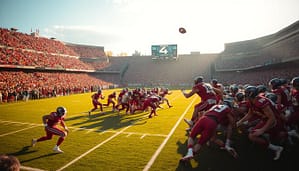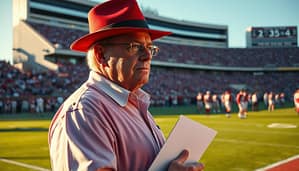
What does a houndstooth hat have in common with a lightsaber? Both became symbols of unlikely power structures reshaping their universes. Alabama football didn’t just win games – it staged mythological events where cleat marks left permanent scars on American culture.
The 1926 Rose Bowl wasn’t just a game – it was the South’s Rebel Alliance moment. An undermanned Alabama squad shocked Washington, making northern sportswriters suddenly care about teams below the Mason-Dixon Line. Fast forward to 1979’s Goal Line Stand against Penn State, where Bear Bryant’s defense became the Confederate statue Southerners actually wanted to keep.
Nick Saban’s reign turned this cultural alchemy into science. His six titles from 2009 didn’t just dominate scoresheets – they created a blueprint for modern dynasties across sports. The 2015 championship’s racial subtext (44% Black players vs. 13% state population) revealed more about Alabama’s evolution than any political campaign ever could.
These weren’t victories. They were tectonic plates shifting under stadiums – the exact moment college football’s Jedi Council realized the Death Star plans had been stolen…and improved.
What Makes an Era-Defining Win?
Is a football game legendary because it set records or because it changed society? Alabama’s iconic crimson tide moments are more than touchdowns. They’re time capsules that show racial progress and coaching brilliance.
- Cultural Shockwaves: The 1970 USC-Alabama game didn’t just integrate Southern football. It changed the region’s identity during desegregation.
- Strategic Sorcery: Saban’s seven titles in 17 years show a pattern. His teams perform best when everyone expects them to fail.
- Narrative Flair: The 1992 Sugar Bowl was more than a championship. It was a dramatic comeback, like a Shakespeare play.
Bear Bryant’s 1979 team is a great example. Their “Goal Line Stand” against Penn State was more than defense. It was a symbol of healing for America after Vietnam.
| Game | Cultural Impact | Strategic Innovation | Legacy Duration |
|---|---|---|---|
| 1979 Goal Line Stand | Restored Southern football pride | 4-down defensive philosophy | 45+ years |
| 1992 Sugar Bowl | Modernized SEC recruiting | Hurricane no-huddle offense | 30+ years |
| 2009 Title Run | Reaffirmed Saban’s dynasty blueprint | Pro-style defense adaptation | Active influence |
Alabama’s clutch performances are like gridiron operas. They mix strategy with deep meaning. Harper Lee’s Alabama knew this, seeing football as a story, each play a chapter in a Southern Gothic tale.
1926 Rose Bowl
An all-white Alabama team set off for California in 1925. Their journey was marked by segregation. But they carried something powerful: proof of concept.
Alabama’s 20-19 win over Washington marked their first national title. It sparked a college football culture war. Grantland Rice’s writings became a propaganda machine, highlighting “Southern speed.”
Northern papers mocked this, while Southern ones saw it as a form of Reconstruction. This event changed everything.
Three major changes came from Pasadena:
- Legion Field’s marble columns seemed like a cathedral
- SEC recruiting went northward
- Football became a sport and a social test
| Pre-1926 Perception | Post-1926 Reality | |
|---|---|---|
| Southern Football | Regional curiosity | National blueprint |
| Race Relations | Jim Crow travel | Integrated stadiums (sort of) |
| Media Coverage | Northeastern focus | National beat writers |
The Rose Bowl boosted Southern cultural legitimacy more than any speech. It created a “us vs. them” myth, despite racism. This irony is as thick as Southern sweet tea.
Wade’s team was greeted by 15,000 fans at Birmingham’s Terminal Station. This event had lasting cultural impacts. Next time you see an SEC team dominate, remember 1926’s revolution.
The Goal Line Stand (1979)
Imagine 353 pounds of power crashing at the 1-yard line. This moment shook the SEC championship and America in the late 70s. The 1979 SEC Championship Alabama game was more than football. It was a clash of titans, a battle of wills.
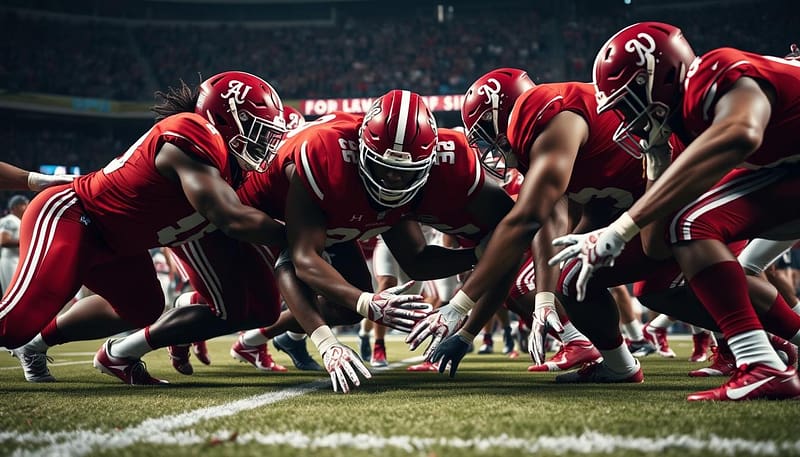
Barry Krauss’ hit on fourth down was a turning point. Alabama’s defense became heroes, stopping Penn State cold. The stats show Penn State only got 19 rushing yards. But the real story was the mental game.
Modern analysts say it was a turning point for wishbone offenses. Bryant’s strategy was like a chess match. It’s a story that’s “the cultural tipping point where wishbone offenses met their match.
Bryant’s tactics were simple yet effective. He used fewer moves but executed them flawlessly. It’s like Obama’s 2008 Iowa strategy – out-prepare and out-discipline opponents.
The goal line stand story is more than just tackles. It’s about timing and symbols of strength. As Reagan campaigned, Alabama’s defense became a symbol of American grit. Even the cigar smoke seemed to plot plays in midair.
1992 Sugar Bowl
If 1992 had a soundtrack, it would’ve mixed “Run Forrest Run” with Alabama’s defense taking down Miami. Tom Hanks’ fictional hero jogged across America, while Gene Stallings’ Crimson Tide made a real-life comeback. This upset college football’s establishment like a Miami turnover.
The Hurricanes came to New Orleans with diamond chains and a lot of pride. Alabama, on the other hand, had lunch pails and Langham. When cornerback George Teague stripped Lamar Thomas mid-strut, it was more than a turnover. It was Southern defiance at Bourbon Street temperatures.
Stallings’ team worked like a blue-collar algorithm:
- Crush Heisman winner Gino Torretta’s completion percentage (35.7%)
- Force 4 turnovers from the self-proclaimed “bad boys”
- Let Miami’s trash talk echo in their own end zone
The 34-13 win did more than secure Alabama national championship wins. It rebooted the program’s DNA. Miami’s “Fab Four” receivers were reduced to extras in Bama’s story. This wasn’t just a football game. It was cultural reprogramming, with Langham’s pick-six being like the Berlin Wall’s collapse for SEC traditionalists.
Funny how history works. While Forrest Gump taught America that “stupid is as stupid does,” the ’92 Tide proved gritty is as gritty dominates. Their playbook? Run the ball. Stop the pass. Collect crystal trophies. What’s more American than that?
2009 Title Run
Nick Saban’s arrival in Tuscaloosa was like a game-changing move in college football. While Wall Street was looking for bailouts, Alabama took over the SEC West. They used saban wins, Heisman trophies, and championship confidence to do it.
The 2009 season changed how we value athletes. Mark Ingram’s Heisman was more than a trophy. It showed Saban’s skill in turning 3-star players into valuable assets. Ingram’s 1,658 rushing yards proved Bama’s new offense was unbeatable.
| 2009 Bama Innovation | Wall Street Bailout | Cultural Impact |
|---|---|---|
| Saban’s 2 National Coach of Year awards | CEO golden parachutes | Coaching > Corporate leadership |
| Ingram’s 15.7 carries/game | $700B TARP funds | RB production > Economic stimulus |
| 14-0 record | 9.9% unemployment | Perfect season > Perfect storm |
This wasn’t rebuilding – it was college football gentrification. The Tide’s SEC Championship win was like Mardi Gras beads falling on Bourbon Street. Each crystal football added to Saban’s collection, pushing rivals down the conference ladder.
What made these championship coaches Alabama so formidable? They used scarcity to their advantage:
- Only 1 Heisman winner per generation
- Just 60 minutes to stop the option
- Zero margin for error against Saban’s Process™
While Detroit automakers failed and bitcoin was new, Alabama kept winning. The 2009 title run was the start of college football’s first dynasty of the digital age. And the market? It’s always optimistic about Alabama.
The Kick Six
Some moments don’t just break scoreboards – they break reality itself. The Kick Six was college football’s version of Duchamp’s urinal. It was a work of absurdist genius that made us question everything we knew about rivalry math. How does a program with 15 national titles lose to an unranked team on a play that shouldn’t exist?
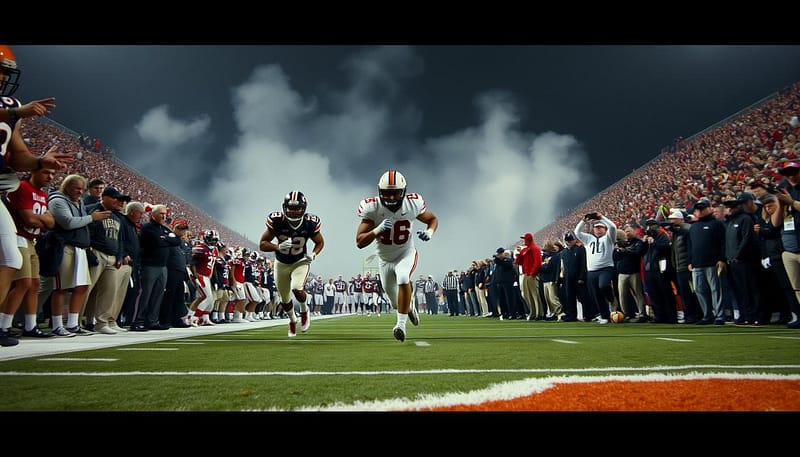
The Iron Bowl had already served us drama for breakfast for over a century. But 2013 was different. It was like Fight Club had come to life. With one second left and a tied game, Alabama coach Nick Saban made a call that was so bold it could’ve been scripted by Kafka: attempt a 57-yard field goal instead of kneeling for overtime. Enter Chris Davis – Auburn’s human cheat code – waiting like a chess grandmaster who’d already predicted checkmate in three moves.
Let’s break down why this play broke analytics models harder than Brexit broke political polls:
- The Yardage Paradox: Davis’ 109-yard return remains physically impossible by Newtonian standards
- Rivalry Alchemy: Turned Auburn from underdog to myth-maker in 13 seconds
- Temporal Whiplash: Alabama’s 99.9% win probability evaporated faster than a Snapchat
This wasn’t just an alabama iron bowl upset – it was institutional vandalism. The play’s cultural afterlife (memes, documentaries, endless debates) proves its power. Like Warhol’s soup cans, it transformed mundane football mechanics into pop art. And like all great art, it asks more questions than it answers: When does strategy become hubris? Can rivalry dynamics ever truly be quantified?
Davis’ dash didn’t just cross a goal line – it redrew the boundaries of what’s possible in college football’s most savage rivalry. The kick six history lesson? Never assume the establishment’s playbook is infallible. Sometimes, the universe prefers poetry over probability.
Lasting Impact
Imagine combining Bear Bryant’s Junction Boys with Nick Saban’s QB lab. You get a coaching Valhalla where SEC dominance is not just tradition, but a science. Alabama’s legacy goes beyond football, influencing basketball too, like Nate Oats’ three-pointers in March Madness.
Let’s look at the numbers like Oats’ team does. The Tide has 18 SEC football crowns from 1992. Basketball has quietly risen too, with 6 conference tournament titles, including the 2023 SEC Tournament win. But there’s more to the story:
| Sport | SEC Titles | NCAA Titles | Defining Era |
|---|---|---|---|
| Football | 29 | 18 | Bryant to Saban (1958-2023) |
| Basketball | 7 | 0 | Oats’ Analytics Revolution (2019-present) |
Saban’s Manhattan Project was all about recruiting top talent. But basketball’s shift under Oats is even more groundbreaking. It’s about using math to outsmart opponents, not just muscle. Imagine Bear Bryant using an iPad to draw up plays – that’s Alabama’s growth in sports.
The LSU-Alabama rivalry is like SEC’s Rome vs. Carthage. From Billy Cannon’s legendary run to Saban’s 7-1 record against the Tigers, these famous LSU-Alabama football games set the stage for conference realignment. Basketball is now heating up too, with the Tide’s 2021 SEC Tournament win over LSU showing that strategy and spirit can win together.
Here’s the key: Bryant’s 1973 wishbone offense and Oats’ modern basketball are related. Both used rule changes to their advantage. Both left opponents in the dust. And both show that Alabama’s secret is not just its red jerseys, but its ability to reinvent games while others stick to old ways.
Fan Reactions
Imagine Bear Bryant’s ghost scrolling Twitter, sipping bourbon as fans dissect the 2023 thriller—a modern Southern Gothic tale. Makers Mark flows as freely as conspiracy theories about referees. The Alabama-Tennessee rivalry doesn’t just divide households; it rewires DNA. My cousin won’t speak to her Knoxville-born husband after the 2009 “Rocky Block” game. Some call it petty. We call it tradition.
Attendance figures tell their own story of obsession:
| Year | Game | Attendance | Legendary Moment |
|---|---|---|---|
| 2023 | Tennessee @ Alabama | 101,821 | Jalen Milroe’s 4th quarter TD scramble |
| 2009 | Alabama @ Tennessee | 102,038 | Terrence Cody’s blocked FG |
| 1985 | “The Kick” game | 95,785 | Van Tiffin’s 52-yard FG |
Twitter meltdowns after these games make Shakespearean tragedies look tame. When Tennessee snapped their 15-year losing streak in 2022, one Bama fan famously tweeted: “I’d prefer to eat glass than hear ‘Rocky Top’ at Walmart again.” Yet beneath the memes and meltdowns lies genuine awe for underdog stories Alabama fans reluctantly admire—like Vols quarterback Hendon Hooker’s 2022 Heisman campaign, born from our own secondary’s incompetence.
Seventy-year-old Mildred Watkins from Tuscaloosa puts it best: “These games ain’t football—they’re family reunions where somebody always brings a casserole of regret.” Her porch swing has hosted viewing parties for 44 years. The swing’s creaks? Just Bear’s ghost approving defensive schemes.
Conclusion
Nick Saban’s retirement has left Alabama football at a turning point. It’s between Bear Bryant’s legacy and the new world of NIL deals. Was his success of six titles in 17 years as great as Shakespeare’s Lear? At least Saban’s decline was celebrated with confetti, unlike Lear’s tragic end.
The Tide’s future is uncertain. It must balance fame on TikTok with winning championships. Can a program known for its houndstooth hats also succeed with blockchain collectibles? Alabama’s recent sweet 16 basketball Alabama success shows it can adapt. But its football era is facing its biggest challenge yet.
Imagine Bryant’s ghost watching player Cameo requests while Saban’s team focuses on NFTs. The magic happens when tradition meets influencer-athletes. Will recruits choose tradition or the freedom of the transfer portal?
Alabama’s secret is its passionate fans. They turned “Roll Tide” into a global meme and made Iron Bowl rivalries legendary. Their support keeps the state’s football alive, even through coaching changes and format updates.
One question remains: Can future teams recapture the magic of the Kick Six and Goal Line Stand? The answer might be found on both the field and social media. Let’s hope for fewer blockchain jokes and more thrilling finishes.