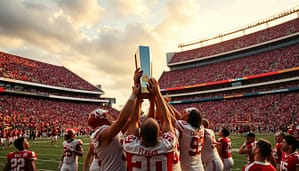
What does a perfect season truly look like? Is it just winning every game, or is it something more profound?
Let’s go back to 1926 Alabama. The Tuscaloosa Black Bears were doing more than just playing football. They were changing the game.
They won every game, outscoring opponents 532-16. That’s not just winning – it’s a statement. Their average of 59 points per game is like Mozart composing music while others struggle.
Their seven consecutive shutouts at the end of the season left a lasting legacy. This wasn’t just winning – it was a form of artistic domination.
The Black Bears’ 61-0-3 run from 1925-1932 is Alabama’s longest streak without a loss. That’s setting a bar so high, it needs its own oxygen supply.
Epic Upsets & Comebacks
When football’s best meets Texas-sized destiny, something special happens. An undefeated Alabama team has faced three epic upsets in bowl games. Each time, they expected to win but got a lesson in fate.
The 1965 Orange Bowl was Bear Bryant’s chance to shine. His 10-0 team was already national champs. But Texas gave them a 21-7 lead at halftime and a thrilling fourth quarter.
Joe Namath’s goal-line sneak was a moment of controversy. It’s like the Kennedy assassination in football. Fans are left wondering if he crossed the line or not.
Eight years later, the 1973 Cotton Bowl brought another Texas showdown. An undefeated Alabama team faced off against Texas again. Alan Lowry’s touchdown run was a topic of debate, but the call stood.
The 1982 Cotton Bowl was the final chapter in this trilogy. Bear Bryant’s team was chasing their seventh bowl win. But Texas scored two touchdowns in the fourth quarter, winning 14-12.
These losses were more than just games. They were dramatic events with questionable calls and injured players. Texas seemed to have a knack for spoiling Alabama’s perfect runs.
What makes these moments unforgettable? It’s the clash of destiny and reality. An undefeated Alabama team doesn’t just lose; it’s outdone by a better story.
The Makings of a Legendary Team
What makes a basketball team truly legendary? It’s not just about talent. It’s about changing the game and winning championships. The 1970s Alabama Crimson Tide did just that, revolutionizing basketball and dominating the SEC.
C.M. Newton took over Alabama basketball in 1968. At first, they were the conference’s bottom team. They won 22 games but lost 54. Then, Newton started recruiting Black athletes, a bold move for the time.
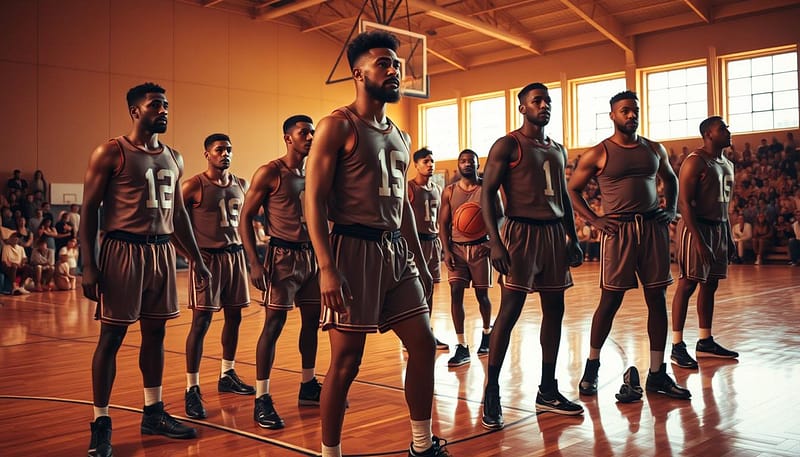
By 1972-73, four Black players were starting for Alabama. This was more than just adding diversity. It was a powerful statement of social change. Wendell Hudson became the SEC’s first Black Player of the Year, twice.
Under Newton, Alabama’s record changed dramatically. They went from 4-20 to 22-8 in just four years. Then, they won three straight SEC titles from 1974-1976. Their 107-30 record over six seasons is impressive.
They averaged 87.6 points per game without a three-point line or shot clock. It was like writing a novel without a key letter. Their offense was groundbreaking for its time.
These history-making teams showed that greatness is more than just talent. It takes courage, vision, and the will to change the game.
Players that Emerged
You don’t stumble into a perfect season by accident. It takes human prototypes who seem to defy physics and common sense. Alabama’s basketball history is a masterclass in evolving athletic development.
Wendell Hudson wasn’t just the program’s first Black scholarship athlete. He was a basketball genius playing with “big trees” from Kentucky and Tennessee. He could grab rebounds at 11 feet, which seems impossible without levitation or a secret pact with gravity.
Then came Leon Douglas, a 6’10”, 230-pound freshman they called “Grandpa.” He dropped 34 points on Kentucky while he was technically learning to shave. His presence in the paint was like architectural renovation.
Charles Cleveland was like Bo Jackson before Bo Jackson became famous. He turned down major league baseball to become a great long-range shooter, even before the three-point line existed. His genius was ahead of its time.
And T.R. Dunn? He defended ball handlers like they were trying to steal nuclear launch codes. His defensive intensity was a psychological warfare tactic disguised as basketball.
These weren’t just players. They were evolutionary steps in athletic development, each adding to seasons so perfect they should be studied like Renaissance art. The perfect season demands perfect players, and Alabama’s history shows they arrived right on schedule.
Media & Fan Reactions
How people react when an undefeated Alabama team loses is a true test of sports culture. Reactions range from sportsmanship to historical revisionism, like something from a Soviet textbook.
In 1926, the Tuscaloosa Black Bears played Chicago’s Senn High School. They won 42-0 in front of 6,000 fans. But years later, Chicago’s school and library erased the game from history.
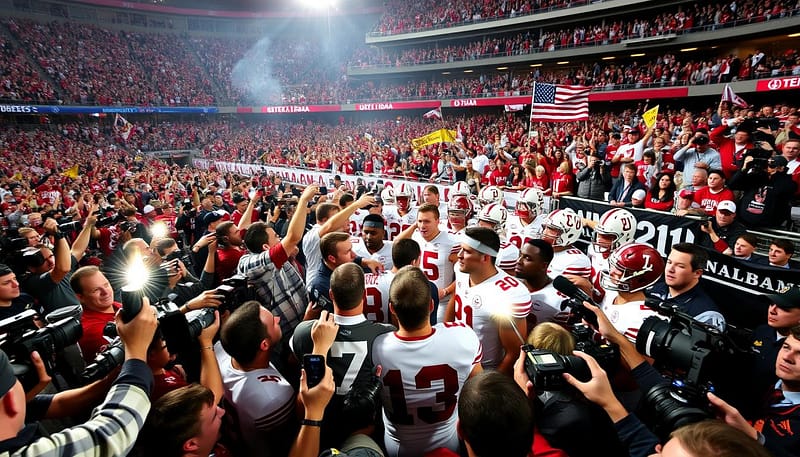
This isn’t just sore losing. It’s like Stalinist history erasure. It makes you question: if a tree falls and the losing team denies it, did it really happen?
Alabama-Texas bowl games brought their own drama:
- Joe Namath always said he scored on a fourth-down sneak in the 1965 Orange Bowl.
- Crimson Tide fans groaned over questionable calls in Cotton Bowls.
- Media coverage was like Greek tragedy, with heroic efforts and controversy.
These stories often became more memorable than the scores. It’s as if we needed a narrative to make up for an undefeated Alabama season being broken.
These reactions create parallel universes of truth. There’s the official record and the version fans and media believe. Both have their own facts, disputed calls, and what-ifs.
The media plays a big role in shaping these stories. They don’t just report on an undefeated Alabama team. They help create myths. Coverage becomes more about understanding the fanbase than just the game.
In the end, these reactions reveal more about us than football. When perfection is disrupted, we get creative. We rewrite, reimagine, and sometimes erase.
For some teams and fans, the worst loss isn’t on the scoreboard. It’s in the history books.
Lessons Learned
What do history-making teams teach us? Winning isn’t just luck. It’s careful planning and hard work. Great teams don’t just win; they create lasting legacies for others to follow.
The 1926 Tuscaloosa Black Bears didn’t just win games. They shaped Alabama football’s future. Their 64-game winning streak set a high standard for the Crimson Tide for years.
The 1970s basketball teams under C.M. Newton showed a remarkable transformation. They went from losing to winning, turning their fortunes around. This was more than just improvement; it was a complete change.
These teams taught Alabama important lessons. They showed the value of recruiting top talent, developing players, and being patient. They proved that even the worst teams can become champions with the right plan.
These history-making teams showed that undefeated seasons are not just luck. They are the result of careful planning and hard work. Their legacy continues to inspire today’s teams, from Nick Saban’s championships to Nate Oats’ tournament success.
Success leaves clues, and Alabama’s greatest teams left a detailed guide for others to follow.
Conclusion
What makes a winning streak truly perfect? It’s not just about winning every game. It’s about the stories, the athletes becoming icons, and games becoming cultural moments.
Alabama’s sports history is full of these moments. The 1926 Tuscaloosa Black Bears didn’t just win; they set a record with a huge scoring margin. The 1970s basketball teams won SEC titles and broke barriers at the same time.
These weren’t just wins; they were statements of excellence and change. Alabama’s greatest teams didn’t just play games; they changed the game. They made seasons into statements and athletes into leaders of change.