
Let’s face it: one conference has been like that friend who always wins at board games. It’s impressive at first, but then it gets annoying.
This powerhouse has dominated for nearly a quarter century. It’s like a giant that swallows any opponent. They’ve won 16 national titles this century alone.
Between 2006 and 2019, they won 13 championships in 17 years. This made the rest of the sport seem like junior varsity. The financial impact was huge.
But things weren’t always this way. The 1990s and early 2000s were quiet times. Then, one coach changed everything.
This success became a symbol of the South’s pride. It showed a region often looked down on by coastal elites could claim superiority as its own.
Most Memorable SEC Title Games
If college football has a modern Colosseum, it’s the SEC Championship. Here, legends are made and dynasties crumble. It’s not just a game; it’s a cultural event where the South holds its breath.
The 2009 title game was more than Alabama versus Florida. It was a moment where Tim Tebow’s tears marked the end of one dynasty and the start of another. Atlanta became a place of legend, where dreams and heartbreak meet.
Then, Georgia’s trilogy of heartbreak began. In 2012, the Bulldogs faced Alabama and fell short. Five years later, a 2017 overtime thriller left Georgia fans stunned. These games were like the SEC’s Thunderdome, where only one team could win.
The 2018 rematch was perhaps the most shocking. Jalen Hurts’ emergence from the bench stunned everyone. These games are more than just titles; they’re about identity and pride.
What makes these title games so special? They’re not just about winning; they’re about who we are. The South’s pride is on the line, turning football into a form of theater. The emotions shown are unforgettable, becoming part of Southern lore.
For a deeper look at these legendary games, check out our analysis of the five best SEC championship games. It explores how these moments shape the conference’s history.
The magic of these title games is their dramatic quality. Heroes emerge, and tragedies unfold. They’re not just games; they’re American stories told on the field.
Standout Players by Decade
Creating an SEC Mount Rushmore would need a lot of space. The conference’s talent is so vast, it’s almost unbelievable. Alabama alone has produced 15 first-round draft picks in 2024.
The system that made these football powerhouses is changing. Texas A&M’s 2022 class was like a dream team. But only six of those players are left at Texas A&M now.
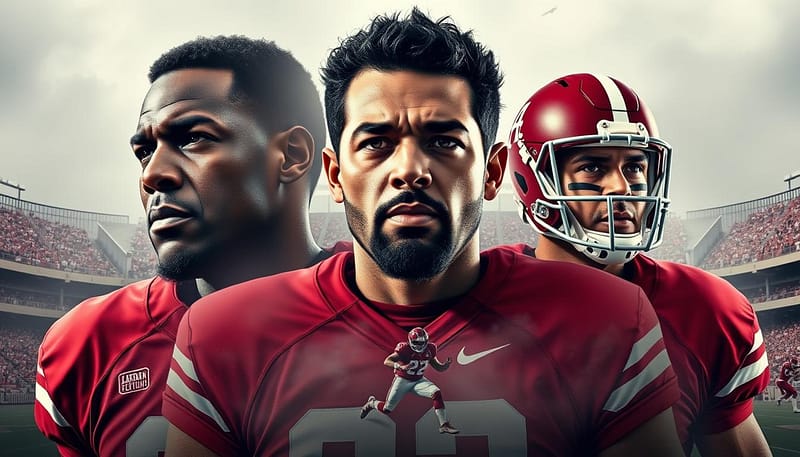
The portal and NIL have changed how players are developed. Programs can’t keep talent locked up anymore. A four-star recruit can now earn NIL money elsewhere, not waiting for a spot on your team.
Kirby Smart has noticed a problem with his team’s depth. He says there’s less experience and attention to detail. The factory for standout players is just updating its process.
| Decade | Program | Standout Player | NFL Impact |
|---|---|---|---|
| 2000s | Florida | Tim Tebow | 2x National Champion |
| 2010s | Alabama | Derrick Henry | Heisman, NFL OPOY |
| 2020s | Georgia | Jalen Carter | Top-10 Draft Pick |
| 2020s | Alabama | Bryce Young | Heisman, #1 Pick |
The SEC’s model for developing players has been unmatched. But now, talent moves through transfer portals, not just traditional paths. This could lead to standout players from more diverse programs in the future.
Alabama’s history shows what focused talent can do. The next decade might show the impact of more spread-out talent. Either way, the SEC remains the top place for college football talent, even with more players leaving.
Key Rivalries
SEC rivalries turn football into a thrilling spectacle. Logic is forgotten, replaced by tradition. These games are like family feuds, but in sports.
The Iron Bowl is the top rivalry in the SEC. Auburn has beaten Nick Saban five times, despite being less talented. It’s a mystery how they do it.
Auburn’s wins against Saban have become legendary. They’re known as “Camback” and “Kick Six.” These names are famous among SEC fans. The Tigers have found ways to outsmart Saban, fueled by magic and rivalry.
The Third Saturday in October was once a big rivalry. But Saban made it one-sided. Tennessee has lost to Alabama 14 times, showing the rivalry’s decline.
Why do Kentucky fans chant S-E-C when Alabama wins? It’s a question with no clear answer. Yet, it’s a big part of Southern football.
Rivalries in the SEC create a sense of community. They’re like family arguments at Thanksgiving. Everyone loves the drama, even if they pretend to hate it.
| Rivalry | Cultural Significance | Notable Streak | Defining Moment |
|---|---|---|---|
| Iron Bowl | Conference’s premier rivalry | Auburn 5-9 vs Saban | Kick Six (2013) |
| Third Saturday in October | Historic border war | Alabama 14-0 under Saban | Tennessee’s last win (2006) |
| Deep South’s Oldest Rivalry | Auburn-Georgia tradition | Georgia recent dominance | 4th & 17 conversion (2023) |
| Egg Bowl | Mississippi family feud | Ole Miss 3-2 last 5 | Pepper spray incident (2019) |
Coach Contributions
If college football were a corporate merger, SEC coaching would be the hostile takeover that redefined industry standards. The conference’s dominance isn’t just about talent—it’s about institutionalizing excellence through leadership that would make Fortune 500 CEOs blush.
Nick Saban didn’t just win games; he engineered an ecosystem. His process-oriented approach turned Alabama into what analysts call “the football equivalent of Amazon’s fulfillment center”—predictable, efficient, and devastatingly effective. While other programs chased flashy innovations, Saban mastered the art of doing ordinary things extraordinarily well.
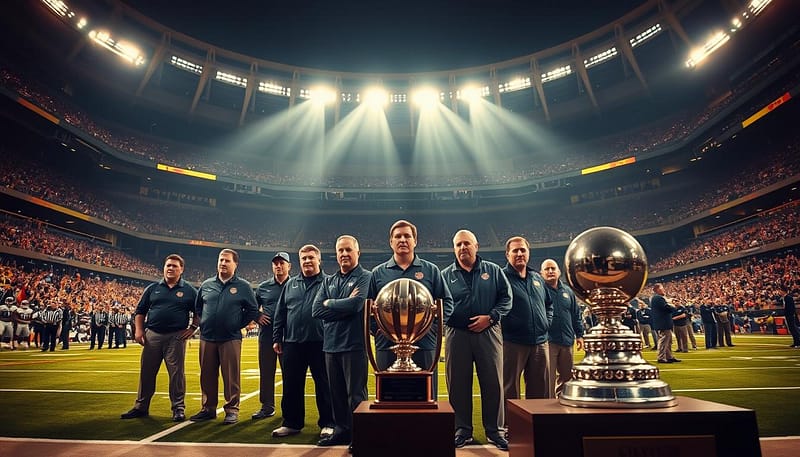
The Saban coaching tree presents a fascinating case study in leadership transfer. For every Kirby Smart who successfully adapted the system at Georgia, there were multiple disciples who learned a brutal lesson: replicating the process requires more than just mimicking the playbook.
Consider the statistical reality: Saban’s former assistants who became head coaches elsewhere combined for a .500 winning percentage outside his shadow. Yet Smart’s Georgia program now mirrors Alabama’s operational precision, proving that the system can travel when implemented by the right architect.
What makes Smart’s success remarkable? He didn’t just copy the blueprint—he evolved it. While maintaining Saban’s disciplinary standards, he injected more offensive creativity, creating what analysts call “Saban 2.0 with better passing concepts.”
The coaching carousel reveals deeper patterns about SEC championships sustainability. Programs that consistently contend—Alabama, Georgia, LSU—share a common trait: institutional memory through coaching continuity. Schools that frequently change leadership often resemble startups trying to compete with established corporations.
Current SEC coaching rankings show an interesting evolution: the conference is moving toward CEO-style head coaches who manage systems. This professionalization of the role might be Saban’s most enduring contribution—even beyond his six national titles at Alabama.
The numbers don’t lie about coaching impact. During Saban’s tenure, Alabama accounted for 40% of all SEC national championships. This dominance created a fascinating paradox: the same coach who elevated the conference’s prestige also made it increasingly top-heavy.
Yet the true measure of coaching greatness might be how you transform your competitors. Saban’s success forced every SEC program to upgrade their facilities, increase recruiting budgets, and professionalize their operations. The entire conference elevated its game trying to catch one man—the ultimate backhanded compliment to coaching impact.
As we look toward the future, the coaching landscape continues evolving. The transfer portal and NIL have created new variables that require adaptive leadership. The next generation of SEC champions will be won by coaches who can balance process with flexibility—the ultimate test of leadership in modern college football.
What’s Next?
Remember when the SEC championship felt like a national semifinal? Those days might be over faster than a Saban halftime adjustment. The conference faces its first existential crisis, similar to when dial-up internet was the norm.
For two straight seasons, the SEC hasn’t even sent a team to the national title game. That’s like Apple missing the smartphone market. The expanded 12-team playoff was supposed to be our birthright – instead, it made the league more vulnerable last season.
On the other hand, the Big Ten’s back-to-back championships created doubt. The tectonic plates have shifted with three seismic changes:
- NIL money redistributing talent
- The transfer portal creating free agency
- Playoff expansion diluting conference dominance
The result? Those NFL-laden rosters are becoming nearly impossible to maintain. Talent is dispersing like crowd noise at a neutral site game.
Texas coach Steve Sarkisian nailed it: “We’ve got to be light on our feet. It feels like on a weekly basis something new is coming… if you don’t adapt to it, the game will pass us by.”
The real question isn’t whether the SEC will remain relevant. It’s whether conference pride even matters anymore when the Big Ten stretches from New Jersey to California and the ACC includes Pacific Ocean schools.
Future title games might feature more conference logos, but less conference identity. The answer will determine whether the SEC’s soul survives or gets sanded down into television-dollar-driven homogeneity.
One thing’s certain: the days of automatic SEC supremacy are over. The new era demands adaptation, not tradition. The conference that invented modern college football must now reinvent itself.
Conclusion
So, what’s the SEC’s future? It’s a story of tradition and change, like a Southern gothic tale. The “It Just Means More” slogan is more than marketing. It’s a proud statement of the South’s elite status, a feeling that’s been missing for a long time.
The SEC is a powerhouse on Saturdays, despite what people think. But the biggest challenge isn’t rival teams or the new NIL rules. It’s the way TV money is making college football too uniform, losing the local charm.
Games like Auburn vs. Alabama are at the heart of this. They’re not just games; they’re community events. They bring people together, showing the importance of connection in the South.
The future is unclear. Will the SEC keep its special place, or will college football lose its unique flavor? Tailgates will keep going, rivalries will continue, and “S-E-C!” chants will echo. Football is more than a game here; it’s the South’s soul, with Alabama’s legacy at its core.