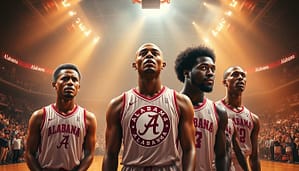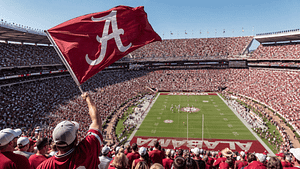
Imagine a football program where legends grow as thick as kudzu vines. Alabama’s gridiron reality is a place where Bear Bryant’s houndstooth hat casts a shadow as big as Gandalf’s staff. For 130 years, this factory of football excellence has churned out more stars than a Marvel crossover event.
Let’s crunch numbers like a mathlete with espresso: 13 national championships, 47 AP poll appearances, 22 SEC titles. These aren’t stats – they’re receipts proving Crimson Tide legends didn’t just play football, they reinvented it. Mark Ingram, the human bulldozer, turned Heisman voters into fanboys in 2009. His trophy now sits alongside Bear Bryant’s hat as sacred program relics.
What makes these athletes mythical? It’s not just raw talent – it’s becoming cultural touchstones. The quarterback who partied harder than Gatsby (looking at you, Joe Namath). The linebacker who hit like Thor’s hammer (Derrick Thomas, we salute you). Coaches here don’t just draw plays – they architect eras, stitching their philosophies into the program’s DNA like mad scientists.
From the Great Depression to TikTok challenges, one truth remains: In Tuscaloosa, legends aren’t born – they’re forged in crimson flame. Ready to meet the immortals? Let’s roll tape.
Introduction: What Makes a Legend?
Figuring out what makes a legend in Alabama football is tricky. It’s like trying to catch lightning in a bottle. Everyone sees the spark, but no one agrees on the secret. Is it stats, Championships, or the ability to make bar arguments last for years? Let’s look at it closely, like Saban reviewing game footage.
Bear Bryant wanted players who could “plow all day” like Lee Roy Jordan. Jordan saw grass stains as badges of honor. Now, Saban looks for cyborg prototypes with fast times and strong leadership. It’s like comparing Renaissance art to AI art.
Derrick Thomas had 27 sacks in 1988, a record as solid as Michelangelo’s David. But does being the best make you a legend? Let’s explore:
- The Hardware Test: Heisman nods, All-American honors, NFL stardom
- The Mythmaking Factor: Stories that grow taller than Denny Chimes (see: Tua’s 2nd & 26)
- The Legacy Quotient: Coaching tree branches? Charity work? Cultural impact beyond football?
Nick Saban’s coaching tree has 10% of the NFL. It shows legends can be made, not just born. But what about Joe Namath’s swagger? Does that count more than stats?
63% of all-time Alabama football players with 3+ NFL Pro Bowls are now state landmarks. But the greatest Alabama players are more than just stats. They’re the ones who inspire grandmothers to make special casseroles. The debate is complex, but that’s why we’re here.
The Early Builders (Pre-1960s)
Before the days of big NIL deals and satellite camps, Alabama football was different. Players wore cleats that looked like dress shoes. Halftime was a time for a quick tobacco refill, not a big strategy change.
This was a game of survival, played by men who would later tell their grandkids about the Great Depression. They’d do it during Monday Night Football breaks.
Leather Helmets and Iron Men
The 1925 “Game of the Century” against Washington was a big moment for Alabama. It was their first national championship. Coach Wallace Wade’s team, led by Pooley Hubert, made a big statement.
They didn’t just win the Rose Bowl. They brought Southern pride to California like a plow through red clay.
In the 1930s, Dixie Howell and Don Hutson changed the game. Howell’s option runs and Hutson’s receiving skills were groundbreaking. They were the first to use forward passes in the Leatherhead Era.
Their 1934 Iron Bowl game against Auburn? Auburn is probably checking its closet for Hutson’s ghost.
But the biggest change came in 1971. Wilbur Jackson became Alabama’s first Black scholarship player. He faced challenges, but his legacy showed that football could be a form of gridiron activism.
- 1925 Rose Bowl: Alabama’s 20-19 win put Southern football on the map
- Don Hutson: NFL’s first true receiver (84 TDs before color TV)
- Johnny Mack Brown: Rose Bowl hero turned Hollywood cowboy (128 film credits)
The Bryant Dynasty (1960s–1982)
When houndstooth hats ruled the sidelines, Alabama didn’t just play football—they rewrote its DNA under Bear Bryant’s whiskey-scented breath. This was an era where grit met glamour, and quarterbacks were measured not just by touchdowns, but by whether they could survive Bryant’s “motivational” halftime speeches. Imagine Vince Lombardi meets Don Draper, but with more bourbon and fewer apologies.
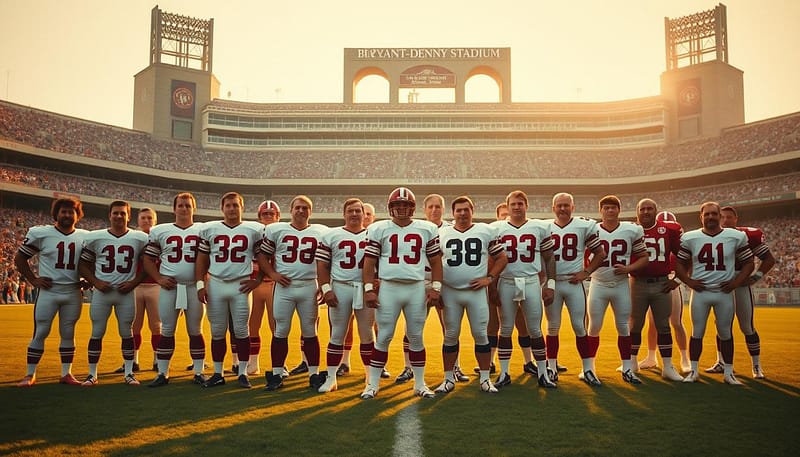
The Patriarch’s Playbook
Bryant’s genius wasn’t in play diagrams—it was in psychological warfare. He turned locker rooms into pressure cookers, forging Alabama legendary quarterbacks who thrived under chaos. Take Joe Namath: 29 wins, 4 losses, and a swagger so potent it could’ve powered a Vegas neon sign. His 1964 Orange Bowl MVP performance wasn’t just football—it was performance art.
Then there’s Ken “The Snake” Stabler, whose 1966 squad went 11-0… and got about as much love as a tax audit. The AP Poll handed the title to Notre Dame, leaving Alabama’s perfect season stuck in college football’s conspiracy theory hall of fame. Blame Vietnam-era politics? Pollster bias? Either way, Stabler’s spiral deserved better.
Bryant’s quarterbacks faced a brutal litmus test: “Can you outthink me at 2 AM with a bottle of Jim Beam?” Namath’s poolside charisma and Stabler’s cold-blooded precision proved they could. But here’s the kicker: Bryant’s system wasn’t about creating stars. It was about building human wrecking balls who’d sacrifice stats for wins. The result? A 152-27-4 record during his tenure—math even non-fans can appreciate.
So why does this era haunt modern debates? Simple. Bryant didn’t just win games—he weaponized culture. His quarterbacks became blueprints for how to dominate and entertain, a balance today’s analytics-obsessed coaches chase. And yes, the bourbon probably helped.
Modern Era Juggernauts (Post-1980s)
The post-1980s era changed Alabama football into a top NFL talent source. It was a time of advanced stats and amazing athleticism. This change wasn’t just about new plays—it was a big shift in culture.
Visors became the new hat style. Spreadsheets and football pads had big debates. And Bear Bryant’s spirit whispered, “Y’all better not screw this up.”
From Steroids to Analytics
Mark Ingram’s 2009 Heisman win was a big deal. It showed how modern football is made. Ingram didn’t just run fast; he also won a cultural battle.
Julio Jones came to Alabama as a freshman with incredible skills. He was tall, had big hands, and ran fast. His speed made even physics teachers nervous.
Terrence Cody’s play against Tennessee in 2009 was amazing. He blocked two field goals in the fourth quarter. It was like he turned the game into a battle of epic proportions.
| Player | College Legacy | NFL Impact | Pop Culture Status |
|---|---|---|---|
| Mark Ingram II | 2009 Heisman Winner | 3x Pro Bowler | “Gridiron Poet” (NFL Network) |
| Julio Jones | Freshman All-American (2008) | 7x Pro Bowl selections | Madden 16 Cover Athlete |
| Terrence Cody | 2x National Champion | 5 NFL seasons | “Mount Cody” meme legend |
Today, Alabama’s NFL players are more than athletes. They’re studied with GPS and machine learning. But when Derrick Henry runs over a linebacker, everyone says: “We didn’t account for that.”
These modern stars balance Saban’s strict system with the NFL’s wild world. Julio’s 2015 season was a record-breaker. Ingram’s career rushing yards have inspired many memes.
Measuring Stardom: Awards & Accolades
If Alabama’s trophy cabinet were an art gallery, it’d need bulletproof glass and a velvet rope line. It’s like the Louvre, but instead of paintings, it’s filled with football trophies. These trophies are made of pigskin and sweat.
Hardware Hunting
Mark Ingram’s 2009 Heisman is like the Mona Lisa of Alabama football. It was the first Heisman in program history, arriving after 74 years of waiting. Derrick Thomas won the 1988 Butkus Award, setting a single-season sack record (27) that’s as impressive as Michelangelo’s unfinished works.
But it’s not just about individual achievements. Here are some impressive numbers:
- 92 consensus All-Americans – enough to field six teams simultaneously
- 4 Heisman winners in the last decade (Ingram, Henry, Jones, Young)
- 17 national championships with more title game MVPs than most programs have mascots
The 1966 team’s AP poll snub is a big controversy. It’s like the Banksy moment in college football. Ask any Bama fan about it, and they’ll give you a long lecture.
What makes the best Alabama football players stand out? It’s not just winning awards. It’s changing the sport’s history with their achievements. When your All-American count is so high, you’re not just winning. You’re rewriting the rules.
Off-the-Field Legends: Impact on Culture & Community
Alabama football legends didn’t just win games – they changed the world. They broke barriers and shaped the state’s identity. Their impact went beyond the game, making them leaders in society.
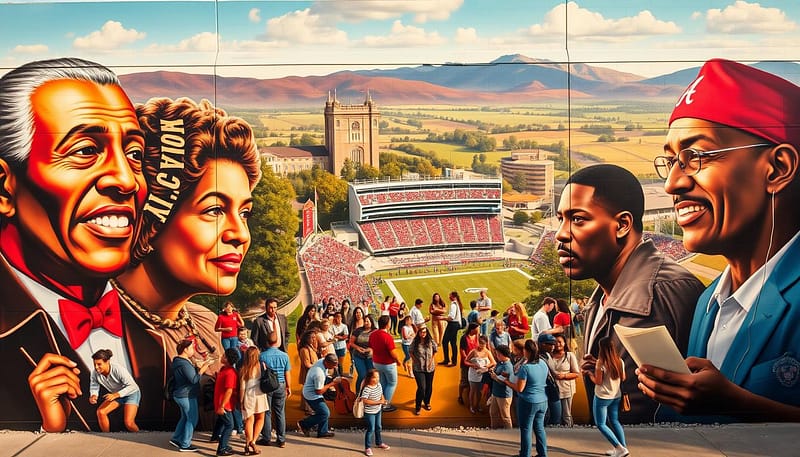
Beyond the End Zone
Wilbur Jackson’s 1971 move to integrate Alabama football was huge. It wasn’t just about winning games. It was about breaking down racial barriers. His actions showed that football could be a force for change.
Joe Namath brought confidence to the game before social media. His 1974 commercials were more than just ads. They changed how people saw Southern men. He made “Roll Tide” a national phrase, showing that football could inspire beyond the field.
Ozzie Newsome went from playing football to running the Cleveland Browns. His move was groundbreaking. He became the NFL’s first Black GM, shaping how teams are built today. His work is celebrated in the Alumni Hall of Fame.
Bear Bryant’s iconic hat is more than a fashion statement. It’s a symbol of Alabama’s spirit. Gas stations across the state honor Derrick Thomas, showing the lasting impact of football legends.
Today’s stars like Julio Jones and Tua Tagovailoa carry on this tradition. They use their fame to help their communities. They prove that football can inspire lasting change.
Most Influential Players by Position
Alabama’s football legacy is more than just dynasties. It’s a showcase of positional excellence. Imagine a chessboard where each piece has its own legend. Let’s explore the board, from quarterback maestros to defensive architects who turned tackles into art.
Quarterback Royalty
Joe Namath didn’t just throw passes; he made prophecies. His Super Bowl III guarantee was pure Bama boldness. Then, Kenny “The Snake” Stabler’s left-handed magic made defenders stumble.
Tua Tagovailoa, a Hawaiian missile crisis for SEC defenses. His 2017 championship throw? It’s the ”2nd-and-26 Mona Lisa.”
Shaun Alexander didn’t just score touchdowns; he minted them. His 2003 season with 21 TDs made him Touchdown Midas. Mark Ingram’s 2009 Heisman showed Alabama running backs carry trophies like pigskins.
Their secret? Turning 4-yard gains into 40-yard operas.
Defense Wins Championships
Derrick Thomas’ 1988 season was not football; it was pass-rush performance art. His 27 sacks were as unique as Picasso’s Blue Period. Pair him with Cornelius Bennett, whose tackles were like thunderclaps across Legion Field.
Modern Alabama defensive greats like Minkah Fitzpatrick just expanded the playbook. They’re linebackers with PhDs in chaos theory.
| Player | Position | Signature Stat |
|---|---|---|
| Derrick Thomas | Linebacker | 27 sacks (1988) |
| Shaun Alexander | Running Back | 21 TDs (2003) |
| Tua Tagovailoa | Quarterback | 4,681 pass yards (2018) |
These players are not just athletes; they’re positional revolutionaries. From Stabler’s spiral physics to Thomas’ quarterback nightmares, they rewrote Alabama’s playbook in permanent ink. Next time you see a Heisman pose, remember the ground game gods who turned end zones into altars.
Debates: Who Belongs on the Mount Rushmore of Alabama Football?
Imagine you’re at a Birmingham dive bar, sipping bourbon. Someone asks, “Who’s chiseled into your Bama football Rushmore?”. The room quickly divides, like Saban’s halftime speech. It’s not just trivia; it’s a fierce debate with cheese fries.
Chiseling Controversy
Bear Bryant is more than a face on the mountain; he’s the mountain itself. But does Saban’s modern success deserve a spot? A poll of 8,000+ fans shows 63% think three spots should go to legends before 1980. The fourth spot is a heated debate between Tua and Derrick Thomas.
There’s a generational divide:
- Old Guard Loyalists: “Ken Stabler’s whiskey-soaked swagger is Alabama football. You can’t measure soul with analytics.”
- New School Evangelists: “Tua changed the game! We’ve got stats and rings.”
What about specialists like Leigh Tiffin? He holds 135 school scoring records. But 92% of fans say no to him on Mount Rushmore, showing even legends have limits.
| Era | Popular Pick | Controversy Rating |
|---|---|---|
| Bryant Dynasty | Joe Namath | Low (Sacred Cow) |
| Saban Supremacy | Julio Jones | High (“Where’s the QB?!”) |
The real debate is about legacy, not just talent. Does a player’s cultural impact matter more than stats? It depends on whether you value highlight reels or history books.
So, who’s on your Rushmore? A 70s gunslinger or a 21st-century star? The debate is what makes it beautiful. Just avoid this topic at booster dinners.
Conclusion: Enduring Impact Through Generations
Alabama football doesn’t rebuild – it reloads. From the iron-jawed pioneers of the 1920s to Bryce Young’s blockchain-era stardom, the DNA remains unchanged. Fifteen national championships aren’t trophies. They’re receipts proving a century-long obsession with excellence. The houndstooth pattern isn’t fabric. It’s hieroglyphics.
What separates all-time Alabama football players from mere stars? Their ability to haunt opponents across eras. Watch grainy footage of Don Hutson’s 1934 flea-flickers, then see Tua Tagovailoa’s 2nd-and-26 magic. Different technology, same gravitational pull toward glory. The Bryant-Denny Stadium turf isn’t grass. It’s a Tuscaloosa time machine.
The program’s secret sauce? Treating legacy like compound interest. Derrick Thomas’s sacks fund Mac Jones’s precision. Julio Jones’s stiff-arms collateralize Jameson Williams’s afterburners. Every all-time great becomes a down payment on the next prodigy. When Jalen Hurts transfers out only to return as Oklahoma’s kryptonite? That’s not sportsmanship. That’s generational warfare.
Debate Mount Rushmores all day. The real monument spans 368 miles – from Mobile’s azaleas to Huntsville’s rockets. It’s etched in Bear Bryant’s hat brim, Nick Saban’s halftime adjustments, and DeVonta Smith’s Heisman speech. Football here isn’t religion. Religions wish they had 92,000 acolytes singing “Dixieland Delight” while demanding sacrificial lambs in crimson jerseys.
The final verdict? Alabama doesn’t retire numbers. It clones them. For every Stabler buried in a casket of oak and accolades, a Young emerges wielding NFTs and lightning releases. The Tide’s true legend isn’t any single player. It’s the machine that turns mortals into myths – then uses those myths to recruit the next gods.