Bear Bryant once said, “Defense is attitude.” This mindset made the Crimson Tide a force in college football. They won four national championships in one decade. Their success came from linebackers who hit hard and defensive backs who were precise.
What makes Alabama stand out? It’s not just talent. The NFL draft board is full of Bama All-Americans. The program has a culture where defense is everything. Nick Saban made this culture even stronger, creating a team that dominates on Sundays.
Alabama treats defense like a chess game. They are always three steps ahead. We’ll explore the history of their defense, the iconic plays, and the bone-crunching legacy that makes them unstoppable.
“Defense Wins Championships”: The Bama Philosophy
Imagine Picasso designing a blitz package—that’s Alabama’s defensive ethos in cleats. The Crimson Tide defense has treated football like chess played with shoulder pads. Coaches here don’t just scheme—they curate.
Bear Bryant’s Junction Boys brought the pain, but Nick Saban turned defensive coordination into industrial art. His “Process” became college football’s most plagiarized blueprint. Imitators usually end up with finger paintings compared to Bama’s Renaissance frescoes.
The numbers don’t lie—42 defensive players drafted in the last decade, enough to field two NFL starting lineups. Saban’s program isn’t a feeder system—it’s a witness protection program for future All-Pros. Want proof? Try naming an SEC offense that’s enjoyed facing:
- Linebackers who hit like Tesla coils
- Cornerbacks with GPS hands
- D-linemen eating double teams for breakfast
This defensive alchemy starts with recruiting sorcery. While rivals chase five-star quarterbacks, Bama stockpiles human wrecking balls. The result? A 52-year gap between Bear Bryant’s last title and Saban’s first seems laughable now.
Today’s Tide defenses don’t just win—they erase. Ask any LSU fan about the 2011 title game “performance art” that made Les Miles’ offense look like toddlers in shoulder pads.
| Era | Coach | Signature Move | NFL Draft Picks |
|---|---|---|---|
| 1920s-30s | Wallace Wade | Dixie Deluge | Pre-draft era |
| 1958-82 | Bear Bryant | Goal Line Stand Doctrine | 17 |
| 2007-present | Nick Saban | NFL Witness Protection | 42+ |
Modern SEC defense legends aren’t born—they’re forged in Tuscaloosa’s film rooms. How many programs have tried to photocopy the Process only to end up with smudged messes? Kirby Smart took the blueprint to Georgia, proving even Saban’s disciples need decoder rings.
The secret sauce? Treating every third down like the Alamo—except Bama’s defenders always win.
Iconic Linebackers: Derrick Thomas, Cornelius Bennett, Rolando McClain
If Alabama’s defense were a rock band, its linebackers would be the lead guitarists shredding solos. They set the stadium on fire. These human tactical nukes redefined offensive suffering. They combined raw power with strategic precision, leaving quarterbacks writing apology letters to their future selves. Let’s dissect three legends who turned Alabama’s top 10 linebackers list into a heavyweight title bout.
The Sack Artist
Derrick Thomas didn’t just break records – he treated them like piñatas at a QB’s funeral. His 1988 season was like John Wick for college football. He had 27.5 sacks, 39 tackles for loss, and enough quarterback trauma to fill a Stephen King novel. SEC offensive coordinators wake up in cold sweats remembering his spin moves.
Bennett’s Big Hits
Cornelius Bennett played linebacker like a meteorologist – his hits didn’t just register on the Richter scale, they created new weather patterns. The “Biscuit” delivered tackles so violent they should’ve come with a parental advisory sticker. His 1986 Iron Bowl performance wasn’t just a game – it was a forensic study in how to separate grown men from their dignity.
McClain’s QB Nightmares
Rolando McClain didn’t just read offenses – he psychically downloaded their playbooks. The 2009 Butkus Award winner treated spread formations like Sudoku puzzles, solving them with brutal efficiency. His 14-tackle masterpiece against Florida in the SEC Championship wasn’t football – it was performance art with shoulder pads.
These iconic Alabama football players didn’t just dominate – they weaponized the linebacker position. From Thomas’ QB safari seasons to McClain’s schematic terrorism, they turned defensive playbooks into bestselling horror anthologies. Their legacy? Proof that in Tuscaloosa, defense isn’t just a strategy – it’s a contact sport for intellectuals.
Defensive Line Legends
If Alabama’s defense were a symphony, the D-line would be the bass section – you feel them before you hear them. These human bulldozers didn’t just occupy space; they weaponized gravitational pull. They turned offensive coordinators into conspiracy theorists. Let’s dissect how Alabama’s trenches became ground zero for defensive innovation.
The Monstars Era (2010s)
The 2010s defensive front was like mixing Space Jam serum with SEC grit. At the center (literally) stood Terrence “Mount Cody” Cody – a 400-pound nose tackle. He moved with the grace of a ballet dancer and the subtlety of a dumpster fire. Flanking him was Jesse Williams, the Australian import who bench-pressed entire offensive lines.
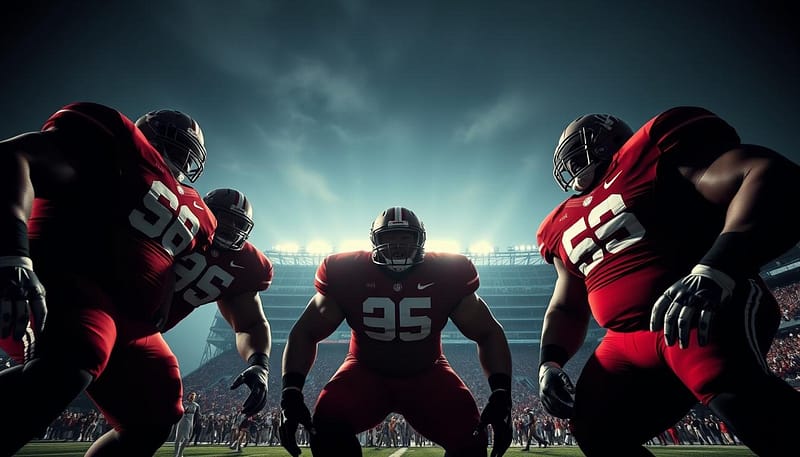
This wasn’t just a defensive line – it was a physics experiment. Opponents faced three immutable laws:
- Law #1: Double teams required hazard pay
- Law #2: Running lanes closed for renovations
- Law #3: Pocket presence became pocket PTSD
Cody’s Gravity-Defying Blocks
The 2009 Tennessee game crystallized Cody’s legend. With seconds left and Alabama clinging to a 12-10 lead, Cody executed two consecutive field goal blocks. This included a game-saving swat that defied both anatomy and probability. How does a 400-pound human become a vertical threat? Ask the physics department – we’re waiting on their thesis.
This play wasn’t just about athleticism. Cody’s Rocky Top Rejection showcased Saban’s defensive algebra: (Mass × Velocity) + Anticipation = Championship Equations. The D-line didn’t just stop plays – they rewrote offensive playbooks through sheer existential dread.
Star Defensive Backs
If Alabama’s secondary were a Netflix thriller, it’d be Bird Box. Opponents never saw the knockout coming until it was too late. The Crimson Tide defense turned its DB room into a factory of chaos architects.
Coverage specialists evolved into hybrid nightmares. HaHa Clinton-Dix’s interception theatrics and Minkah Fitzpatrick’s era of schematic chameleon acts changed the game. These defensive backs didn’t just lock down receivers – they redesigned airspace control.
Fitzpatrick’s Swiss Army Knife Impact
Minkah Fitzpatrick played defensive back like a chess grandmaster playing three boards at once. He wasn’t just versatile – he was position-less. Switching between safety, nickel, and cornerback with ease.
His 2017 season was historic. He became the first Alabama player to win both the Chuck Bednarik and Jim Thorpe awards in the same year.
Coaches didn’t just use Fitzpatrick – they weaponized him. Opposing quarterbacks faced a brutal calculus:
- Throw to his side? Risk a pick-six
- Avoid him? Hello, unblocked blitzes
- Double-team him? Congratulations, you’ve just activated Landon Collins mode
Barron’s Ball Hawk Reign
Before Fitzpatrick, Mark Barron redefined safety play like Apple redefined smartphones. He logged 12 interceptions and 237 tackles, turning Alabama’s secondary into a no-fly zone. His 2010 season was pure larceny – 75 tackles, 2 INTs, and enough broken-up passes to make a DBU highlight reel blush.
Barron’s real genius was anticipation. He didn’t just read quarterbacks’ eyes – he hacked their playbooks. The result? A defensive backfield that functioned like Crimson Tide defense 2.0 – smarter, faster, and always one step ahead.
All-Americans and Their Impact
Alabama’s All-American production is like a high-tech startup. They churn out interceptions and pancake blocks like clockwork. With 38 first-team All-Americans, they’ve set a high standard. It’s not just talent; it’s a well-oiled machine.
The Recognition Machine
How does Alabama make All-American selections a habit? The 2016 secondary was a game-changer. Minkah Fitzpatrick, Marlon Humphrey, and Eddie Jackson dominated the field. They made the “DBU” debate obsolete.
All-American honors at Alabama are more than just awards. They’re NFL audition tapes. Mark Barron’s 2011 season was a highlight reel. His journey from college star to Pro Bowl safety is a Bama success story.
Alabama’s stats are impressive. 80% of their first-team All-Americans start in the NFL. The Alabama All-American honor roll is a list of defensive innovators.
| Player | All-American Year | Pro Bowls |
|---|---|---|
| Minkah Fitzpatrick | 2017 | 3 |
| Jonathan Allen | 2016 | 1 |
| C.J. Mosley | 2013 | 4 |
Alabama’s second-string safety could start for most FBS schools. They’re not just building a team; they’re creating a system. The 2016 secondary produced three NFL captains before 27. Tuscaloosa’s factory floor never stops.
Award Winners: Butkus, Thorpe & More
The Crimson Tide’s trophy shelf is so full, it could start a Home Depot. While others focus on quarterback awards, Alabama’s display is all about SEC defense legends. These players turn Heisman hype into confetti under their feet.
Trophy Case Archaeology
Exploring Bama’s award archives, you’ll see Butkus Awards stacked high. Cornelius Bennett won the first in 1986. Six Tide defenders followed, including Rolando McClain’s 2009 win that changed the game.
The Thorpe Trophy collection is impressive too. From Antonio Langham in 1993 to Minkah Fitzpatrick in 2017, these DB awards pile up fast. Jonathan Allen’s 2016 Heisman finalist spot is a standout, like a defensive tackle as James Bond.
Fitzpatrick’s Dual Crown
2017 was Minkah Fitzpatrick’s year. He became the first All-American Alabama football player to win both the Bednarik and Thorpe awards. His stats were incredible:
- 60 tackles from 5 different positions
- 7 interceptions that looked like art
- 1 SEC Championship MVP trophy “accidentally” left in Georgia’s locker room
Fitzpatrick’s achievement shows Alabama’s defensive philosophy. Why pick one role when you can excel in all? His legacy is a mix of versatility and success, proving DBs can be both shutdown artists and stats leaders.
Game-Winning Defensive Moments
In Alabama football history, defensive stars don’t just make plays. They change the game’s course. Let’s look at two moments where iconic Alabama football players turned near-losses into unforgettable wins. These moments were as dramatic as a Game of Thrones finale.
Cody’s Rocky Top Rejection
The 2009 game against Tennessee was intense. With just 6 seconds left, Alabama was up 12-10. Terrence Cody, known as Mount Cody, made a move that stunned everyone.
- He blocked two field goal attempts
- He nearly ripped off his helmet in celebration
- He saved Alabama’s national championship season
Tennessee’s kicker might dream of that moment. Cody’s block didn’t just save a game. It helped Alabama regain its college football throne.
Dareus’ Title Game Heist
In the 2010 BCS Championship, Texas quarterback Garrett Gilbert made a big mistake. He threw to Marcell Dareus, who was right there. The 6’3″ defensive end:
| Play | Impact | Legacy |
|---|---|---|
| 28-yard pick-six | Shifted momentum permanently | Set championship record for defensive TDs |
| Game-changing sack | Knocked Texas’ QB out mentally | Earned Defensive MVP honors |
Dareus didn’t just steal a touchdown. He took away Texas’ championship hopes. His performance showed that best Alabama defenders don’t wait for chances. They make them happen with determination.
Transition to the NFL: Successes & Challenges
Alabama defenders enter the NFL like warriors stepping into Costco. They face new luxuries and questions. With 14 first-round picks, the Crimson Tide is a top talent pipeline. But, what makes some players like CJ Mosley succeed, while others, like Rolando McClain, struggle?
NFL teams often have high hopes for Bama players, like they do with Dogecoin. Let’s explore why.
Saban’s Proving Ground
Nick Saban’s system is more than a football program. It’s a pro sports simulator with top-notch support. His “process” prepares players to:
- Decode NFL-level playbooks by sophomore year
- Practice against future Top 10 draft picks daily
- Master multiple positions like chess grandmasters
This is why Mosley became Baltimore’s defensive QB quickly, while McClain’s career was short-lived. Mosley studied film intensely, while McClain sometimes struggled to keep up.
Adjusting to Sunday Speed
The NFL’s speed isn’t just about running fast. It’s about processing information quickly. Here’s a reality check:
| College Advantage | NFL Challenge | Survival Rate |
|---|---|---|
| Dominant physicality | Technique refinement | 73% |
| Saban’s structure | Self-directed preparation | 68% |
| Predictable schemes | Weekly schematic curveballs | 61% |
Today’s Crimson Tide defenders come with NFL-ready habits. They’re like iPhones with better tackling software. But, even top talent faces challenges. McClain’s story shows that success isn’t guaranteed.
The real test is when the Alabama training wheels come off. It’s about your dedication to film study, not just your physical skills.
Modern Stars: Will Anderson Jr. and Friends
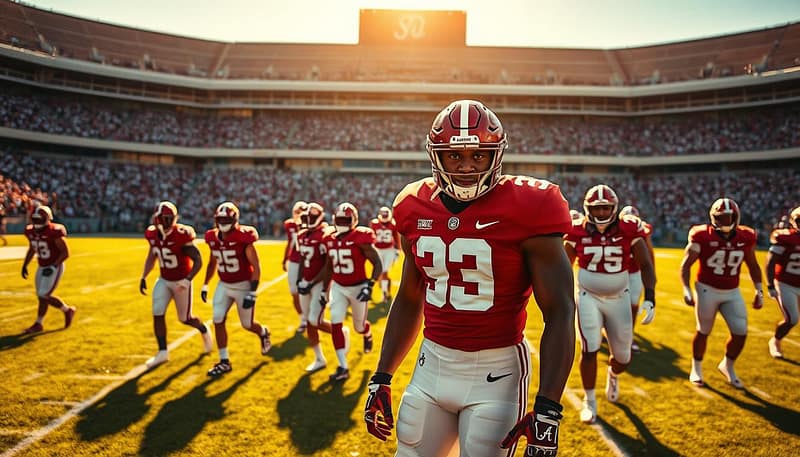
Alabama’s latest defensive stars are taking over TikTok with their quarterback takedowns. Bryant-Denny Stadium has become a quarterback graveyard. This is all thanks to a new group of defenders who treat quarterbacks like targets. Leading this group is a player known as “The Terminator.”
The Terminator’s Legacy
Will Anderson Jr. didn’t just play linebacker; he showed the world what chaos looks like. His 2021 stats (17.5 sacks, 31 tackles for loss) were like a Madden cheat code. SEC offensive coordinators were left scrambling.
What made him so scary? He treated quarterbacks like they were worthless. He hunted them down relentlessly.
Anderson’s QB Body Count
Let’s look at the Terminator’s top hits with some simple math:
| Victim (QB) | Sacks | TFLs | Trauma Level |
|---|---|---|---|
| Matt Corral (Ole Miss) | 2.5 | 5 | Nightmare Fuel |
| Stetson Bennett (Georgia) | 1.5 | 3 | PTSD Alert |
| Bryce Young (Practice Squad) | N/A* | N/A* | Eternal Gratitude |
*Alabama’s own QB wisely avoided Anderson in live drills
For not ending his career prematurely
Now, Dallas Turner is carrying on the tradition. His 10-sack season in 2022 showed Alabama’s defense is always reloading. Together, they’ve made third-and-long a feared situation in college football.
Defensive Trends: How Bama Built Its Wall
If college football were a smartphone, Alabama’s defense would be the update that breaks your favorite apps. The Crimson Tide defense has not just kept up with new offenses. It’s forced a complete rewrite of playbooks. Let’s look at how this battle of tactics made Alabama’s defense almost unbeatable.
Scheme Evolution Timeline
Bama’s defensive trends are like a greatest hits album where every song is a hit:
- 1970s Wishbone Wreckers: Bear Bryant’s 5-2 “Redwood Defense” stacked future NFL linemen to stop option attacks.
- 2000s Spread Neutralizers: Nick Saban brought pattern-matching coverage. It’s like defensive machine learning that guesses route combinations.
- 2010s QB Erasers: The “Cheetah” package turned 270-pound ends into hybrid linebackers. This created the original “positionless defense.”
Saban’s Adapt-or-Die Mantra
Remember when Blockbuster laughed at Netflix? Saban treats old schemes the same way. His 2012 team, with stars like Dee Milliner and C.J. Mosley, led the nation in defense. They changed how defenses work:
| Stat Category | 2012 Bama | FBS Average |
|---|---|---|
| Points/Game | 10.9 | 29.5 |
| Rushing YPC | 2.4 | 4.3 |
| 3rd Down % | 26.5 | 40.1 |
This wasn’t just winning. It was football’s version of survival of the fittest. When fast-paced offenses became popular, Saban’s team adapted quickly. When RPOs became trendy, Bama linebackers became like pop-up ads, jumping into passing lanes.
The outcome? A Crimson Tide defense that’s always ahead of the game. It’s not about being the fastest or strongest. It’s about creating a system where even average players seem like geniuses.
Conclusion: Enduring Defensive Identity
Alabama’s defensive DNA is not just about plays. It’s about the heart and soul of the team. From Dixie Howell’s early days to Will Anderson Jr.’s modern moves, the Crimson Tide’s defense is unmatched. They’ve won five SEC titles and four national championships, all thanks to their defense.
Their success is clear in the pain they’ve caused opponents. Legends like Terrence Cody and Minkah Fitzpatrick have left their mark. They show that Alabama’s defense is not just good. It’s legendary.
While others focus on offense, Alabama sticks to defense. The 2010s “Monstars” line and Anderson’s skills prove their point. Defense is not just a strategy. It’s who they are.
Scouts look at Alabama’s defenders differently. They see a mix of smarts and toughness. This is what makes Alabama’s defense so special.
Alabama’s defense is not just about winning. It’s about tradition and excellence. When you see a Tide defender make a big play, you’re seeing history. It’s a tradition that will never fade.