What makes a moment last forever? In Alabama, where football and basketball are more than sports, there’s a rich history. But not all games are remembered. There are “greatest Alabama football games” and then there are ghost games waiting to be found.
The same land where To Kill a Mockingbird was born saw a legendary football comeback. It was so epic, it should have its own tragic song. Yet, we remember civil rights marches but forget the 1971 Iron Bowl.
This isn’t just about scores. It’s about the sweet 16 basketball Alabama game in ’47. It was a cultural shift, like Hank Williams’ first radio gig. We’ll uncover these moments, hidden by time.
So, let’s go back in time. We’ll explore the real heart of Alabama sports. Every overlooked game tells a story of who we were and who we’ve become.
Defining a “Classic”
What makes a game more than just a game? Is it the thrill of a championship, the shock of a last-second play, or its connection to our culture? Let’s break it down like Bear Bryant’s iconic hat.
True classics have three key elements: stakes, storytelling, and societal resonance. The 1985 Iron Bowl’s Goal Line Stand is like Alabama’s own Macbeth. It’s about ambition, tragedy, and a defense that blocked Auburn’s victory. But our sports stories come with nacho cheese and heated debates.
| Game | Year | Stakes | Drama | Legacy |
|---|---|---|---|---|
| Iron Bowl “Punt Bama Punt” | 1972 | SEC Title hopes | 2 blocked punts in final minutes | Redefined Auburn-Alabama power balance |
| Goal Line Stand | 1985 | National relevance | 4 stops inside 2-yard line | Symbol of Bryant-era defensive identity |
| Kick Six | 2013 | BCS Championship path | 109-yard FG return as time expired | Modern college football’s most replayed moment |
These Alabama victories mirror Montgomery’s civil rights landmarks. The Selma marches and the 1967 Iron Bowl both changed America and football. They showed the power of determination and changing the game.
The 1973 Rose Bowl was a turning point for Alabama. Bear Bryant’s offense beat Ohio State, showing Southern football’s strength. It was a game that changed the way football was seen.
When someone calls a game a classic, ask if it’s memorable. Does it deserve a place in history? If yes, it’s more than a game; it’s a piece of history.
Top Overlooked Football Games
Alabama’s football history is full of miracle comebacks and underdog stories. These games are hidden gems, not just highlights. They’ve shaped legacies without getting much attention.
The 1985 Iron Bowl is a classic example of alabama iron bowl upsets. Van Tiffin’s 52-yard field goal was a game-changer. It was so precise, it’s like a high C at FAME Studios.
In 1992, Alabama’s defense dominated Florida’s “Fun-n-Gun” offense. It was like a crawfish boil gone wrong. The Tide pickled Spurrier’s playbook, showing defense can win championships. This game is often overlooked, but it’s a key part of college football history.
The 2013 Iron Bowl is another unforgettable moment. Chris Davis’ 109-yard return was a game-changer. It left Alabama fans stunned, showing even Saban’s team can have a bad day.
These games are like Talladega’s greatest races. They’re unpredictable and full of drama. They remind us why we love sports: for the unexpected moments that leave us speechless.
Underrated Basketball Battles
Alabama’s basketball history is like a Southern Gothic novel. It’s filled with near-misses and underdog wins that would impress Flannery O’Connor. While football gets all the talk, our basketball stories are full of clutch Alabama performances.
The 1976 SEC Tournament is a hidden gem of March Madness. Coach C.M. Newton’s team fought their way through like Faulkner characters. They won what’s called “the real first sweet 16 basketball Alabama moment” in old-timers’ eyes. Their semifinal win over Kentucky had more twists than a Mobile Mardi Gras parade.
- 1987’s “Blue Collar Five”: Outrebounded opponents like steelworkers clocking overtime
- 2002 SEC Championship: Erwin Dudley’s 24-point clinic in paint domination
- 2013 NIT Run: Trevor Releford’s ankle-breaking crossovers as performance art
These famous basketball rivalries Alabama style are often forgotten. The 1982 game against UAB made Birmingham a Hoops Mecca. Coleman Coliseum shook with Ennis Whatley’s fast breaks that left opponents dizzy.
| Season | Hidden Achievement | Modern Equivalent |
|---|---|---|
| 1976 | Upset 3 ranked teams in 5 days | Birmingham’s culinary revival |
| 1987 | +12 rebounding margin in SEC play | Montgomery union negotiations |
| 2004 | Kennedy Winston’s 31-point OT thriller | Stitt’s wine pairings precision |
Why do these ncaa sec basketball titles Alabama contenders get overlooked? Maybe because their grit lacks football’s polished mythology. But in today’s world, where every TikTok dunk is famous, these blue-collar battles show us that legacy is about sweat stains on the court.
What We Can Learn
Alabama’s forgotten sports moments are more than old stories. They show us the true spirit of the South. Mobile’s Mardi Gras, for example, kept alive cultural traditions during hard times. It did so by hiding them behind masks.
Our championship coaches Alabama also used clever tactics. They made big changes during halftime. Bear Bryant’s 1965 Orange Bowl win was more than a game. It forced Miami hotels to accept Black players, showing the power of sports.
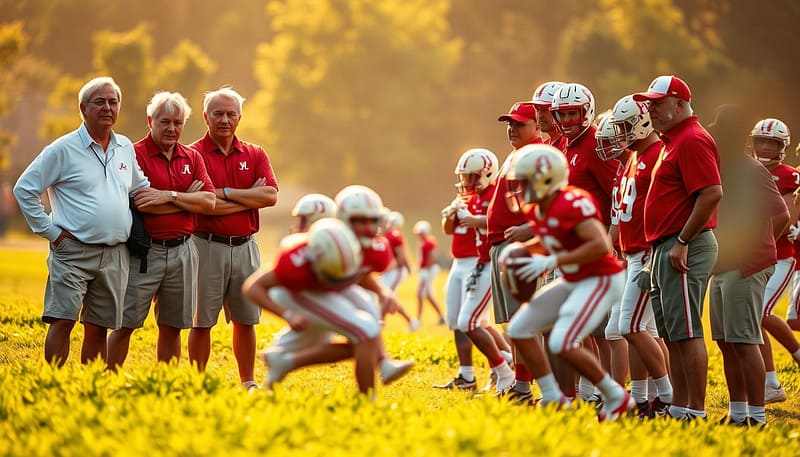
Wimp Sanderson’s flashy blazers were more than just a fashion statement. They brought attention to Alabama’s basketball program. His teams became unlikely heroes, a story that’s told at tailgates.
| Event | Cultural Lesson | Modern Parallel |
|---|---|---|
| Mobile Mardi Gras (1703) | Preservation through spectacle | NIL deals as new-age pageantry |
| ’65 Orange Bowl | Progress via forced proximity | Social media athlete activism |
| Stabler’s “Holy Roller” (1972) | Chaos as strategy | Fourth-down analytics movement |
Kenny Stabler’s bold plays were ahead of their time. His famous fumble-forward touchdown was like today’s analytics. It showed that sometimes, you need to break the rules to win.
Today’s coaches are following Stabler’s lead, but with more technology. They use data and spreadsheets to make their moves. It’s a modern twist on the Snake’s magic.
The wishbone offense was more than a football play. It was a commentary on the state’s economy. It showed how hard work and determination can lead to success. Today’s transfer portal dramas are just a new chapter in that story.
The Players Who Shined in Silence
History often overlooks those who work behind the scenes. Before fame and big deals, Alabama athletes made clutch performances that shook stadiums. Then, they disappeared like smoke from a barbecue. Let’s explore these stories, like opening a fine red wine from Gadsden.
Steadman Shealy’s 1979 game against Penn State was unforgettable. He played like a NASA engineer, slicing through the defense. No Heisman or ESPN fame, just 15 carries for 99 yards and two touchdowns in a 14-7 win. His performance was like jazz, full of instinct and no script.
In basketball, Ennis Whatley was a phantom maestro in 1983. He played like a conductor, leading his team with precision. His 8.1 assists per game are among the top in SEC history, yet his afro is more famous than his skills.
The 1985 game against Tennessee was a slugfest, with Van Tiffin’s 52-yard kick making history. But Curt Jarvis’s three sacks were the real heroes, keeping Bama alive. His dominance was the backbone of “The Kick.”
Why is this important? Today’s most exciting games Alabama plays are built on the work of these unsung heroes. Their legacy lives on in Bryce Young’s comebacks and Brandon Miller’s clutch shots. We’re not just looking at old scores; we’re connecting the past to the present in the Tide’s history.
Preserving the Memories
Imagine if Bear Bryant’s best halftime speeches vanished like morning fog. We face a crisis where iconic Crimson Tide moments might be forgotten. But, there’s hope – we can save sports history with more than just old trophies and newspapers. Let’s explore ways to keep these memories alive.
Learn from the USS Alabama’s preservation. That battleship stayed iconic thanks to hard work and partnerships. Our sports history needs similar care, but with a modern twist. Here’s how:
- Digital Archives 2.0: Imagine VR recreations of legendary clashes where you can literally walk through historic plays
- Storytelling Initiatives: Oral history projects capturing coaches’ sideline rants and fans’ living room celebrations
- Cinematic Resurrections: Gritty documentaries shot like ’70s newsreels, complete with cigarette-smoke haze narration
| Preservation Method | Traditional Approach | Modern Innovation |
|---|---|---|
| Game Footage | VHS tapes in athletic department closets | Blockchain-verified digital vaults |
| Fan Memories | Newspaper letters to the editor | AI-curated podcast series |
| Legacy Events | Annual banquet dinners | Interactive augmented reality tours |
Mixing Birmingham’s food love with Tuscaloosa’s football passion creates magic. Imagine a “Lost Classics” film series with game footage and local chefs making stadium snacks. It’s a perfect blend of cultural preservation and delicious food.
And think about the economic benefits. Those Alabama national championship wins are gold for tourism. With proper preservation, a legendary game could bring in more money than all the merch sales combined. The future of sports history is in digital experiences that make fans feel part of the action.
Conclusion
Alabama’s sports history is like a Faulkner novel, full of untold stories. The greatest games aren’t always the ones with trophies or confetti. Sometimes, they’re the gritty battles where a backup quarterback’s throw became legendary.
The Rose Bowl history books highlight only the polished moments. But there’s a deeper story behind these games.
Think of these forgotten games as cult classics in a world of blockbusters. The 1973 Iron Bowl’s “Punt Bama Punt” is like a Tarantino twist. Games like the pre-integration showdowns between Tuskegee and Alabama State have raw energy, like Sun Studio recordings.
These moments are important because they show the true heart of sports. They’re like finding an unissued Coltrane session in a thrift store.
Preserving these moments isn’t just about looking back. It’s about standing up for what’s real. When someone shares old footage of Kenny Stabler or talks about Lusia Harris’s tours, they’re piecing together Alabama’s sports history.
The state’s fields and courts hold more cultural memory than any statue. They tell a story of resilience and passion.
Next time you see a rusted stadium light tower or a converted gym, think about the stories it might hold. Could that cracked concrete be where Bear Bryant first drew the Wishbone? Did that warped hardwood witness a buzzer-beater that made Birmingham hold its breath?
In Alabama, history is never really history. It’s just waiting for someone to hit rewind.