Imagine a team of Southern farm boys, fresh from Tuscaloosa, outsmarting Ivy League teams in 1925 Pasadena. Wallace Wade’s underdog team stunned Washington with a 20-19 Rose Bowl win. This wasn’t just a game; it was a cultural shift.
Nine decades later, the story changes. Nick Saban’s team turned Bryant-Denny Stadium into a football powerhouse. Their last-second touchdowns against Georgia were like Shakespearean plays, filled with strategy and skill.
What ties these era-defining Alabama victories together? They’re not just games. They’re battles of Southern ingenuity against coastal elitism, of process against chaos. Alabama football creates champions and shapes American history.
So, put on your houndstooth hat. We’re exploring moments where football and culture collided. Every down was a lesson, every touchdown a sign of destiny.
What Makes a Game Exciting?
Alabama football is like your favorite action movie. It needs genius coaching and player heroics. Championship coaches Alabama didn’t just draw plays; they engineered reality. Take Wallace Wade’s 1925 squad training between moving train cars. It was a unique way to get ready for games.
Fast-forward to Saban’s “Process.” It’s like alchemy, turning three-star recruits into NFL stars. His secret? A mix of:
- Midnight film sessions to study opponents
- Practice drills that are tougher than Navy SEAL training
- Strategic sideline outbursts (47 players drafted can attest)
But Xs and Os only get you so far. The magic happens when desperation meets innovation. Like when Alabama’s defense turned LSU’s quarterback into a human during their legendary showdown. Games become iconic when genius meets players willing to risk everything.
| Coaching Era | Training Tactic | Human Element |
|---|---|---|
| Wade’s Wildcats (1920s) | Train car sprints | Survival instinct |
| Bryant’s Boys (1970s) | 4th quarter smoke breaks | Swagger as strategy |
| Saban’s Dynasty (2000s) | Microsecond play clocks | Robotic precision |
Modern miracle comebacks Alabama style aren’t accidents. They’re calculated Hail Marys with spreadsheet backing. That fourth-and-26 conversion? It had a 3% chance. But the quarterback’s determination made it 100%.
Next time you see a walk-off touchdown, remember: It’s not just athleticism. It’s Bear Bryant’s ghost high-fiving a mathlete who calculated the exact wind resistance on that spiral. Championship recipes require mad scientist and madman skills, with a dash of railroad-track recklessness.
Nail-Biting Finishes
Time stops in college football. Not just a saying, but a fact. The clock hits zero, but the play lives on forever. Alabama’s history is filled with endings so wild, they’d be cut from movies for being too crazy. Let’s look at two that changed rivalry math.
The Goal Line Stand That Redefined a Rivalry
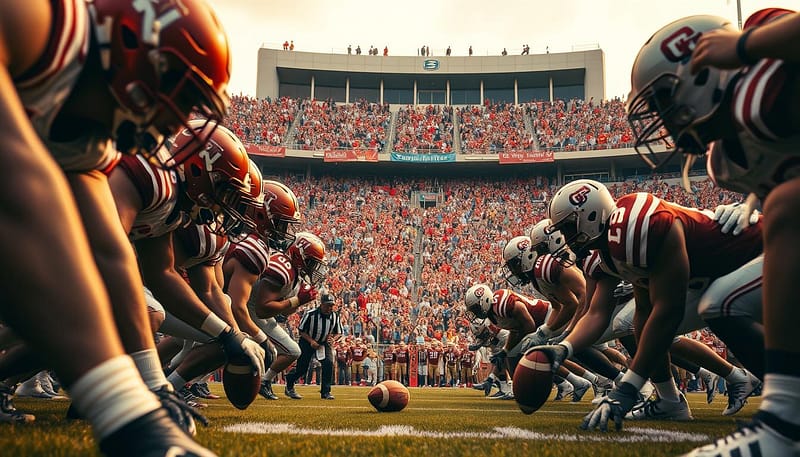
The 1979 Sugar Bowl was more than a game. It was like a Southern Gothic play. Penn State was down 14-7 and had four chances from Alabama’s 1-yard line. Four chances to tie and break Alabama’s spirit.
Then, a defensive performance so perfect, it made Swiss watches look bad. Barry Krauss’s tackle on Mike Guman was like the Mona Lisa of tackles. It was studied and never matched. The South was saved, all without moving an inch.
Kick Six: Auburn’s Immaculate Deflection
In 2013, the Iron Bowl needed a miracle. Alabama kicked a 57-yard field goal with :01 left. Physics said no, but Alabama’s pride said yes. Then, chaos happened:
- The kick fell short (gravity 1, destiny 0)
- Chris Davis caught it 9 yards deep (Auburn’s version of “Hold my beer”)
- 109 yards later, Jordan-Hare Stadium became Mardi Gras meets Bastille Day
This wasn’t just a touchdown. It was a cultural reset. Alabama fans are always checking their drinks for roofies when someone mentions “kick return.”
| Year | Game | Margin | Last Play Drama |
|---|---|---|---|
| 1979 | Alabama vs Penn State | 14-7 | 4th-down stop at 1-yard line |
| 2013 | Iron Bowl | 34-28 | 109-yard missed FG return |
| Legacy | Southern identity | Both games became regional folklore | |
These finishes share a common thread: hubris vs desperation, physics vs fate. They’re why we watch. Not for the 60 minutes, but for the 60 seconds when history takes the ball and says “Watch this.”
Package of Overtime Thrillers
If you think triple overtime is new, Alabama’s history will surprise you. Long before today’s sports, the Crimson Tide was known for their endurance. They played games that would exhaust today’s athletes.
The 1926 Rose Bowl is a forgotten Crimson Tide classic. Stanford faced Alabama’s determination. With seconds left, Alabama’s Gordon “Sherlock” Holmes pulled off a snap that tied the game. It was a moment that crushed West Coast pride.
In 2018, Alabama faced Georgia in a triple overtime game. Fans remember Tua’s winning touchdown. But the real story is Alabama’s defense, which survived 26 plays in three OT periods. It was a true test of endurance.
What makes these games special? It’s the context. The 1926 team played with:
- Helmets thinner than a politician’s promises
- Substitutes rarer than a calm Nick Saban sideline
- Training regimens involving more bourbon than Gatorade
Both eras share a common trait: turning desperation into triumph. The 2018 team had analytics. The 1926 team had existential dread and determination. They both showed the same grit.
When someone talks about modern overtime, remind them of Alabama’s history. Clutch performances are not new. They’re a tradition passed down through generations.
Unforgettable Fourth Quarter Rallies
What do the Trojan Horse and Alabama football have in common? Both are experts at surprising attacks when all hope seems lost. The Crimson Tide’s fourth-quarter magic is like a play from Shakespeare, but with football players.
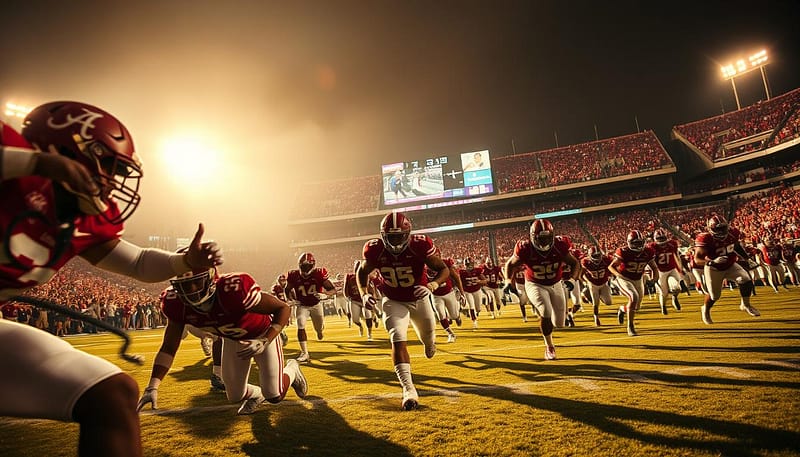
In the 1925 Rose Bowl, Alabama was down 12-0 at halftime. This was a big blow to Southern football pride. Johnny Mack Brown then ran 59 yards for a touchdown, making it a 20-19 win. This victory not only saved face but also redefined Southern football legitimacy nationwide.
Jump to the 2021 Iron Bowl. Alabama was down 10-3 with just 1:35 left. Bryce Young led a drive that was almost perfect. The game went to four overtime periods, a psychological test for Auburn fans. Saban’s team didn’t just win; they gave hope a new meaning.
These miracle comebacks Alabama fans love have a special pattern:
- Opponents think they’ve won too early (often with regrettable sideline dances)
- Alabama’s coaches start their “Death Star protocol”
- Quarterbacks turn into chess masters with strong arms
The real magic happens in famous LSU Alabama football games. Take the 2022 Bayou game. LSU was up 24-20 with 4:44 left. Alabama then scored 10 unanswered points, while LSU fans were left to drown their sorrows in gumbo. These aren’t just comebacks; they’re calculated soul-crushers in disguise.
What makes these wild finishes so hard to take? They show the harsh truth in sports: dominance means nothing until the clock hits zero. Alabama’s fourth-quarter comebacks don’t just win games; they change the story forever.
Most Watched Games
Before streaming, Alabama was a radio sensation. The 1925 Rose Bowl was more than a game; it was a cultural event. It drew national attention, even reaching a young Bear Bryant in Arkansas.
The 1926 rematch added 4,000 seats in Pasadena. This series (1925-1930) made Alabama’s wins a national spectacle. The Saban era brought six titles, drawing huge audiences.
| Year | Event | Viewership Impact | Legacy |
|---|---|---|---|
| 1925 | First Southern Rose Bowl Win | 20M radio listeners | Put Southern football on the map |
| 1926 | Stadium Expansion Game | 45K in-person attendance | Proved Bama’s traveling fan power |
| 2020 | Saban’s 6th Title | 25.5M TV viewers | Modern dynasty confirmation |
Today’s CFP games get big ratings, but the real milestones are in history. The 1930 Rose Bowl team changed West Coast views on Southern football. Alabama’s basketball titles also show the power of sports.
Alabama’s legacy is unmatched. It’s not just about winning games; it’s about changing culture. The numbers show Alabama’s impact on sports history.
Fan Favorites
Alabama’s greatest games aren’t just about winning trophies. They’re about underdog stories that leave fans in awe. These games are etched in our memories as moments of pure magic.
The 2012 Texas A&M game was like a Shakespearean tragedy. Johnny Manziel, a young quarterback, showed up Saban with his skills. He made Alabama’s defense look clueless.
- Out-Saban’d Saban with 345 total yards
- Converted 3rd-and-17 like it was a coin toss
- Made Alabama’s defense look like they’d never heard of the forward pass
Many thought it was a fluke. But after watching the game, it was clear Manziel’s performance was incredible. It was a lesson in how to beat perfection.
Then, in 2023, Alabama’s basketball team made March Madness unforgettable. They turned it into a unique art form, blending skill with chaos. Their strategy was simple: treat every game like the legendary 1976 “Blueface Game”.
- Holding future NBA star Ernie Grunfeld to 12 points
- Forcing 22 turnovers through sheer existential dread
- Proving defense wins championships…and occasionally causes PTSD
These games are more than just sports. They’re moments that change our view of the world. Alabama’s underdog wins show us the power of believing in the impossible. They ask us to question everything we thought we knew about sports.
Closing Comments
Alabama’s legacy isn’t just about winning games. It’s about the moments that make athletes into legends. These moments are more than just scores. They’re stories of culture, tradition, and the clash of great minds.
Imagine every game in Jordan-Hare Stadium as a story as deep as a Faulkner novel. These games aren’t won by brute force. They’re won by creativity and determination. Like when Alabama outsmarted Georgia in overtime with a daring play.
What makes a game unforgettable? It’s the feeling of being part of history. From the Wishbone’s strategic plays to Tua’s incredible comeback, Alabama’s victories are like epic dramas. The question is, can you handle the next exciting moment?
To all the fans who’ve cheered in Legion Field and Tuscaloosa, thank you. You’re not just watching games. You’re preserving a tradition. Share your favorite moments. College football’s greatest stories are told by those who lived them, one thrilling game at a time.