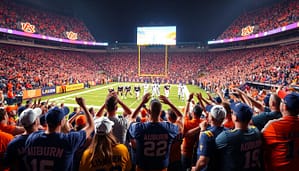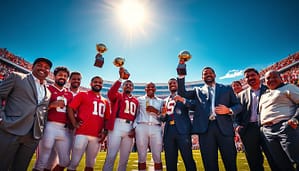
Imagine a Southern football team, born from cotton fields and steel mills, storming a California stadium like gunslingers in a John Ford western. That’s not just a movie—it’s rose bowl alabama history in its purest form. How did a dusty West Coast arena become the proving ground for Dixie’s gridiron pride? Let’s grab our metaphorical popcorn.
The answer lies in what I call the “reverse Manifest Destiny” of sports. While America expanded westward, Alabama’s football identity rode eastward conquests to glory. Six national titles. Eight trips that rewrote playbooks. A literal shoutout in the Crimson Tide’s fight song. This isn’t just football—it’s cultural alchemy.
Think Bear Bryant sipping sweet tea while dissecting game film like a Shakespearean tragedy. The Rose Bowl became his Globe Theatre, staging era-defining Alabama victories that turned regional pride into national mythology. Each clash against West Coast rivals wasn’t just a game—it was a referendum on grit versus glamour.
Today, when you hear “Yea Alabama!” roaring through Bryant-Denny Stadium, you’re hearing echoes of Pasadena. The crimson tide championship DNA? Forged 2,000 miles from home, where Southern underdogs became gridiron royalty. Not bad for a team whose first Rose Bowl squad traveled by train wearing borrowed cleats.
Origins of the Rose Bowl
Orange groves and academic arrogance have a surprising link. They both played a part in the start of the Rose Bowl history we love today. In 1902, Pasadena’s Tournament of Roses Association created the Tournament East-West Game. It was a football game with a twist, meant to attract attention.
Imagine Ivy League teams sipping tea and debating whether to tackle their opponents or their own worries. It was a time when football was seen as a way to show off, not just a sport.
The early 20th century football scene was more about social status than skill. Harvard and Yale teams saw football as a way to show off, while Southern teams were often overlooked. “Hookworm conferences” was a way for Ivy League teams to say they’d play anyone who was clean.
The first game in 1902 was between Michigan and Stanford. Michigan won big, 49-0. The game was a mess, with too much mud and not enough glamour. But it came back in 1916, with a new look and a lot of bad poetry.
By the 1920s, the Rose Bowl was a big deal in college football. Teams from the Northeast and the South faced off. The South was seen as the underdog, but someone had to lose to the Ivy League’s perfection. Alabama’s 1926 upset was just the beginning of a legendary story.
1926 – The Game that Changed the South
In 1926, Alabama didn’t just win a football game. They changed the South’s identity with a bold statement. Imagine a team from a region with a troubled past coming to Pasadena. They then scored 20 points in the third quarter, like Sherman’s march through Atlanta.
This was more than just a game. It was a performance art with football players. It was a show of power and skill.
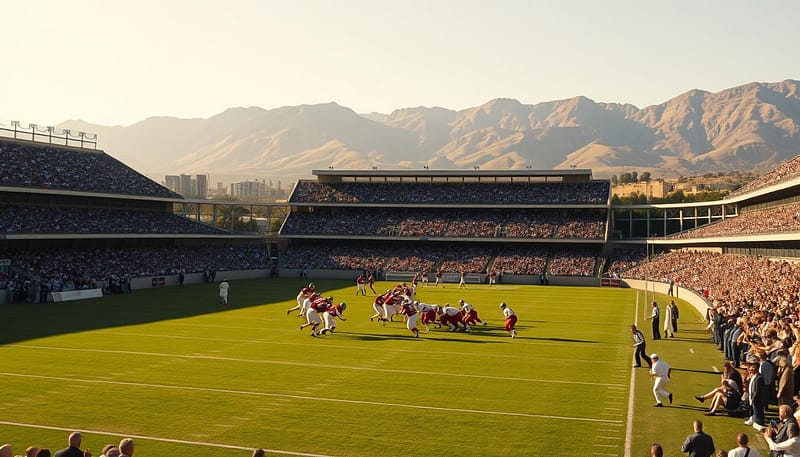
Will Rogers once said, “The South couldn’t lose this game if they tried”. This was a subtle jab at the South’s reputation. Johnny Mack Brown, the star player, scored two touchdowns in the fourth quarter. His heroics inspired countless underdog stories in sports movies.
The real victory wasn’t just the score. It was a cultural shift. The era-defining Alabama victory changed how people saw the South. It turned “backward Confederates” into “gridiron geniuses” in the eyes of the nation.
After the game, Alabama’s train ride home was like a Mardi Gras. People gathered, celebrating like it was 1865, but this time, the South was triumphant. The 1926 Rose Bowl was more than a game. It was a new beginning for the South in the 20th century.
Think of it as Gone With the Wind meets Friday Night Lights. When Brown scored his second touchdown, he didn’t just cross a goal line. He brought the South into the modern era. The game’s legacy? It showed that sometimes, history needs a push from sports.
Subsequent Rose Bowl Appearances
If Alabama’s 1926 Rose Bowl debut was like The Great Gatsby, their next games were like Hemingway stories. They were lean, brutal, and sometimes ironic. The Crimson Tide played in Pasadena seven more times between 1927-1946. They left behind many twists that would make a Netflix series exciting.
In 1935, Don Hutson and Dixie Howell turned the Rose Bowl into a theater. They beat Stanford 29-13, starting the West Coast offense. Hutson’s 6 catches for 165 yards would be all over Twitter today. Howell’s 78-yard TD run is like finding a Picasso at a garage sale.
| Year | Game Style | Final Score | Legacy |
|---|---|---|---|
| 1935 | Aerial Revolution | 29-13 W | Invented modern passing game |
| 1938 | Defensive Masterclass | 0-0 T | “The Silence of the Rams” shutout |
| 1942 | War-Time Grit | 20-19 L | WWII “War Babies” moral victory |
Then came 1938’s shocker, a cosmic joke. Alabama tied California 0-0, a game so defensive it was like watching ballet. Saban’s reaction to a scoreless game today would crash social media.
The WWII era brought surreal moments. In 1942, the “War Babies” nearly won against Oregon State while fighter planes flew overhead. Their 20-19 loss was a cultural mystery – was it a noble defeat or a sign that teenagers shouldn’t play against adults?
Three patterns stand out from these games:
- Alabama either reinvented football or broke its scoring mechanisms
- Every shutout/tie became magnified through southern football mythology
- The Tide’s adaptability foreshadowed Saban-era flexibility
These games didn’t just chase trophies – they shaped college football’s DNA. From Hutson’s sticky fingers to teenage soldiers playing through air raid sirens, Alabama’s Rose Bowl evolution proves championships aren’t just won on scoreboards, but in the collective imagination of a sport.
Legendary Rose Bowl Performances
What do a Hollywood origin story, Picasso’s Blue Period, and Bear Bryant have in common? Alabama’s Rose Bowl lore. These clutch Alabama performances turned football games into cultural touchstones. They mixed athletic skill with myth-making, like a Marvel script doctor.

Johnny Mack Brown, not the B-movie cowboy, was a 1926 end-zone revolutionary. His two fourth-quarter touchdowns against Washington didn’t just win a game; they rewrote Southern football’s DNA. It’s like Captain America’s serum, but in leather helmets and wool jerseys.
Don Hutson’s 1935 aerial clinic was another highlight. While Picasso was redefining art in Paris, Hutson was reinventing receiving in Pasadena. His 12 catches (a then-unthinkable number) against Stanford weren’t just passes caught – they were brushstrokes in football’s modernist era.
| Player | Year | Stat Line | Cultural Equivalent |
|---|---|---|---|
| Johnny Mack Brown | 1926 | 2 game-winning TDs | Superhero origin story |
| Don Hutson | 1935 | 12 receptions, 164 yds | Picasso’s Blue Period |
| Harry Gilmer | 1946 | 3 passing TDs | Jazz improvisation |
The ultimate “before they were famous” subplot? A 22-year-old Bear Bryant catching passes in the 1935 game. Yes, that Bear Bryant – the future coaching deity who once moonlighted as a human victory cigar in Pasadena.
These iconic Crimson Tide moments set the stage for modern miracle comebacks Alabama fans now expect. When today’s players make fourth-quarter magic, they’re not just scoring touchdowns. They’re adding verses to an epic poem that started with Brown’s cleats tearing up Rose Bowl turf.
Cultural Impact
If football were literature, Alabama’s Rose Bowl wins would be Southern Gothic epics. They are filled with sweat, symbolism, and ghosts of the past. The 1926 victory didn’t just win the game; it changed the South’s story.
At the same time, the Scopes Trial was happening, questioning tradition. Alabama’s football game was like a performance art for the nation. Sports Illustrated said Bear Bryant’s houndstooth hat was more meaningful than many monuments.
Harper Lee’s Maycomb had Atticus Finch. Alabama football had the Goal Line Stand. Both stories are about underdogs standing up for what’s right. The 1979 team’s stand against Penn State was like Scout Finch facing a mob.
Modern analytics can’t fully capture this, but let’s try:
- 7 Rose Bowl wins = 7 chapters in a redemption arc
- 1926-2023 span = 97 years of cultural semiotics
- 1 houndstooth hat = infinite metaphorical possibilities
The numbers only tell part of the story. The rest is in Birmingham bars where people debate Ken Stabler’s 1967 touchdown. Southern identity is complex, with football being a big part of it.
These victories are like Rorschach tests for regional pride. Did the 1926 win show the New South’s strength, or hide old tensions? Sports lets us ponder these questions without needing answers. Just enjoy the sweet tea and watch Bear Bryant’s highlights.
Comparing Rose Bowls
Imagine Shakespeare’s Hamlet facing off against a raccoon-wrestling cousin at a truck pull. That’s the difference between Alabama’s Rose Bowl legacy and its SEC rivalries. The Pasadena games are like West Coast sunsets and strategic chess. The Iron Bowl is like a demolition derby with tractors that have elephant trunks.
| Rose Bowl Era | Modern SEC Rivalries | |
|---|---|---|
| Venue | Sun-drenched Arroyo Seco | Dusty Jordan-Hare parking lots |
| Style | Wallace Wade’s precision passing (1926) | Cam Newton’s “hold my Gatorade” scrambles |
| Cultural Impact | Southern football goes national | Toomer’s Corner TP shortages |
The 2000 UCLA game shows the difference. Alabama, ranked #5, faced UCLA, and it was a game of strategy. But UCLA’s spread offense confused Alabama’s defense. UCLA won 35-24, showing the clash of coastal offense and Southern defense.
The contrast between famous LSU Alabama football games and Rose Bowl history is clear. Bayou battles are primal, like alabama iron bowl upsets with better food. Pasadena games, on the other hand, were tests of Southern football against Northern media.
Coaching styles also highlight the difference. Wallace Wade’s 1926 playbook was like a MIT thesis. Saban’s “Process” is modern and complex. Wade had to prove Alabama could play civilized ball. Saban wins 6AM recruiting battles.
Fan Stories
Imagine a 1946 VFW hall debate. It was as heated as any online argument. This is Alabama’s football lore – breathless fandom passed down through generations. Let’s open two time capsules.
1926: Railroad worker Jebediah Tucker wrote in his diary after the parade: “Saw 17 flatcars decked in crimson bunting roll into Tuscaloosa. Coach Wade waved like Caesar… We ain’t just building tracks now – we’re laying rails to destiny.” His crew later pooled $1.37 to telegram Rose Bowl updates – the 1920s version of splitting a YouTube TV subscription.
| Era | Fan Ritual | Debate Fuel | Victory Celebration |
|---|---|---|---|
| 1926 | Telegram relays | Who hit hardest? | Hoisting engineers |
| 1946 | VFW hall radios | Hutson vs. Rice | Victory cigars |
| 2024 | TikTok reactions | Saban vs. Bear | Venmo shot rounds |
The ’46 “War Babies” reunion deserves its own 30-for-30. Picture battle-hardened men arguing over Don Hutson’s hands versus Harry Gilmer’s spirals – their passion outlasting both the bourbon and the ashtrays. Today’s algorithm would’ve crashed from the hot takes.
Modern students keep the tradition alive through Alabama’s first superfan TikTok tributes. Freshman influencer @BamaBreezy recently went viral lip-syncing to 1926 fight songs while “reacting” to grainy newsreels. The comments section? A goldmine of forgotten crimson tide classics – great-grandparents suddenly trending.
What connects these eras? Underdog stories Alabama fans use like playbooks. That 1926 crew saw themselves in Wade’s squad – roughnecks taking on coastal elites. Today’s students meme Bryce Young’s Heisman run with the same defiant grin. The jerseys change; the juice doesn’t.
Conclusion
Alabama’s history in the Rose Bowl has changed. Now, they play under playoff brackets, not in citrus groves. The 2024 team, led by Saban, faces a challenge. They must win titles without losing their regional identity.
The 1926 team came as ambassadors of Dixie’s grit. Today, with transfers and NIL deals, teams look like superhero teams. Does college football have room for cultural shifts?
The sport’s playoff system can’t replace Wallace Wade’s Southern pride in Pasadena. But Saban’s latest team will fight for more than just seedings. They’ll battle for the spirit of Dixie Howell and Bear Bryant’s legacy.
As California’s golden hour sets, I hear the Million Dollar Band’s trumpets. They play the old fight song promise: “Remember the Rose Bowl, we’ll win then.” The magic isn’t in trophies or digital titles. It’s in connecting 1926’s spirit to today’s players.
Does Tinseltown’s magic remain? Ask the Tuscaloosa kid whose TikTok fame can’t replace his desire to add to Bryant-Denny’s story.