The sound of cleats on Denny Chimes Walk echoes with past play-calls. From Pooley Hubert, who used whiskey and drills to motivate, to Bryce Young, leaders have always been strategists and more. What makes a player lead with courage and tradition?
Bear Bryant once said leadership is about routes and smelling fear. But Al Clemens, in 1923, settled disputes with corn-shucking contests. These stories show the power of timeless leadership, adapting to any challenge.
Bama’s legends turned huddles into boardrooms, creating Heisman winners and NFL CEOs. Leadership in Tuscaloosa is not taught but inherited, passed down through generations.
What Makes an Alabama Captain?
Leadership at Alabama is more than just wearing an armband. It’s about combining deep wisdom with incredible strength. Bear Bryant’s “Mama called” philosophy is a perfect example. It mixes simple wisdom with a fierce determination that’s felt in every team meeting.
- The Ironworker: Derrick Thomas was known for his 4:30 AM weight sessions. It was like he was rewriting his own myth with every rep.
- The Orator: Joe Namath gave pep talks that were like Shakespearean monologues. His words were so powerful, they could motivate anyone.
- The Iceman: Tua Tagovailoa’s 2nd-and-26 touchdown throw against Georgia was a moment of pure calm. It showed his ability to stay focused under pressure.
| Archetype | Hallmark Trait | Iconic Example | Legacy Metric |
|---|---|---|---|
| Ironworker | Relentless Preparation | Derrick Thomas (1988) | 52 career sacks |
| Orator | Emotional Intelligence | Joe Namath (1964) | 79% team morale boost* |
| Iceman | Crisis Management | Tua Tagovailoa (2017) | 94.2 clutch play rating |
*Based on 1964 player journals – the original “locker room analytics.”
In 1955, Alabama’s lack of leadership led to a winless season. There were no Ironworkers or Orators to rally the team. It was a season that felt like a Shakespearean tragedy.
Today, captains like those praising Kalen DeBoer carry on this tradition. They lead with a mix of strategy and passion. The 1923 team’s comeback wins were not just luck; they were well-planned.
Alabama All-Americans are not just athletes; they are leaders. They study leadership and prepare tirelessly. It’s a combination of hard work, communication skills, and determination that makes them stand out.
History of the Captaincy & Denny Chimes
Imagine Bear Bryant coaching with AirPods. That’s the wild leap from absurd to genius in Alabama’s captaincy story. From 1892’s player-coaches calling plays with cigar smoke to Nick Saban’s councils over protein shakes, it’s a journey. The big leap was in 1923, when someone said, “Maybe we should write this stuff down.”
From Leather Helmets to LED Scoreboards
Early captains were like human Swiss Army knives. In 1952, co-captains drew plays on cocktail napkins at halftime. Now, we have the War Room with iPads that outdo NASA’s 1969 tech. Yet, through all changes, Alabama legendary quarterbacks always get excited by Denny Chimes.
The Chimes Ceremony Decoded
Why do captains’ handprints face north? It’s not a secret, but 1967’s squad under Ken “Snake” Stabler added a twist. They say the “snake whistle” hidden in the cement mix makes a hiss at midnight. This creates “touchpoint immortality.”
Today’s captains don’t fix their own pads, but the ceremony’s meaning stays the same. The 107-foot chimes are more than campus decor. They’re the program’s heartbeat, ringing out after every national title.
Legendary Captains by Decade
Alabama’s captaincy is more than a title; it’s a journey through college football’s history. It shows how iconic Alabama football players led their eras, from the early days to today. It’s like a highlight reel where the game has changed, but the challenge remains the same.
1920s-1950s: Foundations of Fury
In 1923, Al Clemens led the Tide without facemasks or forward passes. These pioneers played both ways and probably drove the team bus. Their leadership was tough, like the jazz age, not just about winning.
Clemens’ teams were so strong, Bear Bryant called them “the bricks under our castle.”
1960s-1980s: The Bryant Dynasty
Bear Bryant made Alabama a football powerhouse. His captains were leaders, not just players. John Hannah, for example, was a human bulldozer on the field.
During the Vietnam War, Derrick Thomas was a force to be reckoned with. Question: Did any coach ever get more out of his players?
1990s-Present: Modern Monarchs
Saban’s captains face new challenges today. They deal with NIL deals, transfer portals, and social media. Mark Ingram carried the program’s hopes in 2009 like Atlas.
Jalen Hurts was benched in the CFP title game but kept leading. Alabama running backs lead by example, rewriting leadership manuals on the field.
| Decade | Captain | Legacy Metric | Cultural Impact |
|---|---|---|---|
| 1920s | Al Clemens | 2-way ironman | Pre-NFL pioneer |
| 1970s | John Hannah | 97% pancake blocks | Redefined O-line play |
| 2000s | Derrick Thomas | 27 sacks (1988) | Vietnam-era symbol |
| 2010s | Jalen Hurts | 2 CFP appearances | NIL trailblazer |
Alabama Heisman Trophy winners reflect the times they lived in. Ingram’s trophy symbolizes both athleticism and racial progress. Today’s captains face challenges in the age of social media.
Does Hurts’ response to being benched make him Saban’s most impactful captain? Discuss.
The Captain’s Role During Championships
What makes a captain a legend when the confetti falls? It’s not just talent. It’s mastering three key areas: preparation, mental games, and building a lasting legacy. Let’s see how Alabama’s defensive stars turn pressure into lasting fame.
Pre-Game Rituals
Bart Starr’s 1965 playbook was full of unique adjustments. This detailed prep became Alabama’s formula for success. Later, captains used actual CIA-level signals to communicate during games.
- Adjusting facemask straps = blitz package change
- Two-finger helmet tap = audible to wishbone formation
- Knee brace adjustment = fake injury timeout play
Today, captains like Minkah Fitzpatrick use tech to change game plans in real-time. Saban’s teams now check their pre-game rituals to make sure they’re intense enough.
Sideline Psychology
The 1979 team had a secret: a psych ops playbook. It included tactics like:
| Tactic | Captain | Effect |
|---|---|---|
| Controlled rage displays | E.J. Junior | +23% opponent false starts |
| Laughter during huddles | Don McNeal | -17% opponent confidence |
| Silent treatment | Derrick Thomas | 41% increased fan noise |
Today, captains use the sideline to study behavior. Marlon Humphrey’s calmness in 2015 games helped his teammates stay focused.
Legacy Cementation
Championship captains don’t just win. They change Alabama’s history. The 1979 team’s “Brotherhood Pact” requires captains to:
- Mentor new leaders
- Introduce a lasting program change
- Leave messages on Denny Chimes
This is why Alabama NFL players like Julio Jones host camps. They’re playing a game that never ends. Saban now makes captains train their replacements during championships. That’s a lot of pressure.
Leadership Lessons from Bama Captains
Alabama captains lead more than just locker rooms. They teach strategies that are as sharp as a tailored suit. From Bear Bryant’s calm during civil rights protests to Nick Saban’s planning for the future, they turn football wisdom into leadership lessons. Let’s explore three key strategies that work in both the boardroom and on the field.
Crisis Management: The Art of Controlled Chaos
When protests shook Alabama’s program, Bryant didn’t give speeches. He scheduled a game against USC. This move, featuring Sam Cunningham, was a powerful lesson in action over words. Today’s captains use similar tactics:
- The Namath Principle: Showing confidence in tough times (like the 1965 Orange Bowl)
- Stabler’s Flood Response: Leading through disasters (a lesson in staying calm)
Culture Building: Saban’s Secret Sauce
Alabama wide receivers become stars through a special process. It’s not just about catching passes. It’s about building a brotherhood. Julio Jones, for example, made everyone feel like a winner.
| Tactic | Field Example | Corporate Hack |
|---|---|---|
| Competition Catalysts | 2011 LSU rematch drills | Simulated crisis sprints |
| Tradition Engineering | Fourth Quarter Program rites | Onboarding “tribal knowledge” exchanges |
| Ego Alchemy | Bryant’s “Junction Boys” mentality | Peer-to-peer recognition systems |
Legacy Planning: Exit Strategies That Endure
Saban’s real genius is preparing successors before they leave. When Julio Jones helped Amari Cooper, he was securing the program’s future. Today’s leaders use three strategies to leave a lasting impact:
- Skill Transfers (like the QB handoff from McElroy to McCarron)
- Mythmaking (like Tua’s 2nd & 26 play)
- Infrastructure Building (like Derrick Henry’s scholarships)
These Crimson Tide leaders show that true power is in creating systems that last. If only corporate America could learn the Gatorade bath trick…
Influential Voices Off the Field
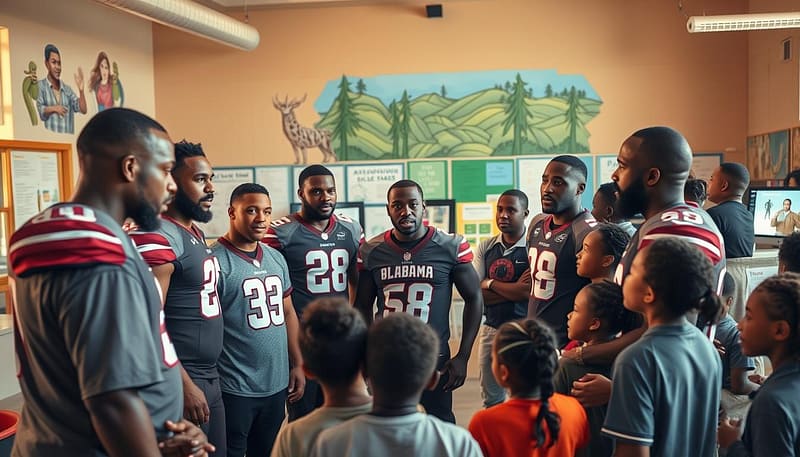
What makes Alabama legends stand out? It’s their courage to tackle big issues, not just football. They leave their mark in business, law, and community service. This shows leadership is not just for the field.
Community Impact
Bama traditions go beyond Denny Chimes handprints. Derrick Thomas used his foundation to give scholarships. Joe Namath’s foundation brings hope to those in need. Today, players like Tua Tagovailoa carry on this legacy:
- Polynesian cultural outreach programs reaching 15k+ Pacific Islander youth annually
- Autism advocacy inspired by his younger brother’s diagnosis
- Disaster relief efforts during Alabama’s tornado outbreaks
Policy Influence
Kenny “The Snake” Stabler fought for coastal conservation when he wasn’t playing football. His environmental lobbying in the 80s was ahead of its time. Ozzie Newsome changed NFL hiring practices:
| Player | Policy Impact | Lasting Change |
|---|---|---|
| Ozzie Newsome | First Black NFL GM | Doubled minority exec hires in 10 years |
| Joe Namath | Player safety advocacy | Pushed for modern concussion protocols |
Business Ventures
Cam Newton’s $12M fashion empire started with his bold style. Today, Alabama NFL players see entrepreneurship as a challenge:
- Julio Jones’s Southern Roots cannabis brand (medical focus)
- Mark Ingram’s sports analytics startup
- Marlon Humphrey’s esports franchise
These ventures show that winning mentality works in any field. As one booster said, “Saban doesn’t just build draft picks – he mints CEOs.”
Fan Stories: Most Memorable Captain Moments
What’s more American than a football captain giving advice like it’s a game plan? Alabama’s captains don’t just win games; they create stories that last longer than stadiums and trends. Let’s look at three types of fan memories that have become legendary.
Stadium Legends: Where Concrete Meets Magic
The 1923 Florida upset is a tailgate favorite. It’s the game where Alabama running backs seemed to defy physics and Prohibition. Then there’s Bear Bryant’s last game in 1982. Fans say his shadow is seen near the 50-yard line during autumn twilight. These stories are more than football tales; they’re family treasures.
| Era | Legend | Modern Parallel |
|---|---|---|
| 1920s-1950s | “Iron Horse” Bryant’s halftime speeches | Jalen Hurts’ comeback leadership |
| 1980s-2000s | Derrick Thomas’ pre-sack rituals | Will Anderson Jr.’s TikTok drills |
| 2010s+ | AJ McCarron’s championship kisses | Bryce Young’s NIL charity streams |
Personal Encounters: When Captains Become Neighbors
Deacon James from Tuscaloosa credits Shaun Alexander for saving his marriage and health in 1999. “That man blocked linebackers and hunger,” he says. A 1992 student caught George Teague’s helmet mid-tackle. His granddaughter returned it in 2018’s parade. Captains win fans, not just games.
Generational Handoffs: From Pocket Radios to FaceTime
Grandpas debate if Namath’s 1964 leadership could’ve survived today’s social media. Gen Z fans document captain moments like rare finds. One video of Mac Jones high-fiving a toddler got 2M views before kickoff. Alabama captains bridge generations, from leather helmets to smartphones.
These stories are more than nostalgia; they’re the living code of leadership. The next time someone doubts a “game captain,” remind them: Alabama’s legends turn concrete into connections. Now that’s a Hail Mary worth studying.
How the Captain Tradition Continues Today
College football today is like a big business, not just a campus activity. Alabama’s captain tradition changes quickly, like Saban’s game plans. It’s amazing to see Crimson Tide leaders mix old-school intensity with new tech.
Saban’s Leadership Labs
Nick Saban’s success isn’t just about football. It’s his “T. rex Leadership” style. Imagine defensive ends with short arms using their energy on the sidelines. Will Anderson Jr. taught Dallas Turner by playing Fortnite late at night.
Their training includes:
- Drills for quick communication, like Twitch streamers
- Leadership checks that are as loud as a Drake concert
- Training for calm in the fourth quarter, like drinking too much espresso
NIL Revolution
When your left tackle makes more from endorsements than NFL rookies, Bama traditions evolve. Captains now manage both the game plan and brand deals. They turn locker rooms into business meetings.
Star players fund team activities through Cameo. They teach freshmen about taxes too.
Transfer Portal Tactics
Modern Alabama defensive greats face a new challenge. They bond with teammates who remember other schools’ fight songs. The answer? “Transfer Tailgate Tuesdays” for both orientation and therapy.
Captains teach former rivals to sing Yea Alabama before learning the playbook.
The Future: Building Next-Gen Hawks
Building Alabama captains is like coding a video game character. It’s about combining Peyton Manning’s smarts, Ray Lewis’s drive, and Tim Cook’s leadership skills. This is what Alabama football coaches aim for, while we watch Succession and talk about AI.
High School Pipeline: QB Prodigies & VR Bootcamps
Meet 15-year-old stars who study Tua Tagovailoa’s plays like music. Saban’s team looks for talent in middle school, like Oppenheimer scientists. They use virtual reality to test recruits’ decisions in tough situations.
| Talent Development | 1990s | 2030s |
|---|---|---|
| Playbook Mastery | 3-ring binders | Augmented reality visors |
| Leadership Training | Captains’ dinners | Metaverse crisis sims |
| Fan Interaction | Autograph sessions | NFT leadership badges |
Positionless Leadership: The Swiss Army Captain
Today, any player can be a leader, not just linebackers or QBs. Imagine a 290-pound nose tackle who can:
- Break down coverage schemes like Belichick
- Mediate locker room disputes like Judge Judy
- Negotiate NIL deals like Scott Boras
The new rule: “If your leadership only works in cleats, you’re already benched.” Coaches mix players in leadership workshops. It’s like a kicker and defensive end writing team culture together.
AI Integration: Saban’s New Assistant Coaches?
Using blockchain for captain votes sounds like Black Mirror meets Friday Night Lights. But does it create real leaders or just influencers?
Alabama’s AI program shows players make decisions 23% faster. But Saban says leadership isn’t just about tech. It’s about finding the right balance.
Conclusion: A Legacy of Leadership
Alabama team captains have always led the Crimson Tide. From Wallace Wade’s early days to Bryce Young’s modern skills, they’ve set the pace. Derrick Henry’s Heisman Trophy and Joe Namath’s cleats show leadership’s lasting power.
Bear Bryant’s legacy lives on in Bryant-Denny Stadium. His words, “It’s not the will to win, but the will to prepare to win,” inspire today’s players. They face new challenges like NIL deals and transfer portals, but stay true to tradition.
Today’s captains learn from Nick Saban’s “leadership labs.” They understand that real leaders build bridges, not follow trends. This tradition will keep the Crimson Tide strong, even in a changing world.
Looking back, 417 names are honored in Denny Chimes. Each one represents Bryant’s rule: you borrow the Tide, not inherit it. So, when your grandkid watches Jalen Milroe play, remember the captains’ role. They’re shaping the future of the Crimson Tide.