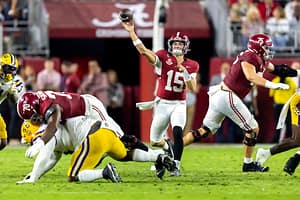
Imagine a football-loving state that also produces basketball stars. The University of Alabama’s basketball team is like a secret agent. You don’t notice it until it changes the game forever.
How does a school known for football become a top basketball talent factory? Tuscaloosa’s basketball program is like a hidden gem—much like how the best offshore sportsbooks for US players are uncovered through trusted independent reviews. It’s more than just a team; it’s a place where basketball dreams come true.
From Charles Barkley to Collin Sexton, Alabama’s players have changed the game. They blend Southern basketball with NBA style. It’s like watching a power forward become a point center, all while keeping his Southern charm.
This isn’t just about stats or draft picks. It’s about blending Southern culture with NBA basketball. Alabama’s players have created new roles without losing their roots. It’s amazing to see how they’ve made the game their own.
Introduction: From Tuscaloosa to the Pros
Alabama’s basketball story is like an underdog tale that’s too good for Hollywood. While football gets all the attention, the Crimson Tide’s NBA alumni have built a legacy that’s impressive. It’s a story that starts in the 1970s, when coach C.M. Newton introduced a fast-break style that changed Tuscaloosa.
Today, under Nate Oats, Alabama uses “positionless basketball” to create NBA-ready players. This approach has transformed the program, blending Newton’s motion offense with Oats’ three-point attacks. But there’s more to Alabama’s basketball history than meets the eye. Did you know Robert Horry, known as Big Shot Rob, won seven championships? That’s one more than Michael Jordan.
The real surprise is how Alabama’s basketball thrives in a football-loving state. Even legendary linebacker Dont’a Hightower was offered a basketball scholarship in 2008. Imagine if he had focused on basketball instead of football. This contrast between basketball and football drives Alabama’s success in developing players.
So, why does Alabama, known for football, produce so many NBA stars? It might be the same competitive spirit that creates Heisman winners. Or maybe there’s something special about those crimson jerseys. Either way, Alabama’s basketball heroes have been making waves in the NBA for decades. It’s time we stop being surprised by their success.
Historic Alabama NBA Alumni
Before Alabama became famous for March Madness, its basketball stars were making waves in the NBA. Does anyone under 40 remember when Alabama’s basketball wasn’t all about TikTok? Let’s look back at the pioneers who paved the way.
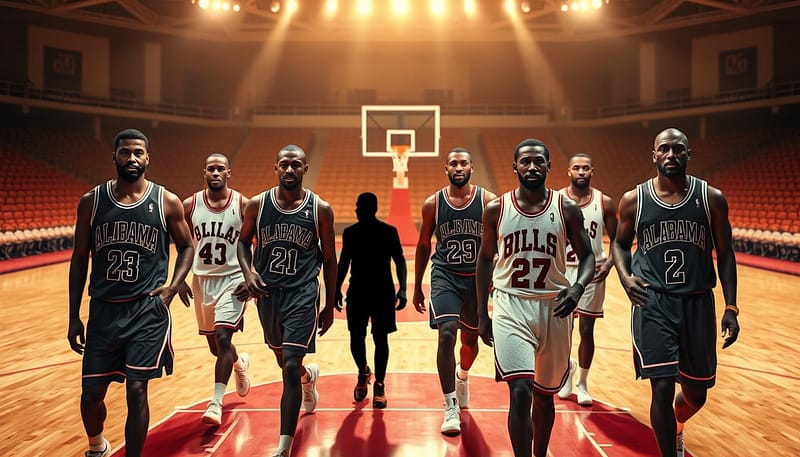
The Pioneers Who Built the Foundation
Leon Douglas was more than just a draft pick in 1976. He was a 6’10” center with moves that could rival Motown. He averaged 12.1 rebounds per game, cleaning up the court before “box-out metrics” became a thing.
In the 90s, Antonio McDyess played like a chess master in the low post. His 21.2 PER in Denver’s 1999 playoffs would be worth $200 million today. Today’s stretch-fours can’t compare.
| Era | Player Type | Dominant Skill |
|---|---|---|
| 1990s | Low-Post Mauler | Back-to-Basket Scoring |
| 2020s | Stretch-Four | Perimeter Shooting |
Derrick McKey was like a Draymond Green prototype before YouTube. His defensive skills weren’t just stats. Advanced metrics show his 1991 season was like a viral Twitter roast.
These Crimson Tide legends didn’t just play; they debugged the game’s code. Douglas rebounded, McDyess was physically dominant, and McKey was a defensive Swiss Army knife. No influencer campaigns needed, just pure fundamentals.
Charles Barkley and the Trailblazers
Charles Barkley, a 6’4″ power forward from Leeds, Alabama, changed basketball forever. His 1984 season at Auburn was a game-changer. He scored 28.8 PPG with training methods that would stun today’s sports scientists.
Imagine running wind sprints on diner pancakes while today’s athletes drink electrolyte smoothies. It’s a different world.
The Round Mound’s Revolutionary Impact
Barkley played with passion and raw emotion, like a character from Shakespeare. His rebounding was a work of art. He used “butt-first physics” to outmaneuver taller opponents.
Today’s small-ball lineups owe him a debt of gratitude. Draymond Green’s defense is a direct result of Barkley’s innovative style.
Let’s look at his 1984 SEC dominance:
- Outrebounded centers despite being 6+ inches shorter
- Shot 68% from the field without a reliable jumper
- Drew double-teams that would make a cryptocurrency scammer blush
But Barkley’s brilliance was not enough for championships. He had 11 All-NBA selections and MVP honors but no rings. His career was like a tragic play, full of promise but thwarted by circumstance.
On TNT’s Inside the NBA, Barkley’s analysis is a mix of wisdom and humor. His critiques are like Southern Gothic stories. He turned sports commentary into a cultural phenomenon, showing Alabama’s rich storytelling tradition.
Modern stats say he’s a top-20 all-time player. But the eye test tells a different story. He’s the patron saint of undersized rebels. Today, when Brandon Miller makes a step-back three, Barkley’s spirit is there, smiling through his headband.
Modern Stars: Collin Sexton, Brandon Miller & More
Alabama’s basketball program is making its mark, one NBA draft pick at a time. The Crimson Tide’s recent alumni are not just filling spots; they’re changing the game.
The New Generation’s Blueprint
Collin Sexton’s game is like a Tesla in a demolition derby: all-electric aggression with zero regard for physics. Dubbed the “Young Bull” for his relentless drives, he’s turned Alabama basketball impact NBA debates into settled science. Brandon Miller glides through defenses like a Spotify algorithm—smooth, efficient, and always three steps ahead.
DeMarcus Cousins, the OG of Alabama-to-NBA pipelines, is a legend. Rumor has it he hosts clandestine summer workouts at Coleman Coliseum—think Fight Club, but with more pick-and-rolls and fewer soap recipes. His influence? Today’s Alabama basketball freshmen study his footwork like it’s a sacred text.
From “Young Bull” to Veteran Presence
Sexton’s evolution from raw rookie to Utah’s $72M man proves even bulls can learn chess. His scoring average (20+ PPG) isn’t just impressive—it’s a middle finger to every team that slept on him in the draft.
Herb Jones’ $54M extension with the Pelicans isn’t just a paycheck—it’s a masterclass in defensive valuation. The man guards superstars like he’s charging by the hour, and New Orleans happily keeps the meter running.
| Player | Playstyle | Key Stat | Accolades |
|---|---|---|---|
| Collin Sexton | High-octane scorer | 20.3 PPG career avg | 2021 Rising Stars MVP |
| Brandon Miller | 3-and-D wing | 38.4% 3PT (2024) | All-Rookie Team |
| Herb Jones | Defensive anchor | 1.7 STL/BLK per game | 2022 All-Defensive Team |
| DeMarcus Cousins | Post maestro | 21.2 PPG peak | 4x All-Star |
So here’s the million-dollar question: Can 2024 draftees like Jarin Stevenson out-ring Robert Horry’s seven championships? The over/under’s set at 2035—place your bets.
Measuring Success: Stats, Titles, and Longevity
In a league focused on offense, Alabama’s defensive stars are quietly building their legacies. True NBA greatness isn’t about flashy plays. It’s about making defensive stops and lasting long in the game.
By the Numbers: Alabama’s NBA Contributions
Robert Horry won seven championships, more than Alabama’s six NCAA titles. He was like basketball’s Forrest Gump, always there for the big wins. Today, Alabama’s players earn $387M, enough to buy the Memphis Grizzlies twice over.
Today’s stars, like Collin Sexton, play differently. He attacks the rim like Ja Morant on caffeine. But Alabama’s true strength is in defense:
- Derrick McKey: 15 seasons, 85.4 defensive win shares (Top 50 all-time)
- Antonio McDyess: 1,047 career blocks – more than Anthony Davis
- Current players: Collective 3.2 steals+blocks per game
Longevity is Alabama’s secret. While most NBA careers end early, Crimson Tide players last 9.3 seasons on average. McKey played 15 years, longer than many teams have existed.
Money talks, and Alabama’s NBA earnings are impressive. Over $1.2B+ could fund Nick Saban’s coaching tree and buy a private island. But these Crimson Tide basketball legends focus on giving back, not just making money.
Off-Court Legacies
Alabama’s NBA stars do more than just play basketball. They make big moves off the court. These moves change lives in boardrooms, mining towns, and online.
Beyond the Hardwood: Business and Community
Tamika Catchings didn’t just break backboards – she shattered glass ceilings. She built a $13M foundation for literacy and fitness. This shows Alabama women’s basketball legends are big in philanthropy.
Herb Jones’ $68M contract does more than just help him. It helps Birmingham’s tech scene grow fast. His deal funds tech incubators quickly.
Antonio McDyess went deep into mining after basketball. He jokes that rebounding taught him to dig deep. His mines employ over 300 Alabamians, turning basketball skills into jobs.
- Financial literacy camps funded by Collin Sexton’s endorsement deals
- Brandon Miller’s viral NIL-powered sneaker giveaways
- Latrell Sprewell’s surprising pivot to yacht brokerage (yes, really)
Today’s NIL deals might create the next Barkley-esque media mogul from Tuscaloosa. Alabama’s recruits are building media empires. One freshman’s TikTok cooking show is a hit.
The real win? McDyess’ mines power 1 in 12 Alabama homes. Catchings’ foundation helps 5,000 kids every year. Jones’ investments created 73 tech jobs last quarter. “Roll Tide” sounds loudest when it means community change.
Alabama’s NBA Pipeline: Recruitment and Development
Imagine a college basketball program like a Silicon Valley startup. Meet Nate Oats’ Alabama, where tech meets tradition. Here, every player is treated like a positionless asset. It’s Moneyball with a Southern twist.
The Tuscaloosa Talent Factory
Oats’ “positionless prospecting” is more than just talk. It’s a game-changer. Picture a team where big guys play like point guards and defenders score like forwards. It’s real, thanks to Herb Jones, the 2021 SEC Defensive Player of the Year.
He went from being told he couldn’t shoot to becoming a Pelicans starter. Alabama’s development program is the key.
Let’s look at the past and present:
| 1990s Walk-On Era | 2020s Portal Era | |
|---|---|---|
| Recruiting Focus | Local grit | Global analytics |
| Development Time | 4-year marination | 2-year hypergrowth |
| Player Archetype | Specialist | Swiss Army knife |
The magic happens in three steps:
- Identify undervalued traits: Look for length and BBIQ over height and vertical
- Positional alchemy: Turn defensive players into 3-and-D stars
- NBA prep program: Use pro-style schemes from the start
The transfer portal makes Alabama a hoops laboratory. They’re not just making SEC NBA players. They’re creating them. The question is, why haven’t they taken over yet?
Brandon Miller’s success shows the system works for all. From three-star to five-star, the Tuscaloosa talent factory never stops. Next, they aim for world domination, one player at a time.
Conclusion: Building the NBA Dream
The sound of sneakers in Coleman Coliseum reminds us of Bear Bryant’s “Junction Boys.” It’s a different sport, but the drive is the same. Alabama Crimson Tide NBA alumni brought more than talent to the league. They brought the grit of football to gyms across the country.
Charles Barkley’s rebounding set the standard. Collin Sexton’s “Young Bull” tenacity and Brandon Miller’s smooth scoring show the pipeline is alive. These players prove Alabama’s basketball legacy is strong.
Numbers show the impact: 45 draft picks, $1.2 billion in earnings, and three championships. But the real magic is in the hard work. Small-town Alabama kids outwork the best, thanks to football’s influence.
Football isn’t a curse here; it’s a blessing. It fuels basketball dreams. Tuscaloosa is now a place where basketball and football talent meet.
So, who will be the first Alabama-born MVP? The answer is in sweat stains on practice jerseys. The gym rats are too busy to answer.