Every November brings a familiar tension to the Southeastern Conference. The annual clash pitting the Alabama Crimson Tide against the LSU Tigers remains a pivotal marker in the football calendar. The most recent iteration during Week 10 of the 2025 season offered a distinct shift in the rivalry’s recent narrative. Head Coach Kalen DeBoer led the fourth-ranked Crimson Tide into Bryant-Denny Stadium against a fractured LSU program. The Tigers arrived in Tuscaloosa reeling from internal turmoil following the dismissal of head coach Brian Kelly just weeks prior. Alabama secured a 20-9 victory by suffocating the opposing offense and executing highly efficient scoring drives. This performance offered a clinical display of field-position management.
For fans analyzing historical SEC football dynamics, this matchup felt like a return to a bygone era of gridiron physicality. The modern college game often favors high-scoring shootouts. DeBoer proved his squad could win a grueling, trench-based street fight. The 2025 game tape provides a fascinating study in defensive discipline and offensive opportunism.
Establishing Control Through Physical Offensive Play
The opening quarter featured a slow, methodical feeling-out process between the two coaching staffs. Both defenses dictated the early tempo. Conor Talty converted a 45-yard field goal to put the Crimson Tide on the board first. Damian Ramos answered with a 37-yard kick for the Tigers shortly after. The parity was short-lived. Alabama leaned heavily on a punishing rushing attack to wear down the interior defenders.
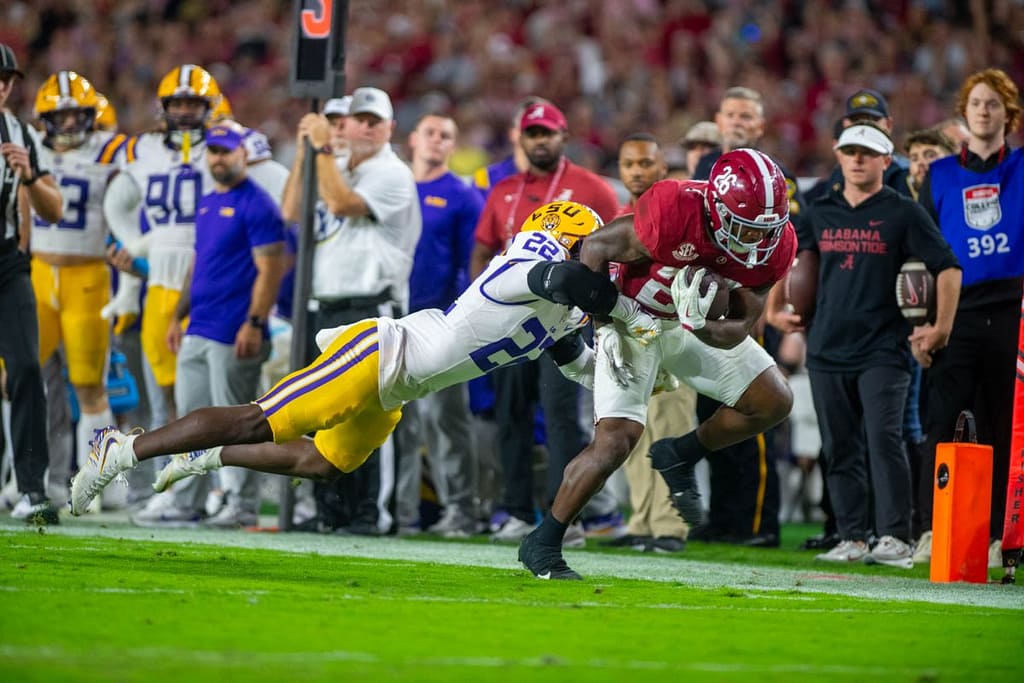
Running back Daniel Hill served as the primary catalyst for the ground game. Hill capped off a lengthy, multi-play drive with a bruising four-yard touchdown run in the second quarter. This physical exertion at the line of scrimmage set the tone for the remainder of the half. The offensive line continuously generated forward push, allowing Hill to fall forward at the end of his runs.
Quarterback Ty Simpson directed the passing attack with precise decision-making. Simpson recognized man coverage on the perimeter right before the halftime whistle. He delivered a perfectly placed strike to rising star wide receiver Ryan Williams for a 13-yard touchdown. This pivotal connection extended the lead to 17-3 at the break. The execution highlighted DeBoer’s schematic brilliance in high-leverage situations. The play-calling forced LSU defenders to respect the power run game, creating isolated, one-on-one matchups on the outside for Williams to exploit.
Suffocating The LSU Passing Attack
On the other side of the ball, the Alabama defense executed a near-perfect game plan against a veteran quarterback. LSU’s offense entered the contest seeking stability under interim leadership. Alabama responded by deploying Alabama’s defensive front strategies designed entirely around eliminating explosive downfield passing.
Garrett Nussmeier found himself forced into a highly restrictive, horizontal passing game. The senior quarterback recorded an incredibly rare statistical line. He threw only three incomplete passes all afternoon. He finished the contest with just 121 passing yards. This translates to an exceptionally minimal yards-per-attempt average, exposing a distinct lack of vertical opportunities. The Crimson Tide secondary kept every receiver in front of them. Defensive backs and linebackers rallied to the football with relentless speed, limiting yards after the catch on quick screens and check-downs.
Harlem Berry paced the Tigers on the ground with 66 rushing yards. The defensive line anchored the point of attack, denying any sustained momentum or breakaway runs. The defensive tackles absorbed double teams, keeping the linebackers clean to flow sideline to sideline. This structural integrity prevented LSU from ever dictating the pace of the game.
Second Half Field Position Execution
The final two quarters transformed into a tactical exchange of field position and special teams reliability. The Crimson Tide defense refused to break upon retreating into the red zone. They adopted a bend-but-don’t-break philosophy that repeatedly frustrated the LSU play-callers. Ramos managed to kick two more field goals for LSU from 44 and 37 yards out in the third and fourth quarters.
These kicks slightly narrowed the deficit but failed to shift the overarching momentum. Talty responded with his own 44-yard conversion late in the fourth quarter. This final kick officially put the game out of reach, finalizing the 20-9 scoreline. Keeping Alabama undefeated in conference play required exactly this type of mature, unflashy execution in all three phases of the game.
| Team | Quarter 1 | Quarter 2 | Quarter 3 | Quarter 4 | Final Score |
| LSU Tigers | 3 | 0 | 3 | 3 | 9 |
| Alabama Crimson Tide | 3 | 14 | 0 | 3 | 20 |
Echoes Of A Historic Championship Shutout
Holding LSU without a single touchdown carries massive historical weight in Tuscaloosa. The last time the Crimson Tide achieved this exact feat occurred during the legendary 2012 BCS National Championship game. That night in New Orleans, Nick Saban directed a 21-0 shutout against Les Miles and the top-ranked Tigers. Replicating that level of defensive dominance over a decade later reinforces the enduring standard maintained within the Alabama facility.
DeBoer proved his staff could formulate a game plan entirely reliant on physical superiority and disciplined gap assignments. The defense dictated the terms of engagement from the opening kickoff until the final whistle. They tackled cleanly in open space, rushed the passer with contained lanes, and communicated flawlessly in the secondary.
The upcoming rematch is scheduled for November 7 in Baton Rouge. Both programs will bring adjusted rosters and new tactical wrinkles to Tiger Stadium. The Crimson Tide will seek to replicate their recent success in one of the most hostile environments in all of college sports. Reviewing the tape from the 2025 matchup reveals a clear, repeatable blueprint for victory against their SEC rivals. Control the line of scrimmage, neutralize the deep passing game entirely, and convert red-zone opportunities into immediate touchdowns. The First Saturday in November remains a defining test of endurance, strategy, and pure football execution.