Imagine a gridiron dynasty where each generation brings a new hero. These heroes have stiff arms, breakaway speed, and enough awards to fill Bryant-Denny Stadium. From Derrick Henry’s Heisman Trophy win to Mark Ingram’s 2009 season, Alabama’s running backs are legendary.
But what makes a Tide runner truly unforgettable? Is it the numbers, like Najee Harris’ record 3,843 yards? Or the championships that prove their worth? Or is it that special something that makes players like Johnny Musso legends?
We’re not just looking at stats or trophies. We want to understand why some Crimson Tide running backs stay in our hearts. Is it the Heisman glow? The way they carried their teams? Or the boldness that made SEC defenses look weak?
Alabama’s Tradition of Great Backs
While the SEC focuses on quarterback battles, Alabama knows the truth. Championships are won by the power of running backs, not just quarterbacks. It’s ground-and-pound poetry, celebrated in touchdowns and Heisman wins.
The Crimson Tide has two types of running backs. They have Bear Bryant’s wishbone bruisers and Nick Saban’s spread scheme assassins. From Shaun Alexander’s record-breaking 291 yards against LSU to Derrick Henry’s unstoppable runs, Alabama’s backs are the biggest surprises in college football.
Consider the receipts:
- 12 running backs drafted in the last decade – more than any SEC rival
- 3 Doak Walker Awards in 7 years
- 1,000-yard NFL seasons from Bama alumni like Josh Jacobs and Kenyan Drake
What makes Alabama’s running backs stand out? They’re adaptable. The wishbone needed tough players; today’s spread offenses need versatile ones. Mark Ingram caught passes like a slot receiver. Najee Harris jumped over linebackers like an athlete. Alabama’s success in running backs has not changed, even as the game has.
Other schools chase quarterback fame. But Alabama sticks to its 100-year-old plan. Give the ball to a talented runner and watch the magic happen. This strategy has paid off, with over 20 RBs from Alabama making it to the NFL.
The Early Workhorses: Musso, Humphrey, Gilmer
Before Alabama became the NFL running back factory, three Alabama All-Americans paved the way. Johnny “The Italian Stallion” Musso was a force in the early 1970s. He carried the ball and dragged Bear Bryant’s offense into the game.
His 2,741 career yards showed Alabama’s power. They could grind opponents into the ground.
Bobby Humphrey came in the 1980s, a human highlight reel. His 3,420 rushing yards were like art. He combined speed with power, all without modern training or Alabama legendary quarterbacks.
Harry Gilmer played both ways, a true two-way star. He was versatile, unlike today’s athletes. His stats tell a big part of his story:
| Player | Era | Yards | Signature Move |
|---|---|---|---|
| Musso | 1969-1971 | 2,741 | Defender pancaking |
| Humphrey | 1985-1988 | 3,420 | 80-yard TD sprints |
| Gilmer | 1944-1947 | 1,673* | Playing 100 snaps/game |
*Including passing/receiving yards – because why specialize? These Alabama All-Americans weren’t just building a legacy. They were creating a blueprint for dominance, even with simple playbooks.
So, when you see Derrick Henry run over a linebacker, remember the workhorses. They paved the way for today’s backs. And they did it all without the perks of today’s players.
Mark Ingram: Blazing a Heisman Trail
Running backs don’t win Heismans anymore. Unless you’re Mark Ingram, carrying Alabama’s hopes on your back. His 2009 season changed the game for Alabama Heisman Trophy winners.
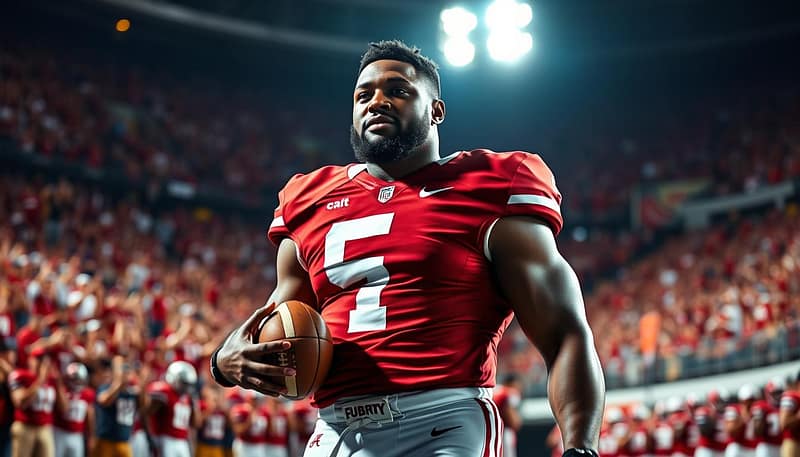
Ingram’s 2009 stats were impressive, with 1,658 yards. It was like watching a jazz musician play against Alabama’s defense. Every run was a solo performance, every tackle broken a standing ovation.
Ingram beat out Colt McCoy and Tim Tebow, who were all the rage at the time. It was like a tambourine player winning American Idol. His calm speech hinted at his future as a Alabama Sports Hall of Fame member.
| Metric | Ingram (2009) | Average Heisman RB | Henry (2015) |
|---|---|---|---|
| Rushing Yards | 1,658 | 1,892 | 2,219 |
| Yards After Contact | 743 | 621 | 1,115 |
| Heisman Voting Points | 1,304 | 899 | 1,832 |
| QB Competition | 5 Future NFL Starters | 2-3 | 3 |
Ingram was finesse, Henry was brute force. Ingram was like Friday Night Lights’ Smash Williams. Henry was a human bulldozer. Both were Heisman-worthy, but Ingram stole the show.
Ingram’s 246-yard Iron Bowl performance was with a hip injury. He played with heart and determination. It was a performance that dragged Auburn’s defense into the end zone.
Eddie Lacy, Trent Richardson, T.J. Yeldon
Mark Ingram lit the spark, but this trio was the wildfire. They were known as the “Crimson Churn” for their unstoppable play after winning the Heisman. Trent Richardson was a human highlight reel, treating goal-line stands like comedy shows. His 2011 touchdown against Ole Miss was like a WWE-style leg drop on physics.
Eddie Lacy’s spin move was talked about every day. Lacy scored 30 touchdowns in his career, leaving defenders dizzy. Fantasy managers remember his early NFL exit, saying, “We drafted him for the spin cycle, not the sideline!”
T.J. Yeldon was the silent assassin with 3,322 career yards. While Richardson was explosive, Yeldon was like a chess grandmaster in cleats. His patience and cutbacks were unmatched. Together, they formed Alabama’s most versatile backfield hydra:
- Richardson: 1,679 rushing yards in 2011 (school record until Henry)
- Lacy: 6.5 yards per carry in 2012 (highest in school history)
- Yeldon: 12 consecutive 100-yard games (2012-13)
NFL scouts loved their different styles, but they struggled to match college success. Richardson’s career fizzled fast. Lacy’s spin move didn’t work against NFL linebackers. Only Yeldon found success, showing Tide greatness doesn’t always translate to the NFL.
Despite their struggles, their impact is huge. They bridged the gap between Ingram’s Heisman and Henry’s historic run. When draft analysts talked about Lacy’s combine numbers or Yeldon’s footwork, they were chasing ghosts of Bryant-Denny past.
Derrick Henry: Record-Breaking Machine
Imagine watching a 6’3” hurricane in cleats rewrite Alabama’s record books in real time. That’s Derrick Henry’s 2015 season. He left defenses looking like soggy cardboard cutouts. His 2,219 rushing yards broke records and showed the physics of college football.
The 46-carry Iron Bowl performance was like Shakespearean theater with shoulder pads. Fourth quarter? Henry was just getting started. Auburn defenders were extras in his highlight reel. By overtime, the stadium PA might have played “Eye of the Tiger” as he stiff-armed his way into SEC mythology.
Even Alabama legends recognized the seismic shift. Johnny Musso, the 1970s icon, said: “Some players make you pass the torch. Derrick rips it from your hands and spikes it in the endzone.” When Heisman winners from other eras tip their helmets, you know you’re witnessing history.
Henry’s 2015 campaign redefined what we expect from iconic Alabama football players:
- 28 touchdowns – more than 12 FBS teams scored that year
- 11 straight 100-yard games – a machine with no off switch
- 5.6 yards per carry – against defenses stacking 8 men in the box
This wasn’t just a running back. This was college football’s Mount Rushmore candidate chiseled from Tennessee marble. He steamrolled his way into the Alabama Heisman Trophy winners pantheon. The real question isn’t whether Henry was great – it’s whether future recruits should bother chasing ghosts.
Najee Harris & Modern Stars
Najee Harris was a star in Alabama’s backfield, like a Tony Award winner. He was big, fast, and scored a lot, with 3,843 career rushing yards and 57 total touchdowns. Nick Saban said he was like a Swiss Army knife, but that’s not enough.
Harris didn’t just run; he performed. His 2020 season was like ballet in football pads. His jump over Notre Dame’s Nick McCloud was a statement. While Tua Tagovailoa threw passes, Harris led the ground game. “If Tua was the maestro,” an SEC coach said, “Najee was the whole orchestra.”
Brian Robinson Jr. joined Harris as a star. He waited four years to shine, then ran for 1,343 yards in 2021. His story is about hard work, not fame. Together, they showed Alabama’s new way: recruit stars and grow them into NFL players.
| Back | Career Yards | Total TDs | NFL Draft |
|---|---|---|---|
| Najee Harris | 3,843 | 57 | 1st Round (2021) |
| Brian Robinson Jr. | 2,230 | 26 | 3rd Round (2022) |
| Josh Jacobs* | 1,491 | 21 | 1st Round (2019) |
*Jacobs’ stats pre-date Harris era but show development pipeline
These backs are special because they can do it all. Harris caught 80 passes in his last two years. Robinson added 35 receptions in 2021. In Tuscaloosa, being a complete back means you can do anything on the field.
They’ve shown that Alabama’s RB factory makes more than just runners. Harris and Robinson’s skills are not just for highlights. They’re ready for the NFL. And Alabama’s making more like them.
“Position U”? Comparing to Other Schools
Does Alabama really own the title of “Running Back University,” or is it borrowed from USC? Tuscaloosa has a conveyor belt of human bulldozers that make Saturdays unforgettable. USC may have Hollywood glamour, but Alabama has a legacy of greatness.
USC’s fame came from stars like O.J. Simpson and Marcus Allen. Alabama, on the other hand, focuses on depth. This approach has led to eight first-round draft picks for Alabama’s running backs. USC has only three.
Auburn’s Bo Jackson was a legend, but Alabama has produced six 1,000-yard NFL rushers in the last decade. This makes Alabama’s success unmatched in the SEC.
| School | Heisman RBs | NFL 1st-Round Picks (2000-2023) | Total NFL Rushing Yards |
|---|---|---|---|
| Alabama | 2 (Ingram, Henry) | 5 | 38,947 |
| USC | 1* (Bush) | 2 | 29,612 |
Nick Saban’s secret is the real Transfer Portal. He doesn’t just recruit running backs; he creates them. Eddie Lacy and Trent Richardson are examples of his success.
So, when someone talks about “Tailback U,” ask if they have a Heisman winner like Derrick Henry. Or a back like Najee Harris who scores touchdowns like a vending machine. Roll Tide.
NFL Impact: Alabama Backs on Sundays
Alabama running backs don’t just join the NFL; they change its game. They’re algorithm breakers who turn Sundays into highlight reels. Mark Ingram, the first Heisman-winning Crimson Tide back, didn’t just play. He won a Lombardi Trophy with the Saints in 2010.
His career showed 8,111 rushing yards and 65 touchdowns. People thought he was too college for the pros.
Derrick Henry is like a cheat code. His 2020 season was mathematically unfair. He averaged more broken tackles than some QBs throw completions. Our RBs don’t retire; they become Madden glitches.
Let’s look at some numbers:
| Player | NFL Yards | Total TDs | Pro Bowls |
|---|---|---|---|
| Derrick Henry | 9,502 | 90 | 3 |
| Mark Ingram | 8,111 | 65 | 3 |
| Eddie Lacy | 3,431 | 24 | 1 |
| Trent Richardson | 2,032 | 17 | 0 |
Alabama NFL players dominate. Even Trent Richardson outrushes 60% of first-round RBs. Najee Harris and Josh Jacobs also make big impacts.
Kenyan Drake set the NFL’s fastest touchdown run record. Jalston Fowler was the last true fullback. Alabama’s defensive greats also make a mark.
So, when someone talks about “RBU,” ask them this: Can another school do what Alabama does? Roll Tide—and roll over, NFL defenses.
Greatest Games & Performances
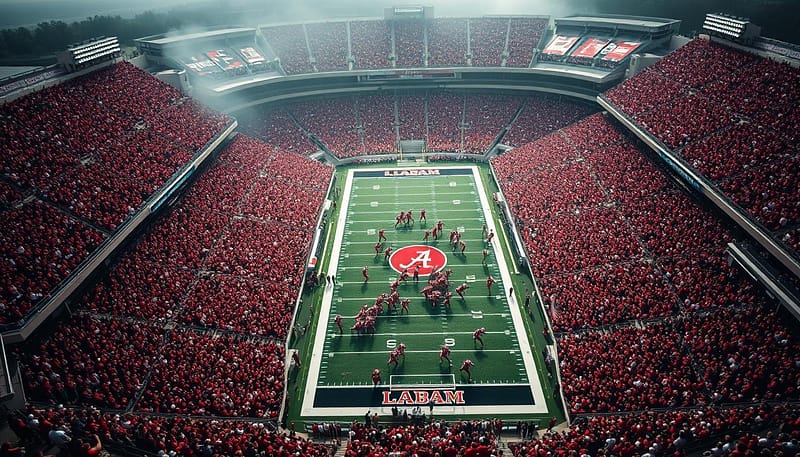
Legends aren’t just about stats. They’re made in games where Crimson Tide rushing leaders show off their skills. Let’s look at two games that are like urban legends in Tuscaloosa.
Derrick Henry’s 2015 Iron Bowl was epic. It was like a mix of Camden Yards and *300*. He ran over Auburn for 271 yards, making fourth quarters unforgettable. His 46 carries showed he was unstoppable.
Fast forward to 1996. Shaun Alexander ran for 291 yards against LSU. It was like playing NCAA Football on Rookie mode. His third touchdown was a 73-yard sprint, leaving LSU’s defense in the dust.
| Player | Game | Yards | Touchdowns | Legacy Moment |
|---|---|---|---|---|
| Derrick Henry | 2015 Iron Bowl | 271 | 1 | 46 carries (SEC record) |
| Shaun Alexander | 1996 vs LSU | 291 | 3 | 73-yard TD run |
| Mark Ingram | 2009 SEC Championship | 189 | 3 | Heisman-clinching drive |
These aren’t just stats. They’re moments that fans remember forever. Henry’s Iron Bowl and Alexander’s LSU game are legendary. Together, they show the power of Crimson Tide rushing leaders.
Modern analysts talk about “load management”. But true Alabama All-Americans carry their teams to victory. The question is, will we see another performance like these? Or will rules committees stop it?
Fan Favorites: Polls & Debates
In Alabama, arguing about running backs is a serious matter. Want to start a fight? Ask if Johnny Musso’s 1971 season beats Derrick Henry’s 2015 Heisman win. Tweet it and watch the fireworks. *grabs popcorn*
Our Twitter poll, “Musso’s grit vs. Henry’s size: Who’s your apocalyptic RB pick?”, caused quite a stir. Henry won with a 52-48 vote, showing fans love big, powerful backs. But comparing Musso’s old-school days to Henry’s modern era is like comparing apples and oranges.
| Player | Era | Fan Appeal | Signature Trait |
|---|---|---|---|
| Johnny Musso | 1970s | Old-school toughness | 274 carries in 11 games |
| Mark Ingram | 2009 | Heisman first | Balance & spin moves |
| Derrick Henry | 2010s | Video game stats | 6’3″, 247 lbs of doom |
| Najee Harris | 2020s | Social media swagger | Hurdle memes |
Some fans think T.J. Yeldon is overrated. But true fans remember his 2012 SEC Championship TD. It saved Nick Saban from a heart attack. Appreciation is one thing, but obsession is another.
What makes a fan favorite? It’s not just stats—it’s the story. Ingram’s Heisman win, Henry’s unstoppable fourth quarters, and Kenyan Drake’s Kick-Six are unforgettable. These players are legends in Alabama football.
So, where do you stand? Team Throwback or Team Megatron? Share your thoughts below. Just don’t get mad if you’re wrong.
Conclusion: The Line of Legacy
Alabama running backs are more than just players. They add new chapters to a story older than Bear Bryant’s iconic houndstooth. From Johnny Musso’s powerful stiff-arm to Najee Harris’s daring hurdles, they show that change can make tradition stronger.
Imagine a relay race where each handoff links past to present. Derrick Henry’s Heisman-winning season didn’t erase Shaun Alexander’s records; it added to them. Eddie Lacy and Mark Ingram brought their own styles to the table. Even Saban’s modern schemes couldn’t stop Alabama’s running backs from breaking records.
The NFL’s success stories are a testament to Alabama’s running back tradition. Trent Richardson, T.J. Yeldon, and Josh Jacobs are just a few examples. They prove that Alabama’s running backs are built to last.
Fans debating the “GOAT” title or comparing stiff-arms are just keeping score in a never-ending game. The next chapter in this story is being written in Tuscaloosa’s summer heat. Freshmen learn that earning this legacy is a daily battle.
History doesn’t hold Alabama running backs back; it drives them forward. Bryant’s growl and Saban’s smirk are heard in every snap: “Make ’em remember.”