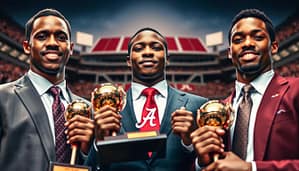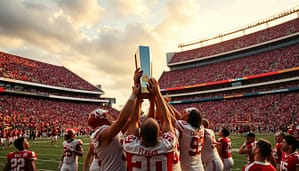
Imagine college football’s Mount Rushmore. But in Tuscaloosa, they’d need a whole mountain range. From Wallace Wade’s 1925 team to Bear Bryant’s houndstooth, Alabama’s sideline generals have created more stories than Marvel Studios.
Alabama has 13 national titles under five coaches. Bryant’s teams were like hostile takeovers. Saban’s teams are like a football assembly line, with six championship rings.
But there’s more. Thomas’s 1941 “Wow Boys,” Stallings’s 1992 “Desperation Block,” and many Rose Bowl heroics add to the legend.
What makes these coaches stand out? They turn local pride into national events. Bryant’s aura made anything seem possible. Saban’s scowl can freeze a TikTok trend, yet recruits flock to him.
This is more than football history. It’s American mythology in cleat marks and confetti. The question is: Does Alabama make legends, or do legends become Alabama?
Bear Bryant’s Historic Era
Think Bear Bryant’s legacy is just about houndstooth hats and cigar smoke? Think again. His 25-year reign changed Southern football, mixing Texas grit with Alabama tradition. It was like John Wayne directing a Shakespearean tragedy with Friday Night Lights as the opening act.
The 25-Year Dynasty
Bryant’s 205-42-9 record wasn’t just about talent. He turned locker rooms into labs, pioneering integration in 1961. He won six national championships and 13 SEC crowns, changing the game.
| Era | Titles | Signature Move | Cultural Impact |
|---|---|---|---|
| 1958-1982 | 6 National | Wishbone Offense | Integrated Southern Football |
| 1961 Season | 11-0 Record | “Catholic Crusade” | Racial Integration Blueprint |
| 1979 Iron Bowl | 1 Legendary Stand | Goal Line Defense | Redefined Clutch Performances |
Junction Boys to Goal Line Stands
Before Bryant became the SEC’s Zeus, he was forging gods at Texas A&M’s Junction Boys camp. That survivalist ethos birthed moments like the 1979 Iron Bowl’s goal-line stand.
Barry Krauss’ fourth-down stop against Auburn didn’t just preserve a 25-24 lead. It froze 80,000 fans mid-scream and created the template for clutch Alabama performances. Modern analytics can’t quantify the psychological aftershocks—Auburn fans check under their beds for Krauss’ ghost.
Yet Bryant’s genius wasn’t just in winning historic games. It was making forgotten Crimson Tide classics—like the 1967 “Game of the Century” against USC—feel like mandatory viewing. His teams didn’t play opponents; they curated museum exhibits of Southern football supremacy.
The Saban Transformation
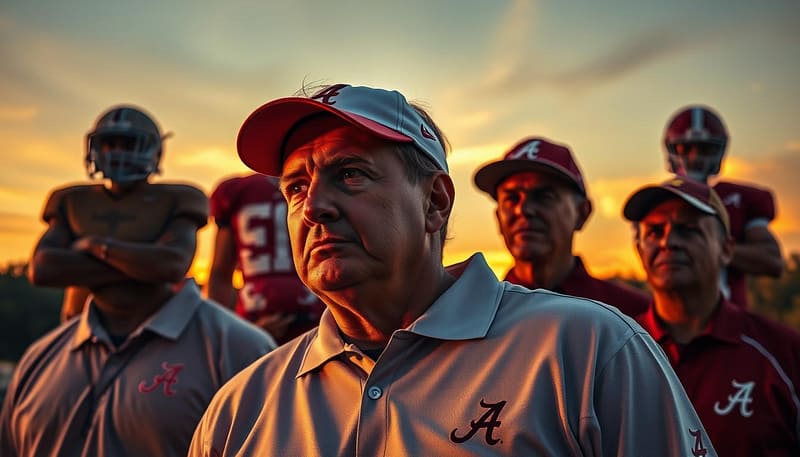
Nick Saban didn’t just coach; he transformed Alabama football. He brought in college football Singularity with his innovative approach. This led to many alabama national championship wins.
Process Over Pageantry
Saban’s success came from treating football like a tech project. His “rat poison” speeches were real, not just for show. The 2012 game against LSU shows his focus on details:
- 9-6 final score (a rare glitch)
- 4 combined field goals in overtime
- Zero touchdowns allowed by Alabama’s defense
This game was a defensive masterpiece. Saban focused on error reduction. He led Alabama to seven national title appearances in 17 years.
NFL Talent Factory Blueprint
Saban didn’t just win games; he created top talent. Here are some numbers:
| Metric | Saban Era | Bryant Era |
|---|---|---|
| NFL 1st Round Picks | 44 | 17 |
| National Titles | 6 | 6 |
| Signature System | Spread offense evolution | Wishbone dominance |
The 2020 CFP run was a peak for Saban’s machine. Mac Jones’ 84-24 playoff scoring was unmatched. Saban turned Tuscaloosa into an NFL lab, making 5-star recruits into top athletes.
The famous LSU Alabama football games became product demos. Saban’s greatest trick was making process the star. He made Alabama’s games into perfect, programmed shows.
Game-Changing Decisions (by Coach)
Alabama’s playbook is more than just football plays. It’s a series of bold moves that changed college football forever. These decisions were made by coaches who were willing to take big risks. Let’s look at two decisions that became legendary.
Bryant’s Wishbone Gambit
In 1971, Bear Bryant was planning a surprise for Oklahoma. He introduced the wishbone formation in the Orange Bowl. This move was a masterpiece of football strategy.
The result was a 38-6 win for Alabama. Oklahoma wished they had stayed home.
- Rushed for 439 yards against a top-ranked defense
- Inspired the 1972 “Punt Bama Punt” Iron Bowl miracle
- Proved southern football could out-innovate anyone
Saban’s Onside Kick Heist
In 2015, Saban made a daring call in the CFP Championship. He went for an onside kick, known as “Ambush”. This play had a 15% success rate but paid off big time.
It gave Alabama the momentum they needed to win their fourth title under Saban.
Analytics Meet Arrogance
Saban’s decision wasn’t just a gut feeling. His team had analyzed the data. They found:
| Factor | Bryant Era | Saban Era |
|---|---|---|
| Decision Driver | Gut instinct | Data models |
| Risk Tolerance | Whiskey-bold | Algorithm-approved |
| Iconic Moment | 1972 Iron Bowl | 2015 “Kick Six” |
In 2017, Saban made another bold move. He replaced Jalen Hurts with Tua Tagovailoa in the title game. This decision had a huge impact on recruiting, as seen in a story by ESPN.
Inside the Locker Room
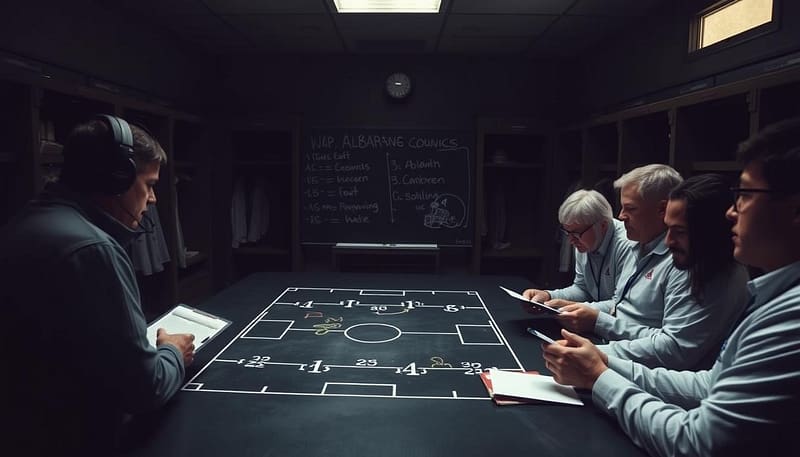
Championship trophies shine in display cases, but Alabama’s magic happens behind closed doors. Coaches create miracles here, blending strategy with psychology. It’s a place where egos, fears, and ambition meet.
Bryant’s Psychological Warfare
The Bear, Paul Bryant, didn’t just coach; he reprogrammed his players. His “self-cleaning program” cut those who didn’t perform, like Joe Namath in 1964. Bryant made locker rooms intense, using tactics that would make Machiavelli proud:
- Strategic silence during film sessions to amplify mistakes
- Public praise for water boys to unsettle starters
- Controlled leaks to local media about roster changes
His greatest trick? The 1992 SEC Championship prep against Steve Spurrier’s offense. Gene Stallings analyzed the game like a biology specimen. The detailed analysis turned a shootout into a 28-21 win.
Saban’s NFL-Style War Rooms
Alabama’s sports science lab today is a Moneyball meets Ocean’s Eleven operation. Saban’s COVID-era rules led to a new playbook. It uses biometric sensors and AI to predict player performance better than scouts.
| Feature | Bryant Era | Saban Era |
|---|---|---|
| Recruiting Metrics | Grit evaluation | Force-plate jump analysis |
| Film Study | 16mm projectors | Virtual reality simulators |
| Player Monitoring | Handwritten notes | Sleep quality trackers |
Alabama’s secret formula turns 3-star recruits into stars. It uses an algorithm that considers “adversity response” and “coachability quotient.” This formula has turned forgotten games into underdog stories.
Other Notable Purpose-Driven Coaches
Bear Bryant and Nick Saban are legends at Alabama. But other coaches also left their mark. They brought the program to national fame with their bold moves.
Wallace Wade’s Rose Bowl Revolution
Wallace Wade changed the game in the 1920s. He took a Model T caravan to the 1926 Rose Bowl. This journey was so bold, it’s like a story from Grapes of Wrath.
His team tied Washington 20-20. But the real win was showing Southern football could compete with the best.
In 1992, Stallings’ team faced Miami in the Sugar Bowl. The “Desperation Block” was a goal-line stand with 11 defenders. It was a 34-13 upset, a defensive masterpiece.
Alabama’s underdog spirit isn’t just in football. Wimp Sanderson’s 1987 basketball team made it to the Sweet 16. They showed that SEC titles are possible in all sports. Great coaches here don’t just rebuild; they redefine what’s possible.
| Coach | Era | Signature Move | Cultural Impact |
|---|---|---|---|
| Wallace Wade | 1923-1930 | Rose Bowl Road Trip | Legitimized Southern Football |
| Gene Stallings | 1990-1996 | 1992 Goal-Line Stand | Revived Post-Bryant Dynasty |
| Wimp Sanderson | 1980-1992 | 1987 Sweet 16 Run | Expanded Alabama’s Sport Dominance |
Legacy Impact
Alabama football’s influence goes beyond just winning games. It’s in the business world and the heart of college sports. What started as a fun Saturday activity has grown into a massive industry.
Recruiting Ground Reshaping
Bear Bryant’s TV deals in the 1960s made games big events. Saban’s deals with Nike have led to top recruiting classes. These victories are now big hits on social media.
The 2023 Iron Bowl’s exciting finish? It’s all about attracting top talent. It’s football and recruitment mixed together.
- 1964: Bryant’s first televised Iron Bowl reaches 12 states
- 2023: Saban’s Nike deal includes holographic practice footage clauses
- Recruiting budget increase: $2M (2010) → $8.5M (2023)
The $200 Million Brand
Bryant-Denny Stadium’s growth shows the economic power of football:
| Year | Capacity | Local Revenue Spike |
|---|---|---|
| 1998 | 83,818 | +$14M/yr |
| 2020 | 100,077 | +$29M/yr |
The “Process” has changed business, from Walmart to tech startups. But scandals have made Alabama’s athletic department work hard. They’ve had to build bigger compliance teams and win more games.
Closing Reflections
Alabama’s coaching scene is changing after Nick Saban left. But one thing is clear: Tuscaloosa’s love for winning is as strong as ever. Kalen DeBoer starts his second year with 14 returning players and a fanbase eager for success.
His first season was good, but not as great as Bear Bryant’s first title. Yet, it was better than Gene Stallings’ first season before his 1992 win.
The Kalen DeBoer Experiment
DeBoer’s West Coast offense meets SEC defenses in exciting games. It’s like watching Tennessee vs Alabama legendary games. Can he succeed in Saban’s shadow? Alabama’s strong record against SEC West teams is a big challenge.
Eternal Flame of Expectations
Football is king, but basketball dreams are alive in Coleman Coliseum. Alabama’s coaches are made, not chosen. They follow in Bryant’s and Saban’s footsteps, carrying a heavy legacy.
Replacing a legend is tough. Does DeBoer inherit a program or a tradition? The Tide’s future is about keeping the dynasty alive. In Tuscaloosa, legends don’t retire; they inspire or intimidate the next generation.