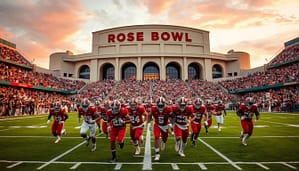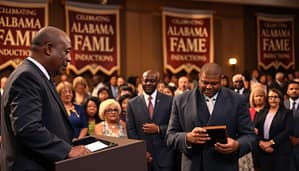
Imagine a smoky ESPN studio where experts debate. They talk about whether Bear Bryant’s houndstooth hat is more iconic than Nick Saban’s play sheets. Tony Kornheiser called their legacies a “bouquet of flowers where every petal has thorns”. This perfectly describes Alabama football, a mix of Southern toughness and modern strategy.
Why focus on coaches instead of star players? In Tuscaloosa, it’s the coaches who create dynasties. Bryant’s tough approach built a strong tradition. Saban’s detailed planning turned players into NFL stars. Together, they’ve created more winners than anyone could imagine.
Their different approaches are what make Alabama special. Bryant used tough training to prepare players. Saban used advanced methods to improve them. Both made players believe they were fighting for victory, with better care for their health.
This isn’t just sports history. It’s a lesson in leadership, blending old and new. So, pour yourself a drink (or a protein shake) and explore how two men from different times built a football empire. They did it, one great play at a time.
Introduction: The Power of Leadership at Bama
Leadership at Alabama is more than just calling plays. It’s about changing history. Take the 1971 “Integration Bowl” against USC. Bear Bryant used Black players like John Mitchell in a bold move.
Michael Wilbon called it “southern football’s Manhattan Project.” Later, Saban started his 2007 season with a bold statement: “We won’t be wasting any time.” It was more than just words—it was a call to action.
Legendary SEC coaches at Alabama don’t just fit into the culture. They are the culture. Bryant was like a chess master, moving pieces to push for integration. Saban was like a tech CEO, shaking up the NCAA.
Both knew that Alabama national titles aren’t won on game days. They’re built through:
- Building a program that turns locker rooms into leadership labs
- Creating paths for captains (Ozzie Newsome in ’78, John Parker Wilson in ’08)
- Using recruiting to teach sociology
| Coach | Captain | Cultural Impact |
|---|---|---|
| Bear Bryant | Ozzie Newsome | First Black team captain (1977) |
| Nick Saban | John Parker Wilson | Bridged Shula/Saban eras (2007) |
| – | Derrick Thomas | Turned sacks into voter registration drives |
Notice how Newsome’s quiet leadership in ’77 inspired later captains like Minkah Fitzpatrick? That’s no accident. These coaches built a system where leadership spreads like a virus.
Quarterbacks teach freshmen about taxes, and linebackers host debate nights. When Wilbon says integration started at Legion Field, he’s right. But the real work was in the meeting rooms, where coaches turned young players into leaders.
So, when you see Saban’s scowl or Bryant’s hat, remember. They weren’t just chasing titles. They were teaching a 50-year lesson in leadership. And that’s truly American.
Early Coaching Pioneers
Before “Roll Tide” became famous, two coaches started Alabama’s journey. One came from the Midwest, the other from Notre Dame. They changed football in the South, mixing old-school tactics with new ideas.
Wallace Wade: The Gridiron Alchemist
Imagine Nick Saban’s work ethic, but in the 1920s. Wade’s 1925 team didn’t just win games; they changed Southern football. They won three titles between 1925-1930, making Alabama a national power.
Wade mixed Midwestern hard work with Southern speed. His teams produced Alabama’s first All-Americans, like Pooley Hubert. The 1926 Rose Bowl win was a big moment for the South.
Frank Thomas’ Strategic Innovations: Passing Fancy
Thomas arrived in 1931 with a new idea: the forward pass. Alabama’s “Mother-in-Law Offense” changed the game in the South. It was different from the old days of just running the ball.
| Coach | Tenure | Key Innovation | All-Americans Developed | Titles Won |
|---|---|---|---|---|
| Wallace Wade | 1923-1930 | Power running schemes | 5 | 3 |
| Frank Thomas | 1931-1946 | Aerial offensive systems | 9 | 2 |
Thomas was all about adapting. In 1941, his “War Babies” team, with many young players, went 9-2. It was amazing to see how they grew into tough players.
These coaches showed Alabama’s success wasn’t just Saban. They found talent, taught discipline, and outsmarted opponents. Their legacy is what built Alabama’s football tradition.
Paul “Bear” Bryant Era: Setting the Standard
Let’s cut through the hagiography: Bryant didn’t just win six titles at Alabama—he reprogrammed Southern football’s DNA. His secret sauce was a mix of strict discipline and forward-thinking. This combo would make even Machiavelli proud. But, the myth about the 1971 USC game needs a fact-check.
That game wasn’t Alabama’s racial “awakening.” Players like Wilbur Jackson were already integrated, showing Bryant valued competence over color.

Cultural Integration Through Competition
Bryant’s locker room was a social experiment by accident. He made position battles fair, where performance erased prejudice. To get playing time, you had to outwork others, no matter their background.
This approach created legends:
- Johnny Musso (1,137 rushing yards in 1971) – The Italian Stallion who made Southern conservatives cheer for a Catholic
- Bobby Humphrey (1987 SEC Player of the Year) – The blueprint for modern dual-threat backs
Lee Roy Jordan’s 31-tackle Orange Bowl in 1963 would impress today’s analytics. Just remember to adjust for the era’s equipment and two-way players.
The Wishbone Revolution
Bryant’s 1971 offensive change was like upgrading from a musket to a machine gun. The Wishbone made Alabama a ground game grinder. But, it came at a cost.
Consider these Heisman-worthy careers stuck in a system that valued wins over stats:
| Running Back | Career Yards | NFL Draft Position |
|---|---|---|
| Johnny Musso | 2,741 | 2nd Round (1972) |
| Tony Nathan | 1,997 | 3rd Round (1979) |
| Bobby Humphrey | 3,420 | 1st Round (1989) |
Funny how Bryant’s “system guys” dominated NFL drafts—14 first-round defensive picks between 1961-1982. The Bear didn’t just develop players; he created human wrecking balls with Southern accents. Yet, the Wishbone made star RBs into committee members. Imagine Derrick Henry splitting carries—the horror!
Key Successor Transitions (Perkins to Stallings)
Alabama’s coaching change after Bear Bryant was like a Shakespeare play with football players. Every mistake was huge, like a missed field goal in overtime. Ray Perkins, the new coach, banned houndstooth hats, starting a cultural war. It was a big mistake.
The Curse of the Houndstooth
Perkins’ ban on houndstooth hats was a big mistake. It was like saying no to sweet tea in the South. The team did poorly for four years, making fans miss the old days. Bobby Bowden was winning big down the road, making us wonder what if.
Stallings’ Redemption Arc
Gene Stallings won the 1992 championship and changed the team’s culture. He used Alabama football team captains as leaders. David Palmer and Antonio Langham were key, helping the team win smartly.
The numbers show his success:
- 11-1 record against Top 25 teams (1990-94)
- 34-4-1 stretch from 1991-94
- 1 iconic goal-line stand vs Miami that’s giving Warren Sapp nightmares
Stallings showed you can respect Bryant’s legacy without being him. His leadership turned a crisis into a success story.
The Saban Dynasty: Modern Dominance
Nick Saban didn’t just boost Alabama’s football program. He turned it into a powerhouse. Imagine Amazon’s efficiency and Tesla’s innovation in football. The Crimson Tide has refined talent like no other, turning raw recruits into NFL stars fast.
NFL Factory Production Line
Saban’s .876 win percentage is impressive, but 44 first-round draft picks are mind-boggling. This is enough to field two NFL starting lineups. Bama has produced stars like Julio Jones and Tua Tagovailoa, ready for the pros.
The secret? Saban’s smart recruiting strategy. It’s a mix of Moneyball and Ocean’s Eleven tactics.
Look at the Heisman Trophy winners:
| Player | Year | Position | Draft Position |
|---|---|---|---|
| Mark Ingram | 2009 | RB | 1st Round (28th) |
| Derrick Henry | 2015 | RB | 2nd Round (45th) |
| DeVonta Smith | 2020 | WR | 1st Round (10th) |
| Bryce Young | 2021 | QB | 1st Round (1st) |
Even Bama’s second-round picks outshine many teams’ top draftees. Young’s 2021 Heisman win shows Saban’s adaptability and dominance.
The Process: Relentless Evolution
“The Process” is Saban’s cult of improvement. It transforms four-star recruits into NFL stars through advanced analysis, nutrition, and mental training.
- Position-specific drone film analysis
- Nutrition plans rivaling Olympic athletes’
- “Mental conditioning” sessions with sports psychologists
This isn’t your grandpa’s football program. When Saban replaced Jalen Hurts with Tua in 2018, it was a game-changer. The result? A 26-23 overtime win that broke Georgia’s spirit.
| Era | First-Round Picks | National Titles | Heisman Winners |
|---|---|---|---|
| Pre-Saban (1990-2006) | 12 | 1 | 0 |
| Saban Era (2007-2024) | 44 | 6 | 4 |
Can any coach replicate this? Unlikely. Saban didn’t just build a dynasty. He created a self-sustaining football ecosystem. The real question: When robots take over football, will they study Nick Saban game tapes to learn optimal performance algorithms?
Comparing Success: Bryant vs Saban vs the Rest
Imagine Thor’s hammer versus Iron Man’s tech – both legendary, but built for different battles. Alabama’s coaching titans created dynasties separated by decades, scholarship rules, and cultural revolutions. Let’s break down their legacies through spreadsheets and stadium lore.
Championships Per Season: A Mathematical Showdown
Bryant’s six titles in 25 seasons (0.24/year) versus Saban’s seven in 17 (0.41/year) seems lopsided. But add context:
| Metric | Bear Bryant (1958-1982) | Nick Saban (2007-2023) |
|---|---|---|
| Scholarship Limit | Unlimited until 1973 | 85 (1994) |
| SEC Teams | 10 | 14 |
| Top 10 Wins/Season | 2.1 | 3.8 |
| Defensive Icons | Derrick Thomas (52 sacks) | Will Anderson (34.5 TFLs) |
Saban’s machine produced 44 first-round picks versus Bryant’s 27. But could Will Anderson’s GPS-tracked practices survive Bryant’s “till the QB cries” three-a-days?
Cultural Impact Beyond the Field
Bryant integrated Alabama football before the state integrated schools. His 1971 USC showdown changed Southern football’s complexion. Saban? He turned Tuscaloosa into an NFL factory while making “The Process” America’s favorite corporate buzzword.
Yet here’s the real barstool debate: Could Saban’s spread offense gurus handle Bryant’s “make ‘em quit by halftime” mentality? Or would Bear’s ground-and-pound squads get dizzy facing hurry-up no-huddle schemes?
One truth unites them: Both made “Roll Tide” mean more than football. From houndstooth hats to rat poison rants, they defined Southern culture through cleats and clipboards.
Assistant Coaches Who Became Legends
What’s more Alabama than turning assistant coaches into stars? While the head coaches win trophies, the assistants often create the winning strategy. Let’s look at how Alabama football coaches turned helpers into key players in the program’s success.
The Saban Coaching Tree
Nick Saban’s coaching team moves fast, like Derrick Henry’s stiff-arm. His former assistants spread out in college football, with mixed results. Some are seen as “genius hires”, while others are questioned.
- Kirby Smart moved to Georgia, leading them to back-to-back championships.
- Lane Kiffin went from being fired at USC to becoming a key coach at Ole Miss.
- Jimbo Fisher got a big deal at Texas A&M, but it’s been a challenge.
This Saban coaching tree analysis shows how working under Saban can make or break a coach.
Bryant’s Disciples in the NFL
Before Saban, Bear Bryant’s assistants were changing the NFL. Bill Oliver was a defensive genius who even helped recruit Julio Jones. He asked, “You wanna block for Heisman winners or catch touchdowns?”
Today, Alabama’s receivers keep this tradition alive. Amari Cooper and DeVonta Smith are examples. They didn’t just improve their draft chances; they made coaches look smart.
So, when a top recruit chooses Alabama, they’re not just picking a head coach. They’re joining a team of assistants who have made a big impact in the NFL.
The Impact of Coaching on Culture & Recruiting
Recruiting at Alabama is more than just selling—it’s magic. Coaches turn young talent into champions, all while managing egos. But how do you convince 18-year-olds to join the legacy of Bear Bryant? You mix it into the culture.
From Mama’s Boy to Five-Star: The Art of the Close
Saban’s secret is not his playbook, but his “Alabama factor” approach. Shaun Alexander’s recruitment was all about faith, making Bryant-Denny sound like a holy site. Bryce Young’s era brought NIL deals, but every pitch starts with a personal touch.
Alabama defensive stars like Minkah Fitzpatrick didn’t just inherit legacies; they became them. Coaches use history to their advantage: “You think Butkus hit hard? Wait till you meet our film room.” Current captains wear throwback jerseys to show tradition is alive.
The running back pipeline is legendary. From Derrick Henry to Jahmyr Gibbs, Alabama backs are destined for greatness. The program’s $288 million facility is a testament to its commitment.
Does legacy matter? Ask a recruit who left with a jar of “Bear’s secret gravy” (it’s just sawmill). The real secret? A mix of fear and magic.
Most Dramatic Coaching Decisions
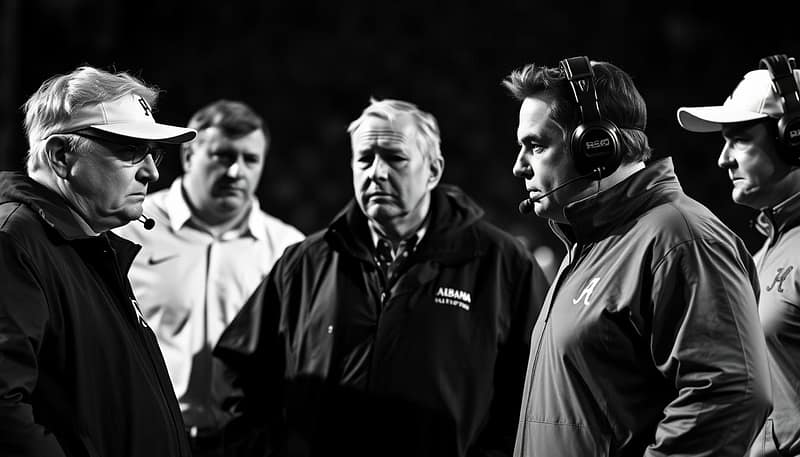
In Alabama football, coaching is like playing Russian roulette with a play sheet. The line between glory and job loss often comes down to one “hold my Gatorade” moment. We’ll look at two kinds of coaching madness: the bold move that changes history, and the quarterback gamble that breaks dreams.
The Onside Kick Heard ‘Round the World
January 11, 2016, was a day to remember. The National Championship game was tied 24-24 in the fourth quarter. Clemson was rolling like a freight train. Then, Nick Saban pulled off the unthinkable: an onside kick.
Marlon Humphrey’s recovery was more than just a play. It was like a Wall Street miracle in cleats. Critics said it was crazy. But history remembers it as a stroke of genius. The result? A 45-40 win and Saban’s fourth title at Alabama.
Quarterback Carousels & Career Killers
Alabama’s quarterback battles are more intense than Game of Thrones. In 2016, Blake Barnett started against USC. But Jalen Hurts soon took over. Then, Tua’s second-and-26 miracle in the 2018 title game changed everything.
Fast-forward to 2020, and Mac Jones, a former three-star recruit, became a Heisman finalist after Tua’s injury. The message is clear: In Tuscaloosa, backup QBs don’t sit on the bench. They either become legends or find new careers.
Saban’s bold moves, like benching established starters (like Hurts), have shaped Alabama’s culture. It’s why the team has produced three Heisman-winning quarterbacks in the last decade. Even Bear Bryant would be impressed.
Conclusion: The Ongoing Legacy of Bama Coaches
Alabama football has a unique mix. It has 16 national titles in a century, making coaches legends. The history of Alabama football is like a tightrope act. Each new coach must live up to Bear Bryant and Nick Saban’s standards.
Can Kalen DeBoer’s modern methods match the impact of Bryant and Saban? It’s like comparing Yankees managers after Joe Torre left. The pinstripes look different, but Alabama’s success keeps going.
Strength coaches and grad assistants keep the program strong. They work hard, even when stars like Derrick Thomas and Julio Jones leave. The factory never stops.
DeBoer faces big challenges. He must win titles, out-recruit Georgia, and keep Saban’s draft success rate. It’s not just about beating Auburn. It’s about living up to legends.
So, let’s honor the hard work of Alabama’s behind-the-scenes heroes. They keep the program thriving, even when coaches change. Roll Tide? It’s more like Roll On. The machine keeps moving.