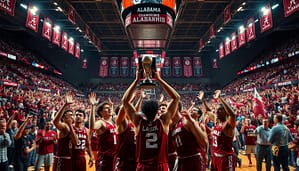
Forget the confetti and the canned speeches. When we look at title coaches, we see more than just luck. We see the builders of football empires.
Take Nick Saban, just honored in the Hall of Fame. His record—297 wins, seven national championship trophies—is impressive. It shows his mastery over college football’s chaos. His journey from Toledo to Tuscaloosa is a strategic conquest.
So, what does this reveal? It shows his obsession with detail and talent evaluation. It shows his ability to turn athletes into legends through psychological warfare. It’s about building a dynasty, not just winning games. For more on his legacy, check out CrimsonTraditions.net.
This isn’t just about football. It’s about understanding the minds that change the sport.
Unique Honors
Saban’s honors in college football history are like a forensic audit of dominance. Most coaches get accolades. Saban, on the other hand, achieved the impossible.
He has seven national championships, more than Bear Bryant and any modern coach. The magic is in the how. He won them at two different schools in two different eras.
Winning like this is like Olympic gold in two different events. The AP Poll started tracking in 1936. No one else has done this two-program trick.
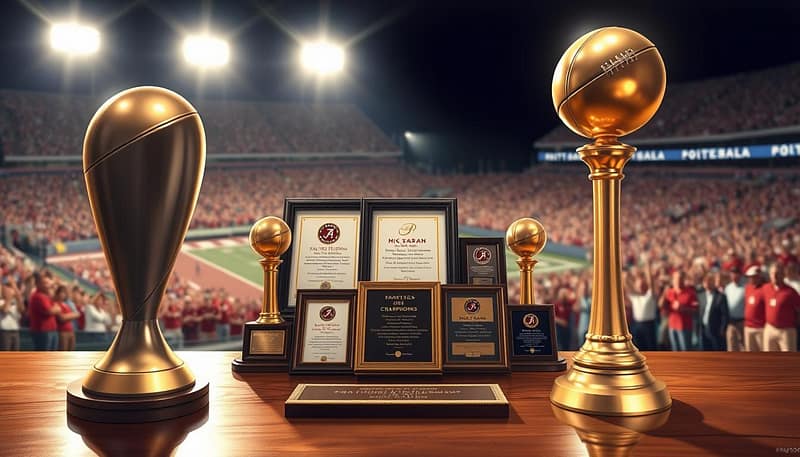
He has coached for 28 seasons without a losing record. In today’s college football, that’s impressive. It’s like he controlled the sport’s chaos.
His player development pipeline was an economic force. At Alabama, he produced:
- 66 First Team All-Americans
- 4 Heisman Trophy winners
- 136 NFL Draft picks
- A record 52 first-round selections
Fifty-two first-round picks is a lot. It made the NFL Draft celebrate the “Saban-to-Pros” pipeline. General managers audited his program.
He has over twenty Coach of the Year awards. These honors are not just decorations. They’re diagnostic.
Each award is a data point in Saban’s intellectual project. The seven titles show a system can transcend players. The perfect record shows it can withstand time. The draft picks show it can produce professional talent at scale.
Other coaches have wins. Saban has evidence. His career is a study in sustained excellence. The trophies are just footnotes.
Looking at his achievements, you see a blueprint. A blueprint so effective, it temporarily broke the sport’s balance. This is an honor that can’t be voted on, but everyone must acknowledge.
Behind-the-Scenes Stories
What happens when the master of process control loses control of the narrative? You get the priceless spectacle of Nick Saban being genuinely surprised on live television. The ESPN College GameDay ambush by host Rece Davis wasn’t just good TV—it was cultural dissonance. Here was the perpetually displeased process-robot, the architect of Alabama’s dynasty, caught with his emotional guard down.
That crack in the public armor revealed something precious. For a coach who scripted every practice minute, this unscripted moment showed the human behind the headset. It reminds us that the true measure of championship coaches being honored isn’t just trophy counts, but their capacity for authentic reaction when the spotlight turns personal.
Then there’s the philanthropy that operates in stadium shadows. Nick’s Kids Foundation has distributed over $13 million to charities, but this isn’t check-writing for good PR. This is boots-on-the-ground commitment. After the 2011 tornado devastated Tuscaloosa, Saban didn’t just donate—he helped rebuild 22 homes with Habitat for Humanity.
That’s the difference between charity and legacy. While most fans remember the heartbeat moments on the field, these off-field efforts create heartbeat moments in people’s lives. Million-dollar scholarship donations and community projects like the Saban Center aren’t line items in a PR budget—they’re investments in Alabama’s future beyond football.
This is where championship coaches earn honors that don’t come with trophies. The statue outside Bryant-Denny shows the stoic general, but these stories reveal the unexpected philanthropist. They prove that even the most analytical minds understand their influence extends beyond the sideline.
The narrative of championship coaches honored often focuses on banquet speeches and ring ceremonies. But the more compelling chapters are written in quiet generosity. As any coaches appreciation guide will tell you, true recognition comes from understanding the full scope of impact—not just the wins, but the lives changed.
These behind-the-scenes stories add a human touch to the legend. They remind us that championship coaches are honored not just for what they built on the field, but for what they helped rebuild off it. The process wasn’t just about football perfection—it was about leaving a community better than he found it.
Enduring Philosophies
What lasts after the confetti falls? It’s the philosophy. Nick Saban’s “Process” was a way to beat chaos. His true skill was in adapting to change, refusing to be outdated.
His approach shaped the coaching world. His ideas will influence football for years to come. A field named after you is the greatest legacy.
There’s another philosophy in sports. It’s about more than systems; it’s about touching souls. A piece on Coach Mack Brown’s impact shows this. The true victory is in the lives you touch.
This wisdom asks if your legacy is in schemes or in helping others. Saban built a dynasty. Brown created a family. Both are meaningful legacies.
The lasting playbook includes strategies and people. It teaches us that the biggest wins aren’t always about winning games.