
Let’s face it: how many college teams can say they’ve won 14 national titles by 1892? Alabama is not just playing football; they’re changing history.
Imagine NCAA sports as a Shakespearean drama. It has its ups and downs, from the first game to today’s dynasties. It’s a story of dominance and athletic genius.
This isn’t just about numbers; it’s about legacy. Each title adds to a story that spans generations. Getting this overview is like understanding a whole symphony before focusing on one note.
The program’s storied history shows how consistency meets excellence. From the early days to the Saban era, each title is a chapter in a bigger story.
Key Moments Each Year
Ever wonder what makes a championship season stand out? It’s the moments that change everything. Alabama’s national championships are filled with these turning points.
In 1925, Alabama’s team was unstoppable. They made their opponents look like extras. Their Rose Bowl prep was a statement, not just practice.
The Bear Bryant era (1958-1982) changed the game. His teams didn’t just win; they made history. Each season had a moment that stood out—a big comeback, a trick play, or a fourth-quarter stand.
Then, in 2009, Mark Ingram showed that winning as a team and as an individual can go hand in hand. His Heisman win was a testament to Alabama’s excellence.
The Nick Saban era (2007 onward) brought a new level of dominance. His teams don’t just have moments; they make victories inevitable.
What makes these moments key? It’s not just the win. It’s the story behind it—the difference between a 1920s victory and a modern-day win. The plays might look the same, but the stories are what truly matter.
Iconic Players and Coaches
If Alabama football were a movie universe, its championship seasons would be like big hits. The players and coaches are the stars that made them memorable. Imagine Marvel’s Avengers but with more tradition and less superhero suits.
Paul “Bear” Bryant was more than a coach; he was a builder of culture. His six championship seasons were not just wins. They were lessons in how to win minds.
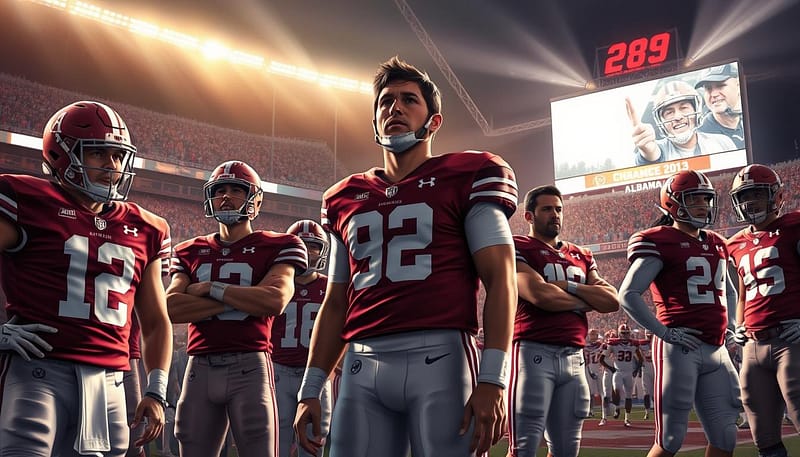
Joe Namath was a rebel on the field. He didn’t just play quarterback; he performed. His confidence was unmatched, turning games into personal shows.
Nick Saban is the modern mastermind. He’s all about process and strategy. His seven titles are proof of his organizational genius.
But there’s more to Alabama’s success than just the stars:
- Ozzie Newsome: The tight end who changed the game
- Derrick Thomas: A defensive force to be reckoned with
- Mark Ingram: Heisman winner who shined in big games
- Jeremiah Castille: The go-to player in clutch situations
What made these players stand out? They knew winning wasn’t just about talent. It was about mental strength. Bryant’s stare could freeze opponents. Saban’s strategy could break any defense. Namath’s confidence inspired everyone.
Gene Stallings also deserves a nod. His 1992 season showed Bear’s legacy could evolve. That team was about more than winning; it was about resilience.
These legends didn’t just win games. They built philosophies and cultures. They made Alabama’s championships more than sports; they became lessons in excellence and human limits.
So, when you see those championship banners, remember they’re not just decorations. They’re stories of people who refused to settle for anything less than greatness.
Signature Plays & Games
Some football games are more than just games. They become cultural moments we remember forever. Alabama’s championship wins are like scenes from blockbuster movies, where every play was a thrilling moment.
The 2009 SEC Championship was a game of strategy. Nick Saban and Urban Meyer were like chess grandmasters with 300-pound pieces. Alabama’s defense took down Tim Tebow’s Florida with surgical precision. The 32-13 win was a statement that changed college football.
The Rose Bowl against Texas for the BCS National Championship was unforgettable. Marcell Dareus’ hit on Colt McCoy was a game-changer. Alabama won 37-21, securing a dramatic Alabama football title with one brilliant moment.
In 1925, Alabama made its national debut in the Rose Bowl. Wallace Wade’s team, unknown southerners, became legends with a 20-19 win over Washington. This victory marked Alabama’s rise to national fame, setting the stage for future championships.
What makes these games iconic is more than just the score. It’s the:
- Strategic genius—play calls that coaches admire
- Raw emotion—sideline reactions that became memes
- Historical weight—games that changed college football
These moments didn’t just win championships. They defined eras. They’re why we debate plays years later and measure each Alabama football titles run against these legendary games. The Crimson Tide’s legacy is built on these unforgettable moments, not just trophies.
Fans’ Memories
Statistics don’t cry, but championships do. They live in the moments between plays, in the gasps of a stadium, and in the voices of our elders. The national championships are more than trophies; they’re emotional treasures.
Gene Stallings remembered the 2009 title and felt the echoes of 1992. It’s like a domino effect of glory. Jay Barker said the Crimson Tide spirit is felt deep within, not just seen on scores. And isn’t that the truth?

Being part of something big means your voice is hoarse by Monday. It means high-fiving strangers and arguing about the Bear Bryant era like it’s today’s news. We’re not just watching history; we’re living it, one play at a time.
We care so much because these moments shape our personal stories. That catch, that stop, that call we debate for years. They mark our lives—where we were, who we hugged, how we cried.
The Crimson Tide’s national championships aren’t just won on the field. They’re celebrated in living rooms, argued in bars, and passed down like family tales. They’re why your kid wears number 12 to school. They’re why your phone buzzes when Saban smiles.
So, yes, we might be a bit dramatic. But when confetti falls, we’re not just fans—we’re guardians of the flame. And that flame burns long after the stadium lights go out.
Legacy Impact
What makes a dynasty stand out? It’s not just the trophies. It’s the lasting impact that championship seasons have on the future. The 1925 Alabama team didn’t just win a title. They set the stage for Alabama’s football legacy, shaping the program for decades to come.
Think of it like the Beatles changing music forever. Before them, pop music was simple. After, it had to be more complex and ambitious. The 1925 team did the same for Southern football, raising the bar so high that average teams became unacceptable.
This legacy shows in many ways. Recruiting gets easier with a century of success to point to. The program’s prestige turns it into a mythic institution, not just a team. It’s why Alabama’s growth feels like destiny.
In today’s world, lasting success teaches us about strategy and endurance. Championship seasons are more than celebrations; they’re investments in future victories. They create a cycle where winning leads to more winning.
The true legacy is the expectation of success. Not hope, but expectation. Alabama doesn’t just hope for championships; it expects them. This mindset, more than any trophy, is the greatest gift from those early pioneers.
Conclusion
Alabama football titles are more than just trophies. They are living chapters in a story that never ends. From Bear Bryant’s legacy to Nick Saban’s dynasty, each title adds to a story loved by all.
What’s next for the Tide? The answer is in the mix of history and hunger found in books and podcasts. These keep the legacy alive, showing us that excellence never stops.
In the world of sports, Alabama’s championships show us tradition, innovation, and pride. They teach us how legacy lasts long after games end. And we can’t wait to see what’s next.