Forget bronze busts and dusty plaques. The SEC Hall of Fame is where a region’s heroes are celebrated. For Alabama football, it’s a family tree with legendary roots and new branches.
The timeline begins in 1951 with Don Hutson, who created the modern wide receiver role. It includes Bear Bryant, a symbol of strength. And it’s about to welcome Nick Saban, whose dynasty changed the game.
The Crimson Tide has 25 players and coaches in this hall. It’s not just a list; it’s a collection of legends.
The SEC also has its own rich history. The SEC Football Legends class adds to the lore. So, what makes a player become a legend?
It’s a mix of great play, cultural impact, and defining an era. Let’s explore how a program creates its gods.
Iconic Conference Moments
The SEC doesn’t just create champions; it makes moments that freeze time. These moments are not just plays in a game. They are cultural artifacts that people talk about for decades.
What makes a moment iconic in the SEC? It needs three things: high stakes, impossible execution, and lasting emotional impact. The 1979 “Goal-Line Stand” against Penn State had all these. It was fourth down at the one-yard line for the national championship.
Barry Krauss and Marty Lyons didn’t just make a tackle; they became symbols of defiance. That play didn’t just win a title; it defined a program’s identity.
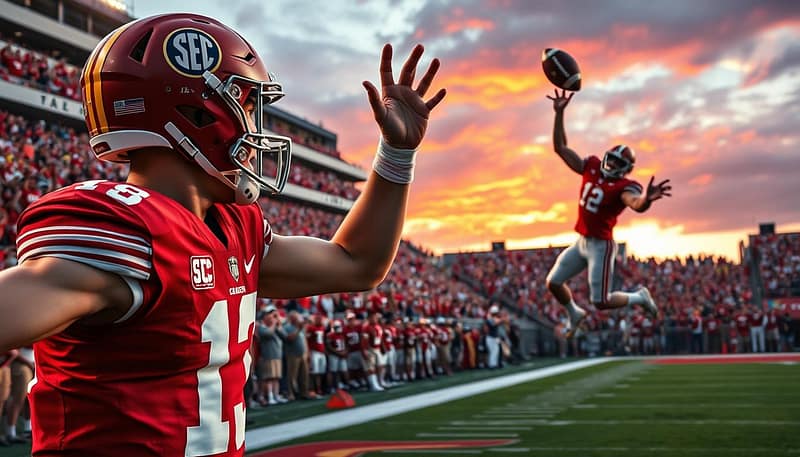
In 2013, the “Kick Six” in the Iron Bowl became a masterpiece. Auburn’s Chris Davis returned a missed field goal 109 yards as time expired. This moment had everything: rivalry hatred, championship implications, and a plot twist nobody saw coming.
Julio Jones started as a true freshman and was fully formed. He made the “learning curve” look like a myth. Shaun Alexander’s 1999 Iron Bowl performance was a man treating his arch-rival like a personal tackling dummy.
Terrence Cody’s two blocked field goals against Tennessee in 2009 were a 350-pound monument to desperation. The 1992 national championship defense was a season-long statement that Alabama would win by making offense impossible.
These moments create the shared memory bank of the SEC. They’re why fans who weren’t alive in 1979 can describe the Goal-Line Stand. They transform players into legends and games into folklore.
As one analysis of the SEC’s most iconic moments suggests, these plays are the conference’s defining currency.
The difference between a good play and a legend-creating play? Context and consequence. A touchdown in September is forgotten. But the same touchdown as the clock hits zero in the Iron Bowl lives forever.
The SEC specializes in providing the stage for these eternal highlights. Think of it this way: Hall of Fame plaques are the official record. But iconic moments are the living, breathing, replayable soul of the sport.
Impact Across Eras
Alabama’s secret isn’t a system or a playbook. It’s a never-ending production line for talent. The true test of a legend is winning every decade, not just one.
In the 1930s, Don Hutson wasn’t just playing football. He was inventing the modern passing game. He played a different sport than his contemporaries. Two decades later, Harry Gilmer was the proto-dual threat, a quarterback who could also devastate as a halfback.
The 1960s gave us Bear Bryant’s on-field philosophers. Joe Namath brought Broadway cool to Tuscaloosa. Lee Roy Jordan delivered brutal, middle-linebacker efficiency. They were two sides of the same championship coin.
Then came the 1970s and John Hannah. A guard so dominant that Sports Illustrated simply declared him the best offensive lineman ever. Period. The 1980s answered with Derrick Thomas. He redefined the pass rusher, treating offensive tackles like minor inconveniences on his way to the quarterback.
The modern Saban era didn’t break the mold. It industrialized it. Mark Ingram’s Heisman trophy. Julio Jones’ otherworldly athleticism. The sustained brilliance of first-round picks became the standard, not the exception.
So what’s the through-line from Hutson to Ingram? It’s a culture that identifies supreme talent. It’s a system engineered to highlight that greatness under the brightest lights. And it’s the immense pressure of the crimson jersey that forges mere stars into legends.
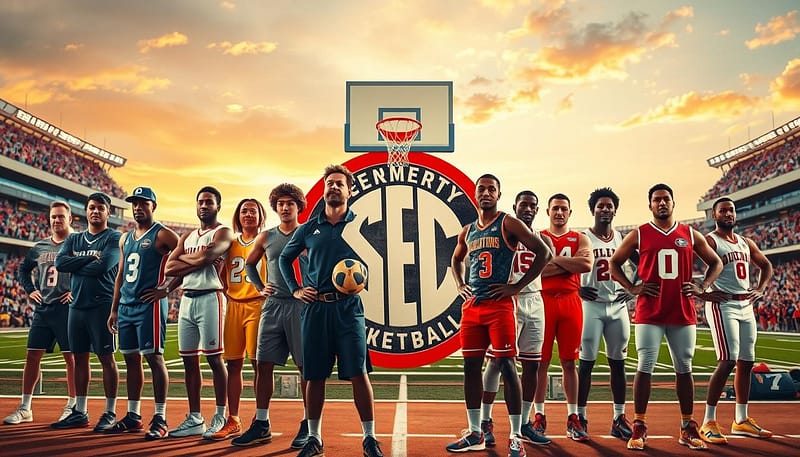
This legend-making machinery isn’t exclusive to the gridiron. Take a glance at the SEC hardwood. You’ll see a parallel universe of iconic coaches and players building their own towering legacies. The conference’s ability to generate cultural sports figures is, it turns out, a multi-disciplinary endeavor.
The same intensity that defines Saturday in the South fuels March Madness. This proves a simple point. Greatness in the SEC isn’t confined to one sport. It’s a cultural export. For a deeper dive into the individuals who built this reputation, consider the greatest players in SEC history. The list reads like a century’s worth of headlines.
Rivalry Games That Defined Their Legacy
Legends aren’t made in September. They’re forged in the white-hot crucible of rivalry Saturday. For an Alabama great, your career narrative gets its final edit in the Iron Bowl or against Tennessee. These games are the SEC’s ultimate personality test.
Consider Shaun Alexander’s 1999 Iron Bowl masterpiece. His 199-yard, three-touchdown evisceration of Auburn wasn’t just a stat line. It was a declaration. The 2013 “Kick Six” remains the haunting counter-narrative to an era of dominance. It proves that in rivalry games, legacy is a single play away from revision.
Ken Stabler’s cool efficiency in these battles earned him his “Snake” moniker. Terrence Cody’s blocked field goal to preserve victory over Tennessee in 2009 wasn’t merely a play. It was a defensive era made stone. These moments transcend sports. They become state folklore.
Dominating the SEC schedule is one thing. Deciding the Iron Bowl or the Third Saturday in October is something else entirely. It’s where a player transitions from athlete to immortal. The pressure is personal. The consequences echo for decades. Want to dive deeper into these defining clashes? Explore the archives at CrimsonTraditions.net for a complete look at the games that built legends.
A Hall of Fame resume is filled with highlights. But its cover is always a rivalry game snapshot.