
In Alabama, football is more than a sport; it’s a state religion. So, when a basketball player makes it to the Alabama Sports Hall of Fame, it’s huge. It feels like a declaration of freedom.
We’re not just talking about good players here. We’re talking about the ones who set the path. Take Gerald Wallace, the first “one-and-done” before it became popular. He went from one season in Tuscaloosa to a 15-year NBA career known for his defense.
Then there’s Theo Ratliff, who made Demopolis famous with his shot-blocking skills. And Larry Kenon, a Birmingham native who went from junior college to almost winning a national title.
These aren’t just stats. They’re stories of setting the stage. They make us wonder: is being the first—the true Basketball Trailblazer—more important than just being great? It’s a debate about foundation versus fame.
Check out the Crimson Tide legacy filled with names like Horry and Sexton. It’s a question that challenges the very essence of the Crimson Tide’s history.
Key Players & Coaches
The Hall of Fame honors legacy, but we’re here to explore the innovation that defined these trailblazers. Being first is one thing. Being good—revolutionarily good—is the real ticket. Let’s examine the blueprints.
Gerald Wallace wasn’t just athletic; he was a defensive prophet. In an era obsessed with scoring, he preached the gospel of disruption. Averaging two steals and two blocks per game for a season? That’s not a stat line. It’s a manifesto.
His 2006 steals title and 2010 All-Star nod were validation, but his real impact was stylistic. He played defense like a chess grandmaster playing speed chess—anticipatory, aggressive, and utterly exhausting for opponents. He was a pioneer of the modern, switch-everything wing defender before it was a coaching cliché.
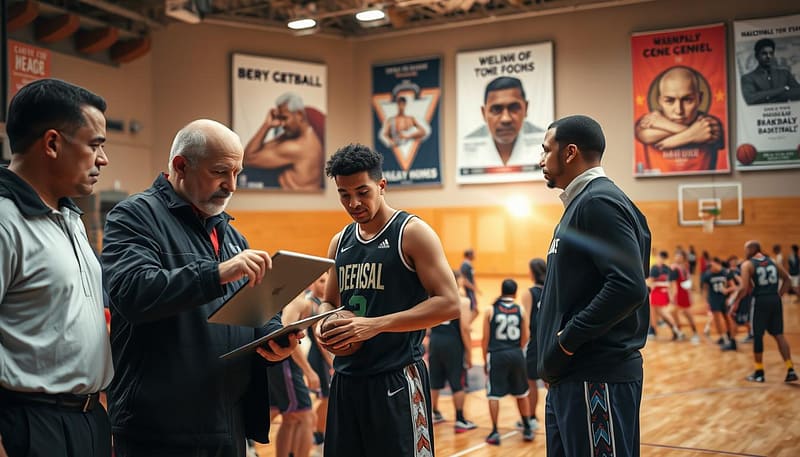
Theo Ratliff presents a fascinating case study in undervalued genius. In today’s analytics-obsessed league, his 1,968 career blocks would be celebrated with advanced metrics and highlight reels. Back then, he was just the quiet guy erasing mistakes.
Leading the NBA in blocks three times isn’t luck; it’s a PhD in geometry and timing. He wasn’t just tall. He understood angles, verticality, and the subtle art of shot suppression without fouling. He made mediocre defenses respectable—a one-man bailout program. His 2001 All-Star selection was a rare, correct popular vote.
Then there’s Larry Kenon, the ultimate basketball chameleon. His career arc is a masterclass in adaptation. He dominated the flamboyant, run-and-gun ABA, winning a championship and making three All-Star teams. Then he seamlessly transitioned to the NBA, earning two more All-Star nods.
His record 11 steals in a single game isn’t just a quirky footnote. It’s evidence of a predatory basketball IQ. He wasn’t just playing the game; he was solving it, reading passing lanes like a psychic. He was a pioneer of the stat-sheet-stuffing forward, impacting every phase long before it became a draft-day prerequisite.
On the sideline, Jackie Sherrill operated with a different kind of playbook. A player on two of Bear Bryant’s national title teams at Alabama, he didn’t just learn X’s and O’s. He learned culture. He learned how to build a winner from the ground up.
His 180-120-4 record as a head coach, leading three different schools to 10+ win seasons, proves the point. This wasn’t a system guy finding one perfect fit. This was a pioneer of program-building, translating the brutal, disciplined ethos of 1960s Alabama football into college football success at Pittsburgh, Texas A&M, and Mississippi State.
What connects these four? It wasn’t just raw talent. It was a specific, quantifiable form of innovation. Wallace redefined wing defense. Ratliff mastered the ignored art of rim protection. Kenon bridged basketball eras with flawless execution. Sherrill translated championship DNA across sports.
Their stats, available in places like basketball reference archives, tell the “what.” But the film—the how—reveals the true pioneering spirit. They didn’t just play the game as it was. They played it as it was becoming.
Their Off-Court Influence
Alabama’s Hall of Fame is more than just a museum. It’s a hub for future leaders. The real magic happens after the game is over.
Antonio McDyess talked about lasting impact in his induction speech. He said it’s about being remembered forever. That’s the ultimate goal for athletes.
Latrell Sprewell felt honored to be among Alabama’s legends. He mentioned Charles Barkley and Kobe Bryant. His legacy is now part of Alabama’s sports history.
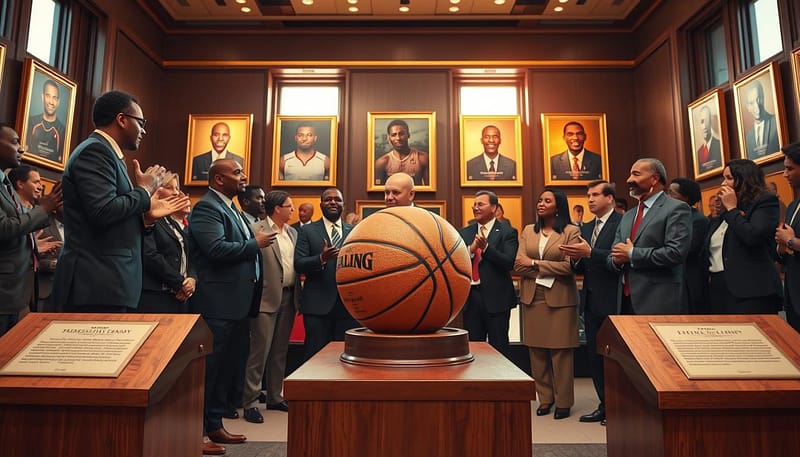
Larry Kenon shared a valuable lesson. He credited Coach Gene Bartow for teaching him to think strategically. This is more than basketball; it’s a life lesson.
But there’s more to the story. The notable alumni honored that night included influential minds. They never played a game but made a bigger impact.
| Name | Primary Arena | Off-Court Masterstroke | Legacy Scale |
|---|---|---|---|
| Bob Barrett | Golf Administration | Shaped Augusta National’s development | Global |
| Mark Womack | SEC Executive | Financial architect for billion-dollar conference | National |
| Rick Karle | Broadcasting | 24-time Emmy winner, Mel Allen Award | Statewide |
| William Booth | High School Coaching | Winningest Alabama HS baseball coach | Generational |
Bob Barrett didn’t just manage a golf course. He helped shape Augusta National. Mark Womack is the financial brain behind the SEC’s success.
Rick Karle won 24 Emmys. He narrated Alabama’s sports history. William Booth coached in Hartselle for fifty years, leaving a lasting legacy.
These notable alumni are more than athletes. They’re leaders who invest in people. They build networks and create opportunities.
Think of it like LeBron James’ off-court legacy. He built a school and a media empire. Alabama’s honorees followed similar paths.
Kenon’s “angles” comment is insightful. These individuals saw opportunities where others saw challenges. Barrett, Womack, and Karle used their talents to make a difference.
The Hall of Fame ceremony is just the beginning. The real work is the lifetime of achievements that follow. These notable alumni show that true impact goes beyond sports.
They paved the way for others, built institutions, and changed lives. The induction is just applause. The legacy is the ongoing impact.
Milestone Games
You build a legacy brick by brick in empty gyms. You cement it under the klieg lights of a single night. Take Larry Kenon. He was an Alabama export, facing off against Bill Walton’s UCLA in the 1973 NCAA Championship Game. Memphis State might have lost, but the message was clear. Alabama could produce players for the biggest stage.
Roman Harper’s Super Bowl XLIV performance was a masterclass in narrative payoff. He made eight tackles for the New Orleans Saints in their first title win. That’s how you turn a solid career into a street name in the French Quarter.
Gerald Wallace getting the 2010 NBA All-Star nod was the league’s nod to the “Crash” test dummy. And Theo Ratliff? His milestone was a slow burn. Leading the NBA in blocks is like being the silent guardian of the paint for an entire season—a sustained, intimidating flex.
These aren’t just box scores. They are coronations. They are the definitive scenes where talent writes its own paragraph in the history books, lighting the way for the next generation from the Heart of Dixie.